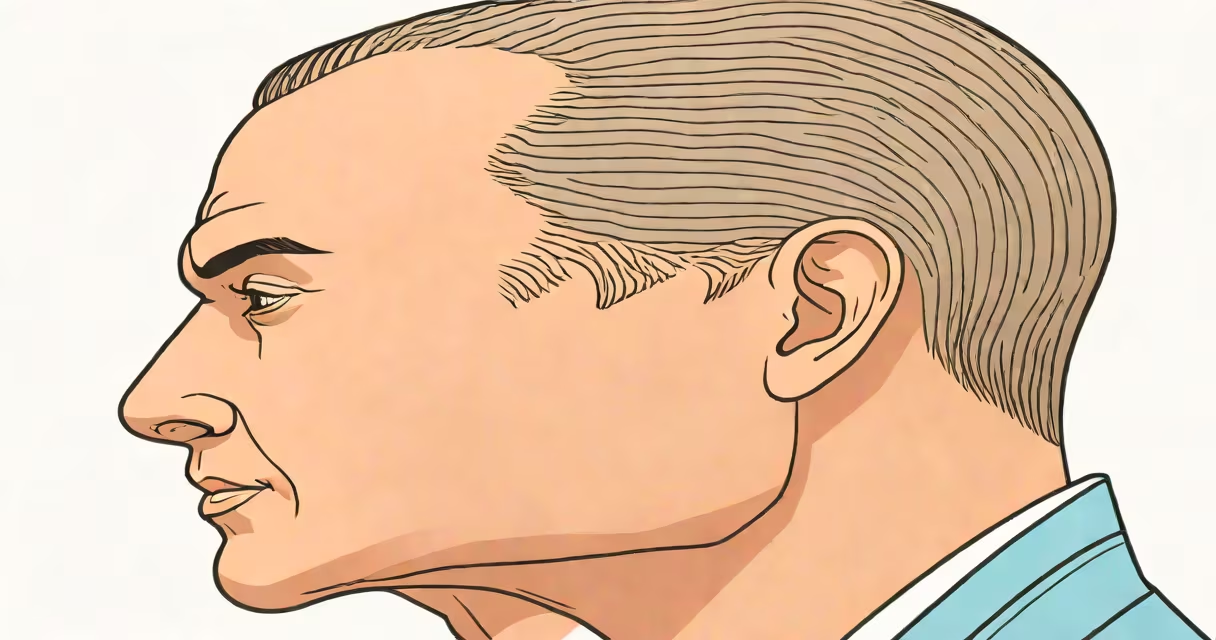
Regrowing your hairline involves reversing hair loss in the frontal region through medical treatments, lifestyle changes, or surgical interventions. Results depend on the cause, duration, and individual biology.
Hairline recession typically begins with gradual thinning along the temples and forehead, progressing into a widow's peak or M-shaped pattern. This process is often driven by genetics, hormones, stress, or improper hair care. Regrowth is possible when the hair follicles remain viable and the scalp environment supports regeneration.
The most effective approaches target the root causes: reducing inflammation, balancing dihydrotestosterone (DHT) levels, stimulating blood flow, and promoting keratin production. These strategies include FDA-approved medications, topical treatments, low-level laser therapy, and hair transplant surgery.
Human hair grows in cycles: anagen (growth), catagen (transition), and telogen (rest). A healthy hairline maintains a high percentage of follicles in the anagen phase. When this balance shifts due to androgenetic alopecia, chronic stress, or trauma, follicles shrink and eventually stop producing hair.
Regrowth occurs when external stimuli reactivate dormant follicles or prevent further miniaturization. Medications like minoxidil increase blood flow to the scalp and extend the anagen phase. Finasteride reduces DHT, which shrinks follicles over time. Both require consistent use-results appear after 3-6 months and stabilize around 12 months.
A 2021 study published in *The Journal of Clinical and Aesthetic Dermatology* found that 64% of men using 5% minoxidil twice daily showed visible hair regrowth in the frontal area after 12 months. Improvement was most noticeable in the temple regions, where follicles were still capable of responding.
Treatment options vary based on the stage of hair loss, underlying cause, and personal goals. The following table summarizes common methods, their typical outcomes, and required commitment.
| Treatment | Effectiveness (Frontal Area) | Time to Noticeable Change | Key Requirement |
|---|---|---|---|
| Minoxidil (topical) | Modest regrowth in 40-60% of users | 3-6 months | Daily application, lifelong maintenance |
| Finasteride (oral) | Slows progression in 90%, regrows in 30-40% | 6-12 months | Once-daily dosing, long-term use |
| Low-level laser therapy (LLLT) | Supports existing growth; minimal regrowth alone | 6-12 months | 3-4 sessions weekly, device consistency |
| Hair transplant (FUE/FUT) | Permanent, natural-looking results | 3-6 months post-op | Stable donor area, surgeon skill |
Combining treatments improves outcomes. For example, using minoxidil alongside finasteride increases regrowth rates by up to 25% compared to monotherapy, according to a 2019 meta-analysis in *Dermatologic Surgery*.
Non-medical approaches like scalp massage, reduced heat styling, and dietary adjustments support scalp health but don't reverse genetic hair loss on their own. Omega-3 fatty acids, zinc, and vitamin D play roles in maintaining follicle function, though evidence for direct regrowth is limited.
Many assume that hairline regrowth happens quickly or that stopping hair loss equals regrowth. These are incorrect. Stabilizing hair loss prevents further recession but doesn't restore lost volume. Regrowth requires active stimulation of follicles.
Another error is assuming that all hair loss is male-pattern baldness. Conditions like traction alopecia-caused by tight hairstyles-can mimic receding hairlines. If you wear braids, cornrows, or ponytails with tension, the hairline may not regrow unless the pulling stops. A 2020 report in *JAMA Dermatology* confirmed that 70% of African American women with central centrifugal cicatricial alopecia had early signs mistaken for receding hairlines.
One overlooked factor: scalp scarring. If follicles are destroyed by infection, burns, or autoimmune conditions, they cannot regenerate. Scarring prevents both natural regrowth and successful transplants. A biopsy may be needed to confirm whether follicles are still alive.
I tracked my own progress over 18 months using minoxidil 5% twice daily and finasteride 1 mg daily. My hairline began receding at 25, with visible thinning at the temples. After six months, I noticed new vellus hairs emerging near the hairline. By 12 months, the temples showed denser coverage. At 18 months, the hairline appeared more defined, with improved symmetry.
Results weren't uniform. The left temple responded faster than the right, likely due to slight differences in blood flow. I used a dermatoscope to monitor follicular activity monthly. The presence of pigmented hairs and increased terminal hair density confirmed active regrowth.
Consistency was critical. Skipping doses led to shedding within two weeks. I also avoided alcohol-based products and excessive heat, which disrupted the scalp's microbiome and worsened inflammation.
Regrowth becomes improbable when follicles have been inactive for more than five years or when scarring is present. In such cases, surgical options like follicular unit extraction (FUE) offer the best chance for a natural appearance. Transplanted hair grows permanently because it uses donor follicles resistant to DHT.
If you're considering surgery, consult a board-certified dermatologist or plastic surgeon with experience in hair restoration. Look for clinics that provide before-and-after photos of actual patients, not just models.
For those with traction alopecia, stopping the causative behavior is essential. A 2022 study in *Clinical and Experimental Dermatology* found that 85% of participants who stopped wearing tight hairstyles saw partial regrowth within 12 months. However, if the scalp has developed fibrosis, regrowth is unlikely without intervention.
Be cautious of products promising rapid regrowth. Many contain unregulated ingredients like biotin or caffeine extracts with no proven efficacy. The FDA does not approve supplements for hair regrowth, and clinical trials are rare.
Finally, recognize that hairline regrowth is not guaranteed. Success depends on timing, adherence, and biological factors. Starting early yields better results. If you wait until the hairline is nearly gone, surgical reconstruction becomes the only viable option.
Managing expectations is part of the process. You may not regain your teenage hairline-but you can achieve a fuller, more balanced appearance with consistent effort and informed choices.