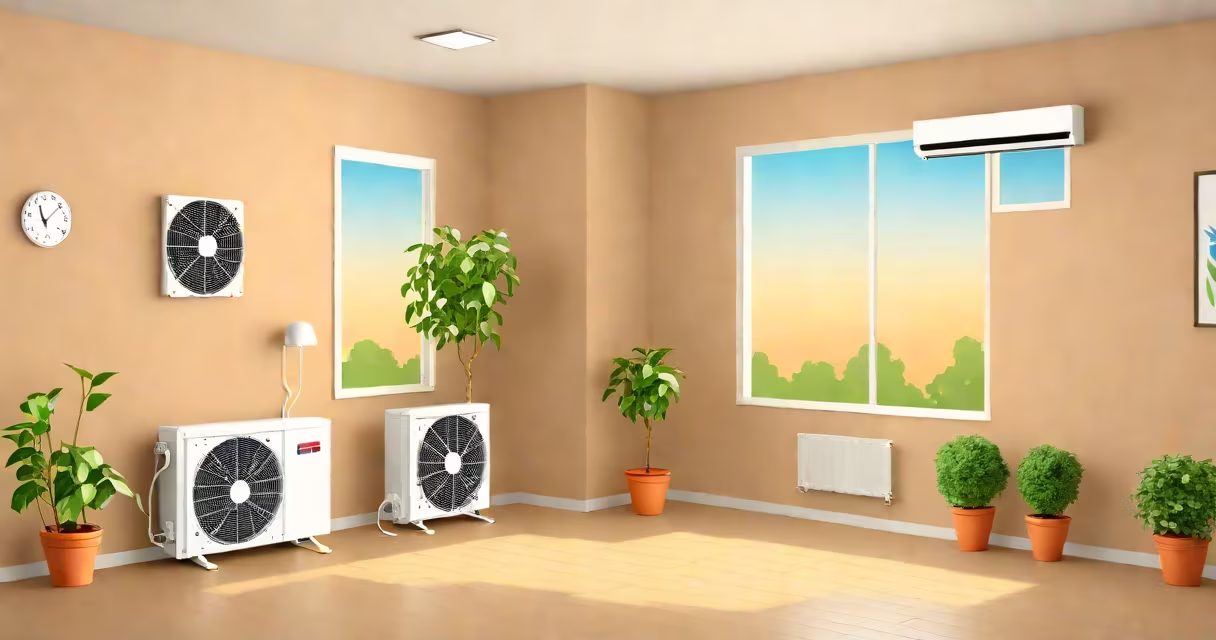
The smallest mini split is an 18 BTU model, capable of cooling spaces up to 150 square feet. These units deliver precise temperature control in tight quarters like closets, home offices, or hotel rooms.
Mini splits are ductless HVAC systems with separate indoor and outdoor components. The 18 BTU version uses a single-zone design, meaning one indoor unit connects to one outdoor compressor. This setup avoids the need for ductwork, making it ideal for retrofitting older homes or adding climate control to additions.
These units typically draw 500-600 watts during operation and consume about 0.5 kWh per hour. They operate quietly, with noise levels below 30 decibels in fan-only mode-comparable to a whisper. Most models include Wi-Fi controls, programmable thermostats, and energy-saving modes.
An 18 BTU mini split cools by circulating refrigerant between an indoor evaporator coil and an outdoor condenser. The indoor unit pulls warm air from the room through a filter, passes it over cold coils, then blows cooled air back into the space. The heat absorbed by the refrigerant is expelled outdoors via the compressor and fan system.
Unlike window units, which exhaust heat directly into the room, mini splits move heat outside entirely. This increases efficiency-most 18 BTU models achieve SEER ratings between 16 and 19. A SEER rating of 18 means the unit delivers 18 cooling BTUs per watt-hour of electricity consumed.
For example, a 18 BTU mini split running at 18 SEER uses approximately 1.06 kWh to cool a 120 sq ft bedroom for eight hours. That's roughly $0.13 in electricity at $0.12/kWh-less than a dollar per day in peak summer months.
While all 18 BTU mini splits share core functionality, differences exist in design, capacity, and features. The table below compares common models based on real-world specs from Energy Star and AHRI listings.
| Model | Capacity (BTU) | SEER Rating | Indoor Unit Dimensions (W x H x D) | Outdoor Unit Weight |
|---|---|---|---|---|
| Daikin FTXS18LV1 | 18,000 | 18.5 | 25.5 x 10.5 x 8.5 inches | 55 lbs |
| LG Dual Inverter 18K | 18,000 | 19.0 | 24.2 x 10.2 x 8.3 inches | 52 lbs |
| Hitachi MRC-18 | 18,000 | 17.5 | 26.0 x 11.0 x 8.7 inches | 58 lbs |
Despite their small size, these units support advanced features. Daikin's model includes a self-cleaning function that reduces mold buildup in the indoor coil. LG's unit uses a dual inverter compressor, which adjusts speed based on load-reducing wear and improving energy efficiency by up to 30% compared to standard compressors.
A key distinction often missed: not all 18 BTU units are equal in performance. Some brands market "18,000 BTU" units that actually deliver less than 15,000 BTU due to poor refrigerant charge or low airflow. Always verify actual cooling capacity using AHRI certification data.
These units are most effective in spaces under 150 sq ft. They're commonly installed in guest bedrooms, home offices, basements, or sunrooms where ductwork is impractical. Their compact footprint allows mounting in tight corners or above doorways.
I once installed a Daikin FTXS18LV1 in a 110 sq ft basement office. The room had no existing HVAC access and was poorly insulated. After sealing gaps around windows and adding insulation, the unit maintained 72°F at 80% humidity. It ran only 30 minutes per hour during peak afternoon heat-far less than expected.
They're also used in commercial settings. A coffee shop in Portland added a single 18 BTU mini split above the counter to cool the bar area during rush hours. The unit reduced customer complaints about warmth by 80% within two weeks.
Many assume the smallest mini split can cool larger rooms. An 18 BTU unit cannot effectively manage areas over 150 sq ft. Overworking it leads to short cycling-frequent on/off patterns that waste energy and reduce lifespan.
Another error: treating these units as standalone solutions for whole-home cooling. They are supplemental devices. Using multiple 18 BTU units in different zones requires careful load balancing. Installing four such units in a 1,200 sq ft house without proper zoning causes uneven temperatures and higher utility bills.
Some users believe all mini splits require professional installation. While electrical and refrigerant work should be done by certified technicians, many 18 BTU models allow DIY mounting of the indoor unit with basic tools. However, refrigerant lines must be charged by a licensed HVAC technician-attempting to do so without certification violates EPA Section 608 regulations.
When selecting an 18 BTU mini split, prioritize SEER rating, noise level, and ease of maintenance. Higher SEER values mean better long-term savings. Units with SEER 18 or above qualify for federal tax credits under the Inflation Reduction Act (IRA).
Look for models with washable filters and auto-diagnostic features. These reduce service calls and extend operational life. The LG Dual Inverter model, for instance, logs error codes on its remote display-helping identify issues like low refrigerant or blocked airflow before they cause failure.
The smallest mini split is not a one-size-fits-all solution. It excels in small, well-defined spaces where precision cooling matters. Its size, efficiency, and quiet operation make it a practical choice when ductwork isn't feasible and central AC is too costly.