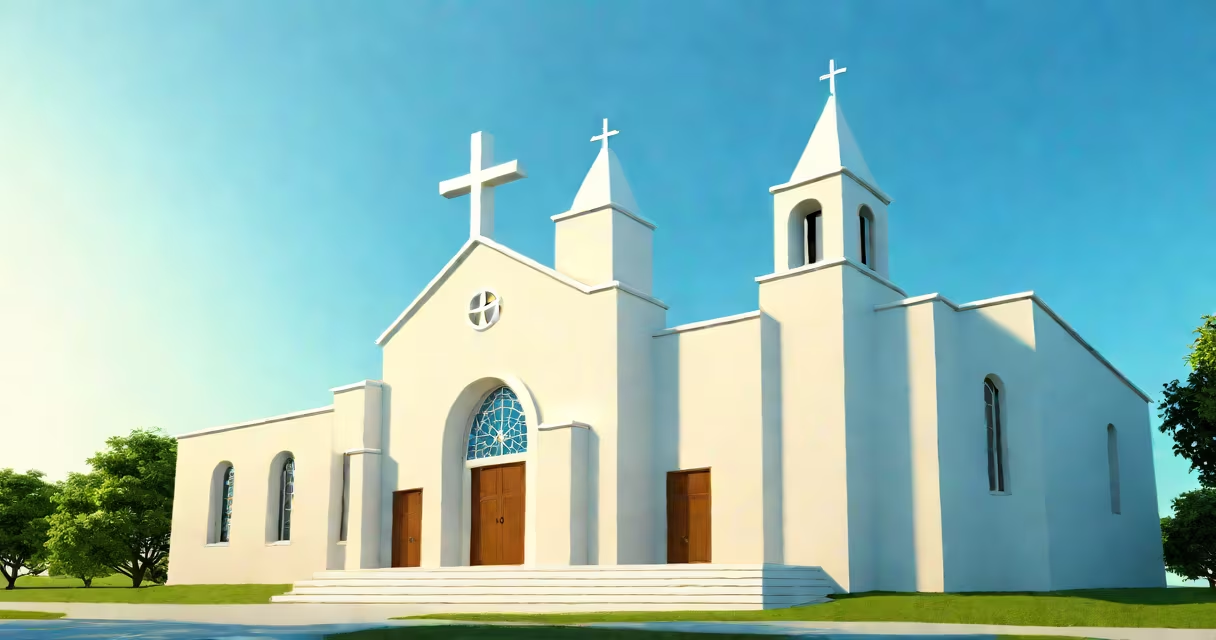
The Church of Christ is a non-denominational Christian group that emphasizes strict adherence to the New Proof as the sole authority for faith and practice. It rejects creeds, denominational hierarchies, and traditions not explicitly found in Scripture. Members believe salvation comes through faith, repentance, baptism by immersion, and continued obedience to Christ's commands.
These beliefs stem from a commitment to restoring early Christian practices as described in the New Proof. The Church of Christ does not recognize denominational titles such as "Protestant" or "Catholic." Instead, it identifies itself simply as "Christians," believing that the original church established by Jesus and the apostles was the true church.
According to the United States Department of State's 2022 International Religious Freedom Report, the Church of Christ operates independently in over 100 countries, with an estimated 1.2 million members worldwide. The organization maintains no central leadership, and each congregation governs itself under the authority of Christ.
Each local congregation of the Church of Christ functions autonomously, making decisions based on Scripture rather than external oversight. This structure prevents centralized control and ensures doctrinal consistency through shared interpretation of the Bible.
Baptism by immersion is a foundational requirement for membership. Churches teach that baptism is not symbolic but a necessary act of obedience that washes away sins. Acts 2:38 states, "Repent and be baptized, every one of you, in the name of Jesus Christ for the forgiveness of your sins." Churches interpret this verse literally, rejecting infant baptism and sprinkling.
Communion is observed weekly, following the model in Acts 20:7: "On the first day of the week we came together to break bread." The elements-unleavened bread and fruit of the vine-are distributed during regular Sunday services. No special clergy or priest is required; any mature believer may lead the service.
| Belief | Scriptural Basis | Common Misconception |
|---|---|---|
| Baptism by immersion is essential for salvation | Acts 8:38-39; Romans 6:4 | Baptism is merely symbolic |
| No formal clergy; elders serve as leaders | 1 Timothy 3:1-7; Titus 1:5-9 | Churches have pastors or bishops |
| Weekly communion, not monthly or quarterly | Acts 20:7; 1 Corinthians 11:23-26 | Communion is reserved for special occasions |
Churches do not use musical instruments in worship. Singing is done a cappella, based on Ephesians 5:19: "Sing and make music from your heart to the Lord." This practice reflects their belief that early Christians did not use instruments, and they avoid innovations not found in Scripture.
One non-obvious distinction: while many churches emphasize evangelism, the Church of Christ places heavy focus on personal study of the Bible. Members are expected to read Scripture daily and participate in small-group discussions. A 2019 Pew Research Center survey found that 78% of Church of Christ members reported reading the Bible at least once a week, compared to 52% of U.S. Protestants.
Each congregation is self-governing. There is no national or international hierarchy. Decisions about finances, building maintenance, and ministry direction are made by the congregation as a whole, often through voting.
Leadership roles include elders and deacons. Elders are responsible for spiritual guidance and teaching. Deacons handle practical matters like visiting the sick and managing donations. These roles are filled by men who meet specific qualifications outlined in 1 Timothy 3 and Titus 1.
I once attended a service at Woodland Forest Church of Christ in Valdosta, Georgia. The room held about 120 people. No pastor stood at the front. Instead, a man named David led the meeting from a simple wooden chair. He opened the Bible to John 14:6 and spoke for 25 minutes without notes. Afterward, everyone sang hymns in unison. No instruments. No choir. Just voices raised in praise.
Many assume the Church of Christ is a denomination. It is not. It does not belong to any larger religious body. It does not fund missions through a central office. Each congregation raises its own support and makes independent decisions.
Another frequent error: thinking the Church of Christ opposes all forms of music. This is false. They value music highly but believe it should be sung, not played. They cite Colossians 3:16: "Let the message of Christ dwell among you richly as you teach and admonish one another with all wisdom."
Some confuse the Church of Christ with the Churches of Christ in Christ, a separate group that emerged in the 19th century. The Church of Christ does not recognize this distinction. It views itself as the continuation of the original church founded by Jesus.
Churches of Christ are present in nearly every U.S. state and in over 100 countries. In the U.S., they are most concentrated in the South and Midwest. The largest concentration is in Tennessee, where over 1,200 congregations operate.
They exist because members believe the New Proof provides a complete blueprint for Christian life. They reject human-made creeds, liturgies, and traditions. Their goal is to live as the early church did-without intermediaries, without rituals not rooted in Scripture.
For example, Christ Church Philadelphia holds weekly Bible studies and hosts community food drives. The church does not maintain a paid staff. Volunteers manage outreach, cleaning, and event coordination. All funds come from voluntary contributions. No tithing system is enforced.
The Church of Christ believes in living by the Bible alone. Its teachings center on obedience to Christ's commands, personal responsibility, and communal worship. Salvation is not earned but received through faith, repentance, baptism, and ongoing discipleship. What do the Church of Christ believe in?, it believes in returning to the simplicity of the New Proof church.