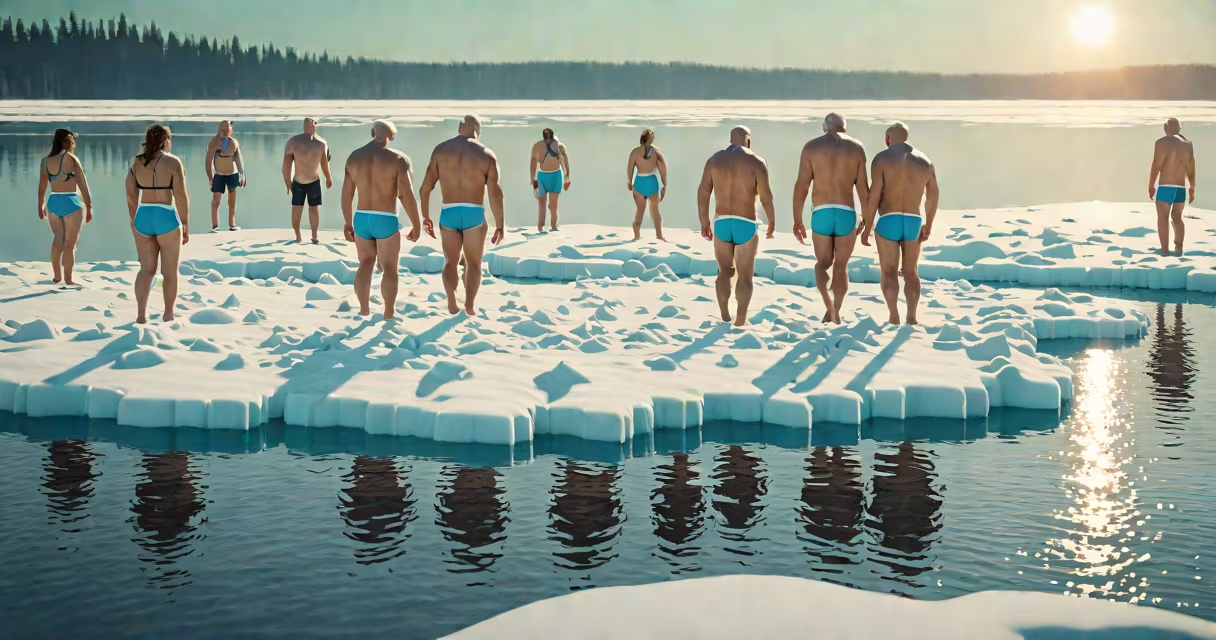
The polar bear plunge is a winter swimming event where participants briefly submerge themselves in freezing water, typically below 5°C (41°F), often as part of a charitable fundraiser or seasonal ritual. It is most common in December or January in colder regions like Canada, the U.S., and parts of Europe.
Participants usually enter the water wearing swimsuits, hats, and sometimes gloves, then exit quickly-typically within 30 seconds to a minute. The act is not about endurance but about confronting cold exposure in a controlled, social setting. Events are often held at lakes, rivers, or oceans with ice edges, and organizers provide safety personnel, warming tents, and medical staff.
While the term "polar bear plunge" evokes imagery of Arctic wildlife, the activity has no direct connection to actual polar bears. Instead, it references the animal's association with extreme cold and survival in icy environments. The name became popular in North America during the early 20th century, especially in cities like Toronto and Boston, where winter swimming clubs formed around New Year's Day traditions.
Participants gather at a designated location-often a public beach or riverbank-before the plunge. They may warm up with light exercise or perform a ceremonial chant. Once signaled, they run or walk into the water, usually in groups, and remain submerged for a set time. After exiting, they move quickly into heated shelters or change into dry clothes.
Physiological responses include immediate vasoconstriction (narrowing of blood vessels), increased heart rate, and release of adrenaline and endorphins. These reactions are part of the body's acute stress response to sudden cold. The cold shock response-characterized by gasping and rapid breathing-can last up to 30 seconds and poses a significant risk if someone enters the water too quickly or without preparation.
Organizers follow strict safety protocols. For example, the Canadian Red Cross advises that plunges should not exceed 60 seconds, require a minimum of two trained spotters, and prohibit participation by individuals with cardiovascular conditions. In 2022, a study published in *Frontiers in Physiology* found that cold-water immersion under 1 minute caused measurable increases in cortisol and norepinephrine, but no lasting harm in healthy adults who were properly prepared.
While the core format remains consistent, regional variations exist based on climate, culture, and purpose:
| Type | Description | Location Example | Typical Duration |
|---|---|---|---|
| Charity Plunge | Group events raising funds for causes like mental health or cancer research. Participants pay entry fees. | Chicago's New Year's Day Plunge, Illinois | 30-60 seconds |
| Winter Swimming Club | Recurring sessions by regulars who train for cold tolerance. Often held weekly throughout winter. | St. Petersburg, Russia - Krestovsky Island Swim Club | 1-3 minutes |
| Religious or Ritual Plunge | Part of religious ceremonies, such as Orthodox Christmas Eve in Eastern Europe. | Ukraine - Saint Basil's Day in Kyiv | Varies, often symbolic |
A lesser-known variant is the "reverse plunge," where participants start in a heated pool and then step into cold water. This method is used in training programs to reduce shock and improve adaptation. The Finnish practice of "kylmäkävely" (cold walking) involves walking through snow and ice, sometimes ending with a brief dip-blending movement and cold exposure.
Motivations vary widely. Many cite psychological benefits: a sense of accomplishment, heightened awareness, and temporary relief from anxiety. A 2021 survey by the University of Manitoba found that 68% of participants reported improved mood post-plunge, with 42% stating they felt "more present" afterward.
Some view it as a rite of passage. I attended a polar bear plunge in Toronto in January 2023. The air temperature was -12°C (10°F), and the lake surface had a thin layer of slush. I waited in line with others wearing mismatched swimwear and wool caps. As we ran into the water, my breath caught instantly. Within 15 seconds, my limbs felt numb. I exited quickly, shivering violently, but within five minutes, my body began to warm. The collective laughter and cheering afterward created a useful sense of community.
Another reason is tradition. In places like Newfoundland, the annual New Year's Day plunge dates back to the 1920s. Families gather, children participate with adult supervision, and local media cover the event. It reinforces regional identity and resilience in harsh climates.
One widespread myth is that cold-water immersion boosts immunity. While short-term exposure increases white blood cell counts, there is no evidence that this translates to fewer infections. A 2020 review in *Nature Reviews Immunology* concluded that cold exposure does not alter long-term immune function in humans.
Another misconception is that anyone can safely do a polar bear plunge. The reality is that hypothermia, cardiac arrest, and drowning are real dangers. The American Heart Association warns that sudden cold exposure can trigger arrhythmias in people with undiagnosed heart conditions. Between 2010 and 2020, the U.S. Coast Guard recorded 14 deaths linked to winter swimming events, though most involved alcohol use or lack of supervision.
Participants must also consider environmental impact. Large gatherings near sensitive ecosystems-like coastal areas in Alaska or the Great Lakes-can disturb wildlife. In 2021, a polar bear plunge in Lake Superior drew criticism from conservationists due to proximity to nesting sites for piping plovers.
Despite the risks, many plunges raise substantial funds. The annual Toronto Polar Bear Plunge raised over $1.2 million in 2022 for youth mental health services. Similarly, the Boston Winter Swim Club's New Year's event collected $850,000 for cancer research.
For those considering joining, preparation is essential. Always go with a group. Warm up beforehand. Never jump in alone. And recognize that the goal isn't to prove toughness-it's to experience a moment of shared challenge in a safe environment.