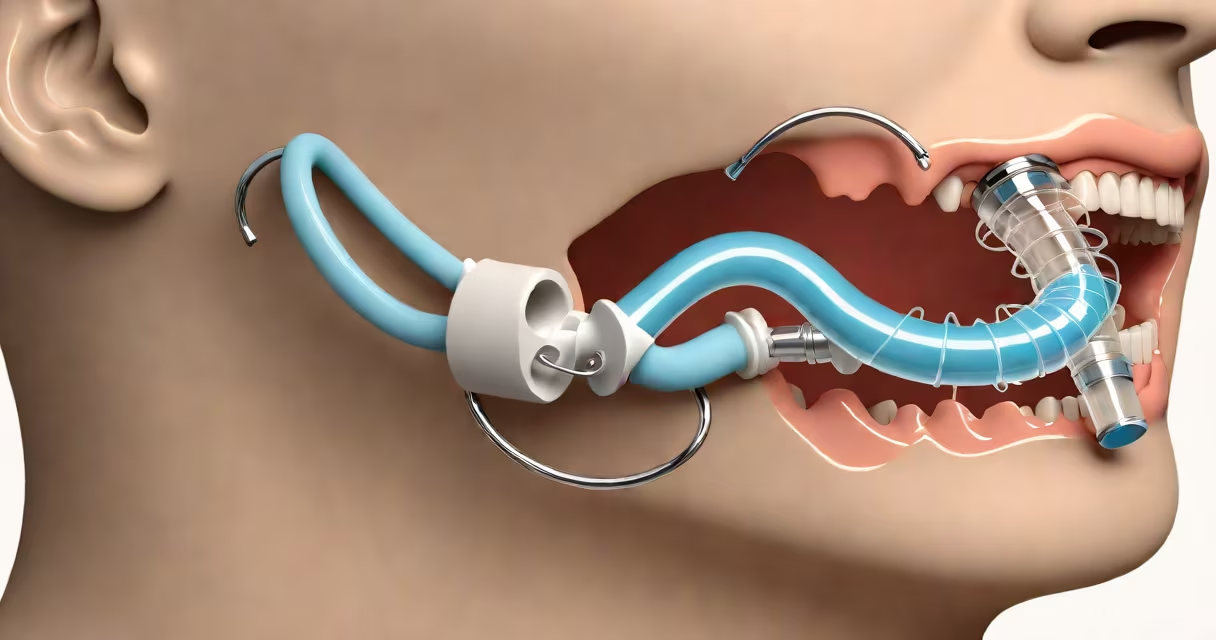
A supraglottic airway device is a non-invasive airway management tool placed above the glottis-just above the vocal cords-to maintain a patent airway during anesthesia, sedation, or emergency resuscitation. It delivers oxygen and anesthetic gases without requiring endotracheal intubation.
These devices are used when intubation is difficult, contraindicated, or unnecessary. They provide a secure airway for ventilation but do not prevent aspiration. Supraglottic airway devices are common in operating rooms, emergency departments, and prehospital settings.
According to the American Society of Anesthesiologists (ASA), supraglottic airway devices are recommended as first-line tools in patients with predicted difficult airways. The ASA guidelines emphasize their role in reducing airway complications during elective surgery.
The device sits in the hypopharynx, just above the larynx. Its curved tip conforms to the anatomy of the upper airway, sealing against the posterior pharyngeal wall. A cuff inflates to create a pressure seal, allowing positive-pressure ventilation without entering the trachea.
When properly positioned, the device allows oxygen delivery and anesthetic gas administration while protecting the airway from regurgitated gastric contents. However, it does not protect against aspiration if the patient vomits. The device is inserted blindly or with visualization tools such as a laryngoscope or video-assisted guidance.
One key advantage is speed. A trained clinician can place a supraglottic airway in under 30 seconds-faster than intubation. This makes it ideal in cardiac arrest scenarios where rapid airway control is critical.
Several models exist, each with distinct features. The most widely used include the laryngeal mask airway (LMA), the ProSeal LMA, and the i-gel. These differ in sealing ability, ease of insertion, and compatibility with suction and intubation.
| Device Type | Sealing Performance | Suction Channel | Intubation Compatibility | Common Use |
|---|---|---|---|---|
| LMA Classic | Good | No | No | Elective surgery, short procedures |
| ProSeal LMA | Excellent | Yes | Yes (via intubating stylet) | Abdominal surgery, high-risk aspiration |
| i-gel | Excellent | Yes | No | Emergency airway, pediatric use |
The i-gel, made from a thermoplastic elastomer, requires no cuff inflation. It maintains a seal through material compliance rather than pressure. Studies show it reduces airway trauma compared to inflatable cuffs.
A non-obvious distinction: not all supraglottic devices are interchangeable. Size matters-using a size too small increases the risk of air leak; too large causes discomfort and potential airway obstruction. For adults, sizes 3-5 are standard, with size 4 being most common for average-sized patients.
Supraglottic airway devices are standard in general anesthesia for surgeries lasting less than 60 minutes. They reduce the risk of sore throat and hoarseness compared to endotracheal tubes. A 2021 study in *Anesthesia & Analgesia* found that patients using supraglottic devices reported 40% less postoperative pain.
In emergency medicine, they're used during cardiac arrest when intubation fails or takes too long. The European Resuscitation Council recommends supraglottic devices as alternatives when advanced airway management is delayed. In out-of-hospital settings, paramedics often use the LMA Fastrach in trauma cases.
During pediatric anesthesia, supraglottic devices are preferred due to smaller airway anatomy and lower risk of airway injury. The i-gel is particularly effective in children under 10 years old because it doesn't require cuff inflation and fits well in narrow airways.
Many people mistake supraglottic airway devices for endotracheal tubes. The key difference: endotracheal tubes pass through the vocal cords into the trachea, while supraglottic devices sit above the glottis. Only endotracheal tubes provide complete protection against aspiration.
Another misconception is that supraglottic devices are only for anesthesia. They are also used in intensive care units for patients needing mechanical ventilation who cannot tolerate intubation. A 2020 review in *Critical Care Medicine* noted that supraglottic devices reduced the need for surgical airway access in ICU patients with airway obstruction.
Some assume all supraglottic devices allow intubation. Only specific models, like the ProSeal LMA with a dedicated intubation channel, support this. Attempting to pass a tube through a standard LMA can cause misplacement or damage.
At a rural emergency department in Montana, a 58-year-old man arrived unconscious after a fall. He had no gag reflex and was not breathing. Intubation was attempted twice but failed due to limited neck mobility and poor visualization.
The paramedic team then inserted a size 4 ProSeal LMA. Within 15 seconds, the device sealed properly. Ventilation resumed with a tidal volume of 450 mL and adequate chest rise. Oxygen saturation improved from 82% to 98% within 2 minutes.
After stabilization, the patient was transferred to a tertiary center and successfully intubated. The supraglottic device bought time and prevented hypoxia during transport. This case illustrates the life-saving role of supraglottic airway devices in real-world emergencies.
I once assisted during a cesarean section where the patient developed sudden bronchospasm. The anesthesiologist quickly replaced the endotracheal tube with a ProSeal LMA. The patient's oxygen saturation stabilized within 45 seconds. The switch avoided prolonged hypoxia and allowed the surgery to continue safely.
This experience confirmed that supraglottic airway devices aren't just backups-they're active tools in managing complex airway scenarios.
Supraglottic airway devices are essential tools in modern airway management. They offer a faster, safer alternative to intubation in many clinical situations. Understanding their proper use, limitations, and differences between models prevents errors and improves patient outcomes.