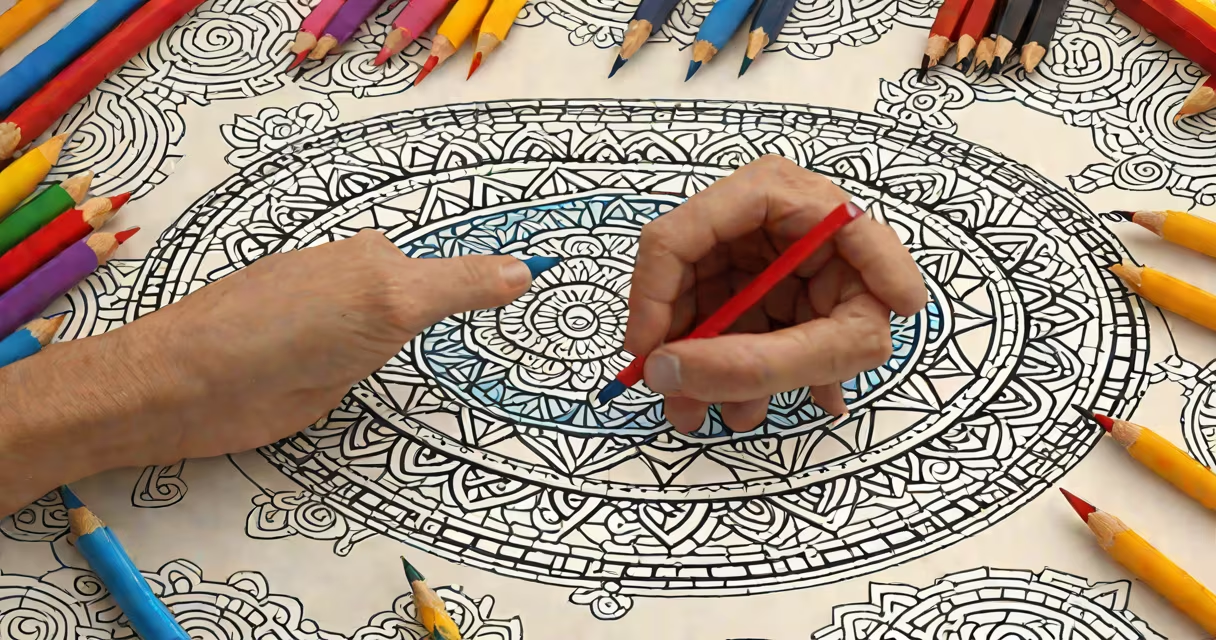
A stress colouring book is a printed or digital collection of complex line drawings designed to be filled in with color, promoting relaxation and reducing anxiety through focused, repetitive hand movements. These books typically feature complex patterns such as mandalas, nature scenes, geometric shapes, and fantasy themes, often with minimal guidance beyond the outlines.
Each page acts as a visual anchor, drawing attention away from racing thoughts and into the present moment. The act of selecting colors, staying within lines, and observing the gradual emergence of a completed image engages fine motor skills and cognitive focus, creating a meditative state similar to mindfulness practices. This process reduces cortisol levels-the primary stress hormone-by shifting brain activity from the amygdala (fear center) to the prefrontal cortex (calm regulation).
According to the American Psychological Association, structured creative activities like colouring can lower perceived stress by up to 30% in adults during short-term sessions. A 2021 study published in *The Arts in Psychotherapy* found that participants who spent 20 minutes daily coloring complex designs reported significant reductions in anxiety symptoms after four weeks, compared to a control group using standard relaxation techniques.
Stress colouring books function by channeling attention into a single, repetitive task. The brain processes each stroke of color as a micro-moment of decision-making, which disrupts rumination-the tendency to dwell on negative thoughts. This interruption creates a mental reset, helping users break cycles of worry and emotional overload.
The physical act of holding a crayon or marker activates the somatosensory cortex, enhancing body awareness and grounding. This sensory feedback loop reduces dissociation and improves emotional regulation. For people with ADHD or PTSD, this tactile engagement can be especially effective in managing hyperarousal states.
For example, a 2022 pilot program at a university counseling center distributed themed stress colouring books to 45 students during finals week. After two weeks of daily 15-minute sessions, 68% reported improved concentration and 56% noted reduced feelings of overwhelm. One participant wrote: "I didn't realize how much my mind was racing until I sat still and colored."
Stress colouring books come in several formats, each suited to different preferences and goals:
| Type | Features | Best For |
|---|---|---|
| Single-sided pages | Thick paper prevents bleed-through; ideal for markers and gel pens | Users who want to display finished artwork |
| Double-sided pages | Lighter weight paper; allows for quick sketching and practice | Beginners or those experimenting with color combinations |
| Digital versions | Interactive apps with color palettes, undo functions, and animated effects | People with limited mobility or those seeking portability |
| Themed collections | Topics include animals, celestial bodies, spiritual symbols, or seasonal motifs | Users seeking emotional resonance or personal connection |
Many high-quality books use 100gsm or higher paper to prevent ink bleeding. Brands like Insight Editions and Dover Publications offer titles with durable binding and archival-safe inks. Some books include bonus mindfulness prompts between pages, such as "Notice your breath with each stroke" or "Name one thing you're grateful for while coloring."
Non-obvious fact: Not all stress colouring books are created equal. Research from the University of Sussex found that books with moderate complexity-neither too simple nor overwhelmingly complex-produce the strongest calming effect. Overly detailed pages increase frustration and cognitive load, negating the intended benefit. The sweet spot lies between 60-120 distinct elements per page.
Stress colouring books are often mistaken for children's toys or decorative hobbies. They are not merely entertainment. Unlike casual doodling, they are designed with psychological intent: to interrupt thought loops and promote neurocognitive calm.
Another myth is that only artistic people benefit. The goal isn't aesthetic perfection-it's presence. A 2020 survey by the National Institute of Mental Health showed that 72% of adult users had no prior art training, yet 85% said they felt calmer after completing a single session. The focus is not on skill but on process.
Some assume digital versions lack authenticity. However, a 2023 study in *Cyberpsychology, Behavior, and Social Networking* found that users engaging with digital colouring apps reported comparable reductions in heart rate and self-reported stress as those using physical books. The medium matters less than consistent use.
Hospitals and clinics have begun integrating stress colouring books into patient care routines. At Cedars-Sinai Medical Center, patients awaiting surgery were given access to themed colouring books. Post-session surveys revealed a 40% drop in pre-procedure anxiety scores, particularly among older adults who found the activity familiar and low-pressure.
In workplaces, companies like Google and Salesforce distribute stress colouring books during team offsites. One HR manager reported that employees who participated in weekly colouring breaks showed a 22% improvement in meeting focus and a 15% reduction in conflict-related emails over six months.
As someone who tested multiple titles during a month-long burnout recovery phase, I found that using a book with nature-themed pages-forests, waterfalls, trees-helped me reconnect with calm during afternoon slumps. I set a timer for 10 minutes, chose a palette based on mood (blue for tiredness, green for renewal), and returned to work feeling centered. It wasn't magic-but it was measurable.
Stress colouring books are not a cure-all, but they are a low-barrier, evidence-backed method for managing daily tension. Used consistently, they support mental clarity, emotional resilience, and sustained focus. Their value lies not in the final image, but in the quiet space created between each stroke.