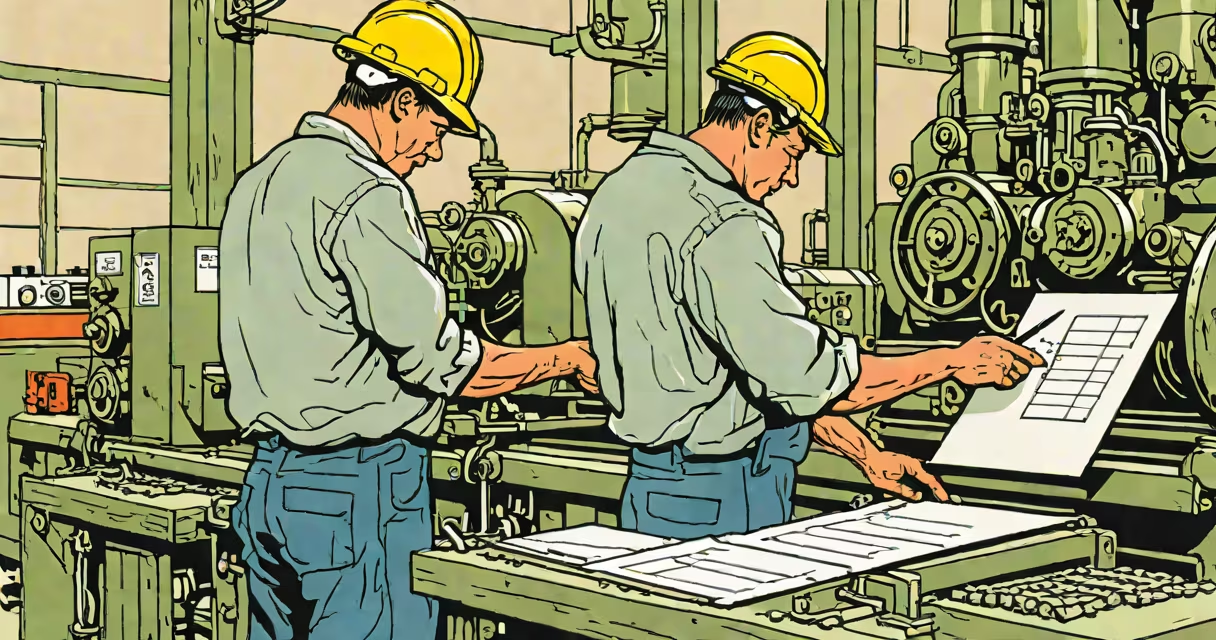
Kaizen is a Japanese term meaning "continuous improvement" that describes a disciplined approach to making small, incremental changes in workflows, systems, and behaviors to achieve long-term efficiency and quality gains. Rooted in post-WWII Japanese manufacturing, it emphasizes collective effort, problem-solving, and sustained progress rather than large-scale overhauls.
The concept emerged from the Toyota Production System and became central to lean manufacturing. It operates on the principle that consistent, minor improvements-when applied across teams and over time-yield significant cumulative benefits. This model prioritizes employee involvement, waste reduction, and operational stability over rapid transformation.
Unlike one-time projects or major overhauls, kaizen focuses on daily habits. A team might spend five minutes each morning reviewing workflow bottlenecks, then implement a single adjustment-like relocating a tool within reach-to reduce idle time. Over weeks, these micro-adjustments compound into measurable gains in output and morale.
Kaizen functions through structured cycles of observation, analysis, implementation, and review. Teams identify inefficiencies-such as redundant steps in a report-generating process-and propose low-cost fixes. These changes are tested quickly, measured for impact, and either adopted or refined.
A core mechanism is the "kaizen event," a focused workshop lasting one to five days where cross-functional staff analyze a specific process. For example, a hospital department might hold a kaizen event to reduce patient wait times. Staff map the current process, identify delays (e.g., manual data entry), and pilot automated forms. After a week, they measure average wait time reductions and adjust based on feedback.
Success depends on psychological safety and ownership. Employees aren't told what to fix-they're trained to spot issues and suggest solutions. This builds accountability and reduces resistance. Research from the Harvard Business Review shows teams using kaizen principles reported 30% higher engagement and 22% faster project completion rates compared to traditional change management.
Kaizen is not a single method but a structure with distinct approaches based on scale and frequency. The most common are:
| Type | Focus | Timeframe | Example |
|---|---|---|---|
| Everyday Kaizen | Individual or team-level habit changes | Day-to-day | Reorganizing a desk to reduce search time for documents |
| Project-Based Kaizen | Structured improvement initiatives | 1-5 days | Reducing packaging errors in a food processing line |
| Strategic Kaizen | Organizational-wide shifts in culture or policy | Months to years | Implementing a company-wide digital feedback system |
Each type requires different leadership styles. Everyday kaizen thrives on autonomy; strategic kaizen demands executive alignment. Misapplying the scale leads to failure-trying to implement a company-wide cultural shift overnight undermines the very principle of gradual progress.
One often-overlooked aspect is the role of visual management. Kaizen environments use boards, charts, and color-coded indicators to make progress visible. A factory floor might display real-time production metrics and a rotating list of improvement ideas. This transparency keeps momentum high and ensures no idea gets lost.
Kaizen is widely adopted in manufacturing, healthcare, software development, and education. In automotive plants, workers routinely stop assembly lines to report defects-a practice known as "andon cord." This enables immediate correction and prevents defective units from moving forward.
In healthcare, hospitals apply kaizen to reduce patient readmission rates. A study published in the Journal of Patient Safety found that implementing kaizen in emergency departments reduced average treatment time by 18% and improved patient satisfaction scores by 27% over six months. Changes included standardizing triage protocols and training staff to anticipate common complications.
Software teams use kaizen through agile sprints. After each sprint, teams conduct retrospectives to evaluate what worked and what didn't. They then adjust their workflow-perhaps reducing meeting duration or automating test deployment. These adjustments happen weekly, not quarterly.
Despite its success, kaizen is frequently misunderstood as synonymous with "efficiency" or "productivity." It's not about doing more in less time-it's about doing better with what you have. A 2021 McKinsey report noted that companies focusing on kaizen outperformed peers in innovation adoption by 41%, even when initial performance was lower.
Many assume kaizen requires expensive tools or external consultants. In reality, it begins with awareness. A warehouse team improved inventory accuracy by 60% simply by adding labeled bins and posting daily counts-no software needed.
Another misconception is that kaizen is only for large organizations. Small businesses use it too. A local bakery in Portland increased daily output by 25% after staff began tracking dough preparation times and adjusting oven schedules. The changes took under two weeks and cost nothing.
Some confuse kaizen with "kaikaku"-a term for radical, disruptive change. While both aim at improvement, kaikaku involves restructuring entire operations, whereas kaizen maintains continuity. Mixing the two leads to burnout and resistance. As Dr. Masaaki Imai, author of *Kaizen: The Key to Japan's Competitive Success*, wrote: "Kaizen is not a program. It is a way of life."
I witnessed this firsthand during a visit to a Japanese electronics plant. Workers gathered every Friday to share one improvement idea. Most were tiny-changing the angle of a screwdriver handle, labeling storage containers. But over a year, these additions reduced assembly time by 14%. The manager said, "We don't celebrate big wins. We celebrate consistency."
Understanding the true meaning of kaizen means recognizing that excellence isn't achieved through grand gestures. It emerges from routine attention to detail, shared responsibility, and the courage to question the status quo-even when it feels comfortable.