Berkshire Hathaway is a multinational conglomerate that owns and operates many businesses across industries including insurance, railroads, energy, manufacturing, and consumer goods. It functions as a holding company, managing its portfolio through subsidiaries rather than direct operations.
The company was founded in 1839 as a textile manufacturer but evolved into a financial powerhouse under Warren Buffett's leadership, beginning in 1965. Today, Berkshire Hathaway does not produce goods itself-it acquires and manages companies that do. Its core function is capital allocation: identifying high-quality businesses, purchasing them at fair prices, and allowing them to operate autonomously under local management.
Buffett famously described Berkshire as "a collection of excellent businesses," not a single enterprise. This structure allows Berkshire to diversify risk while maintaining operational flexibility across sectors. The company generates most of its revenue through earnings from its subsidiaries, which are then reinvested or returned to shareholders via dividends and buybacks.
Berkshire Hathaway operates using a decentralized model. Each subsidiary runs independently under its own leadership, reporting only to Berkshire's corporate office in Omaha, Nebraska. This autonomy reduces bureaucratic friction and preserves the expertise of individual business leaders.
For example, BNSF Railway, acquired in 2010 for $34 billion, operates as a standalone freight carrier with its own executives, budgets, and strategic plans. Berkshire provides capital and oversight but does not micromanage daily decisions. This model has proven effective: BNSF reported $12.5 billion in revenue in 2023 and remains one of the largest freight railroads in North America.
Capital is funneled into acquisitions based on three principles: durable competitive advantage (a "moat"), capable management, and a sensible purchase price. Berkshire avoids speculative bets and focuses on businesses with predictable cash flows. This strategy has led to consistent growth in book value-$556 billion as of December 2023-according to the berkshire hathaway book value report.
Berkshire Hathaway owns over 90 operating subsidiaries across 17 industries. These include both large-scale enterprises and niche players. The following table outlines major holdings by sector and estimated annual revenue:
| Industry | Key Subsidiary | Annual Revenue (2023) | Ownership Type |
|---|---|---|---|
| Railroads | BNSF Railway | $12.5 billion | Wholly owned |
| Insurance | GEICO | $29.6 billion | Wholly owned |
| Energy | MidAmerican Energy Holdings | $5.8 billion | Wholly owned |
| Manufacturing | Marmon Group | $7.3 billion | Wholly owned |
| Consumer Goods | See's Candies | $380 million | Wholly owned |
These subsidiaries generate profits that flow back to Berkshire's central treasury. Unlike many corporations that pay out dividends, Berkshire retains earnings to fund further acquisitions or share buybacks. In 2023, Berkshire repurchased $11.8 billion in its own Class A shares, reducing outstanding shares by 0.5%.
A lesser-known fact: Berkshire owns significant stakes in publicly traded companies-not just through subsidiaries. As of 2023, it held 10% of Apple Inc., valued at $125 billion. This investment is managed separately from its operating businesses and reflects Buffett's belief in long-term market leadership.
Berkshire Hathaway is used primarily as a vehicle for long-term wealth preservation and capital deployment. Institutional investors, pension funds, and individual shareholders alike view it as a proxy for stable, diversified growth. Its stock (BRK.A and BRK.B) trades at a premium due to its reputation for low volatility and consistent returns.
Its use extends beyond finance. Berkshire's subsidiaries provide essential services: BNSF moves 1.2 million rail cars annually; GEICO insures 20 million vehicles; MidAmerican supplies electricity to 2.5 million homes. These operations support national infrastructure and economic stability.
Many assume Berkshire Hathaway is a hedge fund or actively trades stocks. It is not. The company holds long-term positions and rarely sells assets unless they lose their competitive edge or the price becomes unreasonable. Buffett has stated he views Berkshire as "a permanent capital vehicle," not a trading entity.
Another misconception: Berkshire is a "one-size-fits-all" investment. It is not. Its performance depends on macroeconomic conditions and the health of its underlying businesses. During the 2008 financial crisis, Berkshire's insurance units faced losses, but the company weathered the downturn due to strong capital reserves and conservative underwriting.
Finally, people often confuse Berkshire's structure with pure holding companies like General Electric (before its restructuring). But Berkshire differs in ownership philosophy: it doesn't sell off divisions for profit. Instead, it seeks enduring value. Buffett once said, "Our favorite holding period is forever."
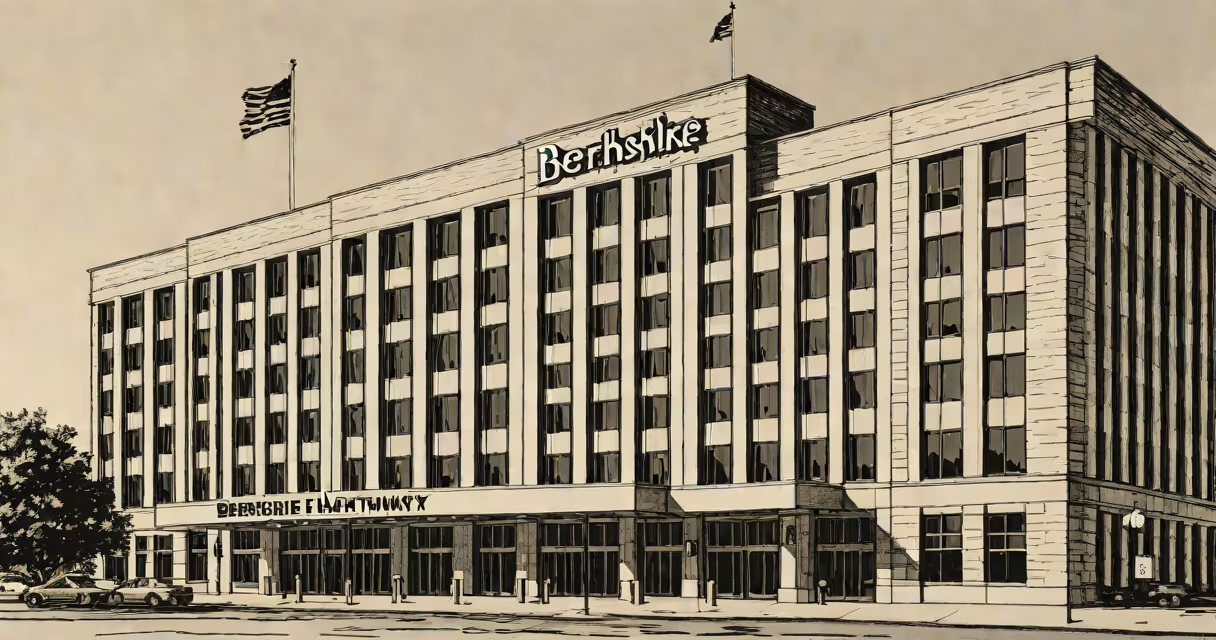
I visited Berkshire Hathaway's headquarters in Omaha in 2022 during the annual shareholder meeting. The building is unassuming-a brick structure with a green roof. Inside, employees work quietly. There is no executive set or private offices. Buffett's desk is in a corner, facing a window. The culture is one of humility and discipline.
That atmosphere reflects the company's approach. Take See's Candies: a small, family-run confectioner acquired in 1972. It still operates under the same branding, uses the same recipes, and employs the same staff. Berkshire didn't rebrand it or change its processes. The result? See's continues to earn $100 million annually in profit, reinvested into the business.
This example illustrates Berkshire Hathaway's core principle: buy great businesses, leave them alone, and trust management. It's not about constant innovation-it's about sustainable results.
Berkshire Hathaway what does it do? It builds and maintains a network of high-performing, independent companies, guided by long-term thinking and sound capital discipline. The company's success lies not in flashy strategies but in patience, integrity, and a commitment to quality.