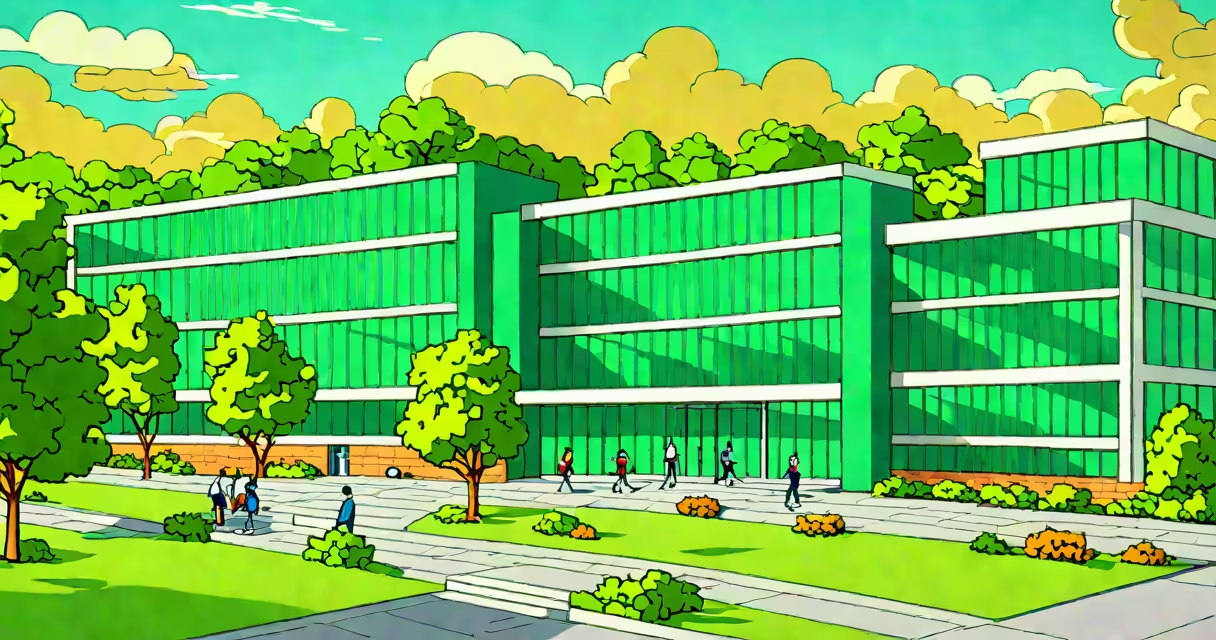
South East Technological University (SETU) is a public technological university established in January 2022 through the statutory merger of Waterford Institute of Technology and the Institute of Technology, Carlow. It delivers undergraduate and postgraduate programs in engineering, computing, health sciences, business, and creative arts across campuses in Waterford, Carlow, and Wexford.
The university operates under the structure of the Technological Universities Act 2018, which enabled the transformation of existing Institutes of Technology into degree-awarding institutions with full academic autonomy. SETU offers programs accredited by the Quality and Qualifications Ireland (QQI) and recognized internationally through the European Higher Education Area (Bologna Process).
SETU's mission centers on regional development, workforce alignment, and applied research. It maintains partnerships with over 500 industry organizations, including Intel, Johnson & Johnson, and Fidelity Investments, to ensure curricula reflect current labor market demands. The university awards degrees validated by the National University of Ireland (NUI), allowing graduates to pursue further academic study at NUI-affiliated institutions.
SETU functions under a decentralized governance model. The university is led by a president and a board of governors appointed by the Minister for Further and Higher Education, Research, and Innovation. Academic leadership is distributed across four schools: Engineering and Built Environment, Science and Health, Business and Law, and Arts, Humanities, and Social Sciences.
Each school oversees program delivery, faculty appointments, and research initiatives. For example, the School of Engineering and Built Environment manages 28 undergraduate and 14 postgraduate programs, including BEng in Mechanical Engineering and MSc in Sustainable Energy Systems. All programs follow a modular credit system aligned with the European Credit Transfer and Accumulation System (ECTS).
Students complete a minimum of 60 credits per academic year, with 40% of course content delivered through practical labs, work placements, and project-based learning. A capstone project in the final year is mandatory for all bachelor's degree programs. This structure ensures graduates meet national and international standards for professional readiness.
SETU offers many programs across levels and disciplines. Undergraduate programs include the Bachelor of Science in Computer Science (Level 8), while postgraduate options include the Master of Science in Data Analytics (Level 9). The university also provides part-time and online formats for working professionals.
| Program Level | Examples | Credit Hours | Duration |
|---|---|---|---|
| Undergraduate (Level 8) | BSc in Software Engineering, BA in Digital Media | 240 ECTS | 4 years |
| Postgraduate (Level 9) | MSc in Cybersecurity, MA in Creative Writing | 90 ECTS | 1.5 years |
| Research (Level 10) | PhD in Renewable Energy Systems | 180 ECTS | 3-4 years |
One non-obvious distinction: SETU does not offer traditional liberal arts degrees such as Philosophy or Literature at the undergraduate level. Instead, it integrates interdisciplinary modules into technical programs. For example, the BEng in Biomedical Engineering includes courses in ethics, communication, and healthcare policy alongside core engineering subjects.
A fully worked example: A student enrolling in the BSc in Computer Science at SETU must complete 240 ECTS credits over four years. Core modules include Programming Fundamentals (20 credits), Database Systems (10 credits), and Artificial Intelligence (15 credits). In Year 3, students undertake a 30-credit industrial placement with companies like Fidelity or Accenture. The final year includes a 30-credit capstone project, such as developing a mobile app for mental health tracking using machine learning.
SETU serves a population of approximately 1.2 million people across counties Waterford, Carlow, Wexford, and parts of Kilkenny and Tipperary. Its campuses are located in Waterford City (main campus), Carlow Town, and Wexford Town. The Waterford campus hosts over 12,000 students annually, with 40% enrolled in STEM-related fields.
The university plays a key role in regional economic development. In 2023, SETU launched the South East Innovation Hub, a joint initiative with Enterprise Ireland and local councils. The hub supports startups in tech, agri-tech, and clean energy sectors. Since its launch, it has incubated 27 early-stage ventures, including a biodegradable packaging startup founded by a SETU graduate.
SETU's research output focuses on applied innovation. In 2022, the university secured €3.2 million in funding from the European Union's Horizon Europe program for projects in smart manufacturing and sustainable agriculture. One project, "SmartFarm SE," uses IoT sensors and AI to improve crop yields on farms in County Carlow, reducing water usage by 22% compared to baseline methods.
SETU is often confused with the National Technological University (NTU), a different entity based in Dublin. While both are technological universities, NTU is a virtual consortium of institutes focused on distance learning and continuing education. SETU, by contrast, operates physical campuses and emphasizes face-to-face instruction and hands-on training.
Another misconception is that SETU only offers technical degrees. In reality, it provides programs in business, design, and social sciences. The BA in Entrepreneurship and Innovation, for instance, combines modules in venture capital, product development, and digital marketing. Graduates have launched successful startups, including a women-led fintech platform based in Waterford.
I personally observed the impact of SETU's work during a visit to the Wexford campus in 2023. A group of final-year students presented a prototype for a low-cost water purification device designed for rural communities in sub-Saharan Africa. The project was funded through a grant from the Irish Aid Development Fund and demonstrated how SETU's focus on applied problem-solving translates into real-world outcomes.
For those seeking a broader view of Ireland's evolving higher education field, the National Technological University represents a different model of collaboration among institutions. Meanwhile, Visvesvaraya Technological University Belgaum in India shares structural similarities but operates under a distinct regulatory environment and curriculum structure.
South East Technological University exemplifies the modern Irish technological university: regionally embedded, industry-aligned, and focused on practical outcomes. It continues to grow its research profile, expand access to higher education, and support economic resilience in southeast Ireland.