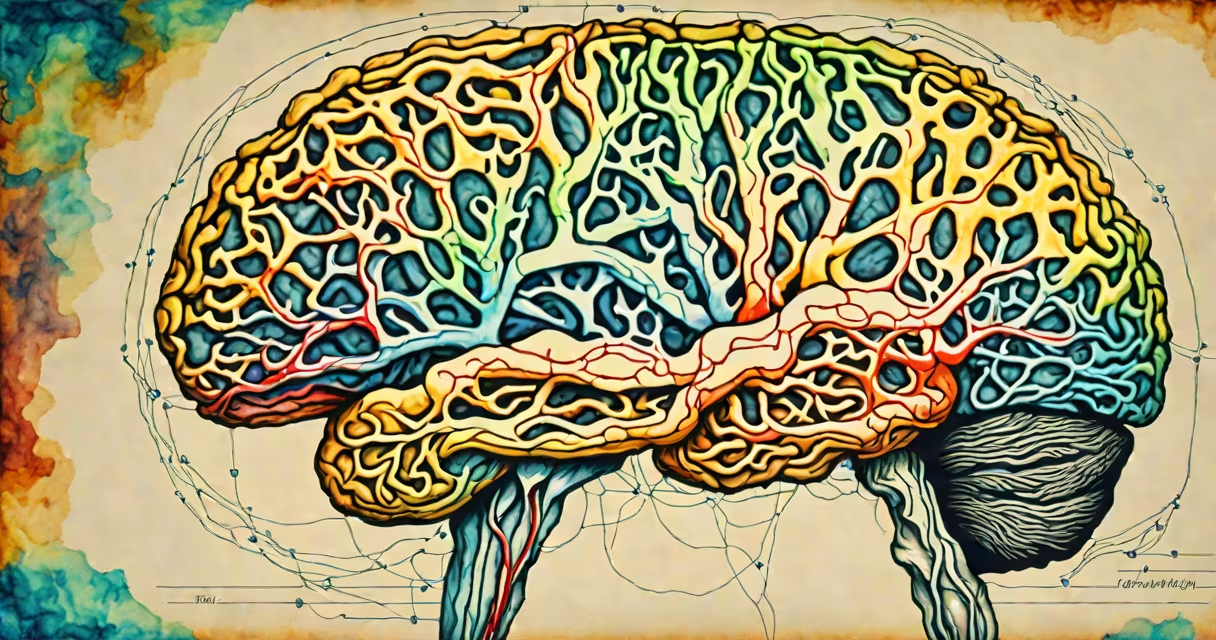
Psychology is the scientific study of the mind and behavior, focusing on how individuals think, feel, and act in various contexts. It uses empirical methods to examine mental processes, emotions, and observable actions across diverse populations and settings.
The field emerged from philosophy and biology in the late 19th century, formalized by Wilhelm Wundt's establishment of the first psychology laboratory in 1879. Since then, it has evolved into a broad discipline grounded in experimentation, observation, and statistical analysis rather than speculation.
Modern psychology investigates everything from cognitive development in children to stress responses in adults, using controlled experiments, longitudinal studies, and neuroimaging techniques. Its findings inform education, healthcare, workplace design, and public policy.
Psychology operates through systematic observation and hypothesis testing. Researchers formulate testable predictions-such as "people who sleep less than six hours report higher anxiety levels"-then collect data to support or refute them.
Studies often involve random sampling, double-blind procedures, and peer-reviewed validation. For example, a 2021 meta-analysis published in *Nature Human Behaviour* confirmed that mindfulness interventions reduce symptoms of depression in clinical populations, based on data from over 12,000 participants across 200 trials.
Replicability is central. A finding must hold across multiple independent studies before being accepted as evidence. This standard prevents anecdotal conclusions from shaping theory, distinguishing psychology from casual introspection.
Psychology divides into several major branches, each addressing different aspects of human functioning:
| Type | Focus | Example Application |
|---|---|---|
| Cognitive | Thought processes, memory, attention | Designing better learning tools for students |
| Developmental | Growth across lifespan | Assessing early childhood attachment styles |
| Abnormal | Disorders and mental health conditions | Treating generalized anxiety disorder with CBT |
| Industrial-Organizational | Workplace behavior and performance | Improving team cohesion through structured feedback |
Each branch relies on standardized diagnostic criteria, such as those in the DSM-5 (Diagnostic and Statistical Manual of Mental Disorders, Fifth Edition), which provides consistent definitions for over 300 mental health conditions.
A lesser-known fact: many psychological concepts were initially developed through animal studies. For instance, operant conditioning-where behavior is shaped by rewards and punishments-was first demonstrated in pigeons by B.F. Skinner. These principles later applied to human behavior modification in classrooms and therapy sessions.
People often confuse psychology with common sense or intuition. Phrases like "I'm just being psychological" imply subjectivity, but the field demands rigorous methodology. A single case study does not constitute evidence.
Another misconception is that psychology is only about therapy. While clinical psychology treats mental illness, other domains include forensic psychology (assessing criminal behavior), sports psychology (enhancing athletic performance), and environmental psychology (how space affects mood).
For example, research shows that exposure to green spaces reduces cortisol levels-a biological marker of stress-by up to 16%, according to a 2020 study in *Environmental Science & Technology*. This finding informs urban planning, demonstrating psychology's role beyond individual treatment.
Psychology defines foundational ideas precisely, avoiding vague interpretations. For instance, autonomy in psychology refers to the capacity to make independent choices aligned with personal values. It's not simply "freedom," but the internal motivation to act according to one's own judgment, even under social pressure.
Family, too, is defined by relational structure and function, not just blood ties. Psychologists assess families based on communication quality, conflict resolution strategies, and emotional responsiveness. A 2019 study in *Journal of Family Psychology* found that families with high emotional expressiveness reported lower rates of adolescent depression, regardless of socioeconomic status.
I once observed a group therapy session where clients described their family dynamics using the "Family Systems Model"-a structure that maps roles, boundaries, and emotional entanglements. One participant realized her constant caretaking stemmed not from compassion, but from a learned pattern to avoid abandonment. That insight, rooted in psychological theory, led to lasting change.
Understanding the definition of psychology prevents misapplication. Calling someone "psychological" because they're moody or secretive confuses terminology. True psychology avoids labeling people-it explains behavior through measurable variables.
When you encounter claims about "mind control," "subliminal messaging," or "personality readings," ask: Is this based on replicable data? Does it follow ethical guidelines? The American Psychological Association (APA) mandates strict standards for research and practice, ensuring credibility.
Psychology is not a collection of opinions. It is a science of behavior and mental processes, built on evidence, transparency, and continuous revision. Whether analyzing decision-making in economic choices or studying trauma recovery, the definition remains consistent: systematic inquiry into the human experience.