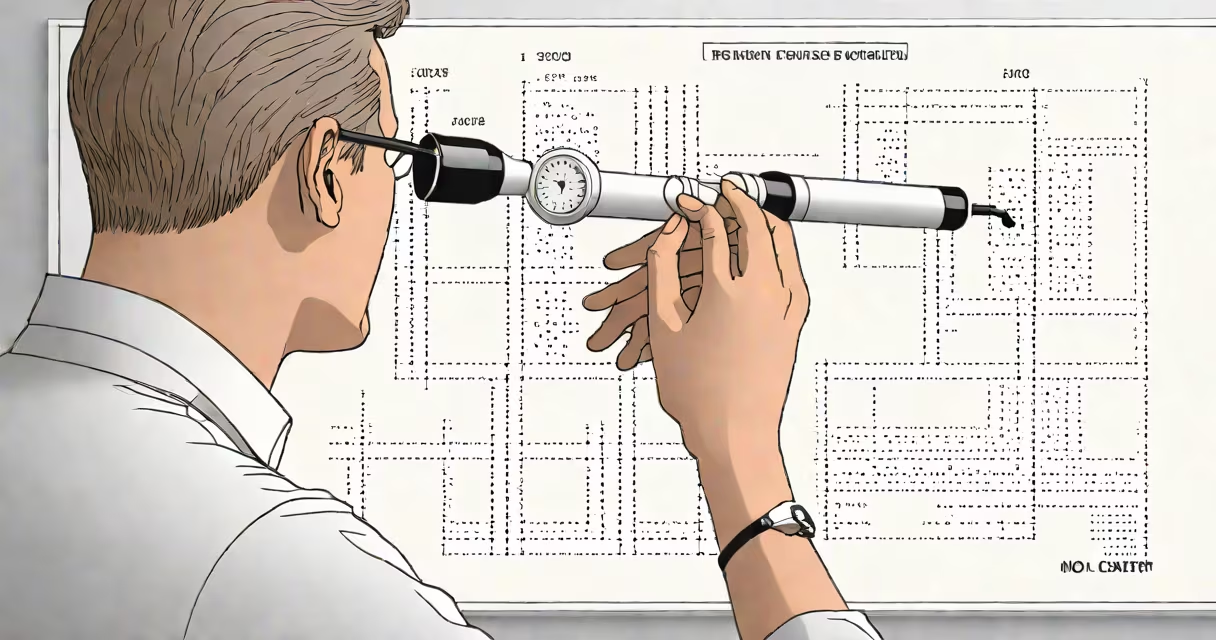
Eye exam results use a fraction like 20/20 to describe visual acuity-the sharpness of vision at a distance of 20 feet. The first number indicates the testing distance; the second shows the smallest line a person can read accurately. A result of 20/20 means normal vision at that distance.
Visual acuity is measured using a Snellen chart, a standardized tool with rows of letters decreasing in size. During a test, you stand 20 feet from the chart and read each line aloud. The smallest line you can read correctly determines your vision score. For example, 20/40 means you see at 20 feet what a person with normal vision sees at 40 feet.
These numbers reflect how well your eyes focus light onto the retina. They don't measure eye health but indicate how you see objects at a distance. A score below 20/20 may suggest nearsightedness, farsightedness, or astigmatism-conditions corrected with glasses, contact lenses, or surgery.
During a routine eye exam, an optometrist or ophthalmologist uses a phoropter-a device with interchangeable lenses-to fine-tune your prescription. You look through different lens combinations while reading the Snellen chart. The goal is to find the lens power that gives you the clearest vision.
For instance, if you read the 20/20 line but struggle with the 20/15 line, your vision is 20/20. If you can only read up to the 20/40 line, your vision is 20/40. This process identifies refractive errors: myopia (nearsightedness), hyperopia (farsightedness), and astigmatism (irregular corneal curvature).
Some clinics use automated refractors to estimate your prescription quickly. These machines shine light into your eyes and analyze how it reflects off the retina. While faster, they're less precise than manual testing and still require confirmation by a professional.
Standard vision categories help patients understand their results. The following table outlines typical ranges and what they mean clinically.
| Vision Number | Meaning | Typical Cause |
|---|---|---|
| 20/20 | Normal visual acuity | No refractive error |
| 20/30 | Slightly reduced clarity | Mild nearsightedness or astigmatism |
| 20/40 | Below average; may affect driving | Needs corrective lenses |
| 20/60 | Significant impairment | Requires glasses or contacts |
| 20/200 or worse | Legally blind | Severe vision loss |
According to the American Optometric Association, 20/20 is considered normal, but many people achieve better than 20/20 with corrective lenses. Some individuals have 20/15 vision, meaning they can see at 20 feet what most people need to be 15 feet away to see.
A 20/200 result is legally defined as blindness in the United States. The National Federation of the Blind notes that this threshold allows states to determine eligibility for disability benefits and driver's license exemptions.
Numbers like 20/20 don't capture peripheral vision, color perception, depth awareness, or contrast sensitivity. Two people with identical acuity scores may experience vision differently in real-world settings.
For example, someone with 20/20 vision may still struggle to see road signs in low light due to poor contrast sensitivity-a condition often linked to early cataracts or glaucoma. A 2021 study published in *Ophthalmology* found that nearly 40% of patients with early-stage glaucoma had normal Snellen acuity but impaired contrast detection.
Vision numbers don't reflect eye strain, dryness, or double vision-symptoms that may require treatment even if the acuity score is perfect. A patient with 20/20 vision who experiences frequent headaches during screen use may benefit from blue-light filters or vision therapy, despite normal test results.
Consider a 35-year-old software developer with 20/15 vision in both eyes. Their eye exam shows no refractive error. However, they report eye fatigue after two hours of screen work. A follow-up test reveals reduced blink rate and mild dry eye syndrome-issues not detected by the Snellen chart alone.
Another common confusion: equating 20/20 with perfect vision. The term "perfect" is misleading. 20/20 only measures central vision clarity at a fixed distance. It doesn't account for night vision, motion detection, or eye coordination. A pilot with 20/20 vision may fail a medical exam due to poor peripheral vision or depth perception.
Even the Snellen chart has limitations. Its design assumes uniform lighting and consistent letter spacing. A 2019 study in *Journal of Vision* showed that letter recognition accuracy drops under dim lighting-even when the Snellen score remains unchanged.
If your vision number changes over time, especially if it worsens from 20/20 to 20/40, consult an eye doctor. Sudden shifts may signal underlying conditions like diabetic retinopathy or macular degeneration.
Children should have vision screenings by age 3. The American Academy of Pediatrics recommends screening for amblyopia (lazy eye) and strabismus (misaligned eyes) before school entry. Early detection prevents permanent vision loss.
For adults over 40, annual exams are advised. Age-related changes such as presbyopia (difficulty focusing on close objects) typically begin around age 40 and progress slowly. Regular monitoring ensures timely intervention.
I once observed a patient with 20/20 vision who reported difficulty reading small print. Upon further testing, we discovered high-order aberrations-tiny distortions in the eye's optical system not picked up by standard refraction. Corrective lenses tailored to those irregularities restored comfortable near vision.