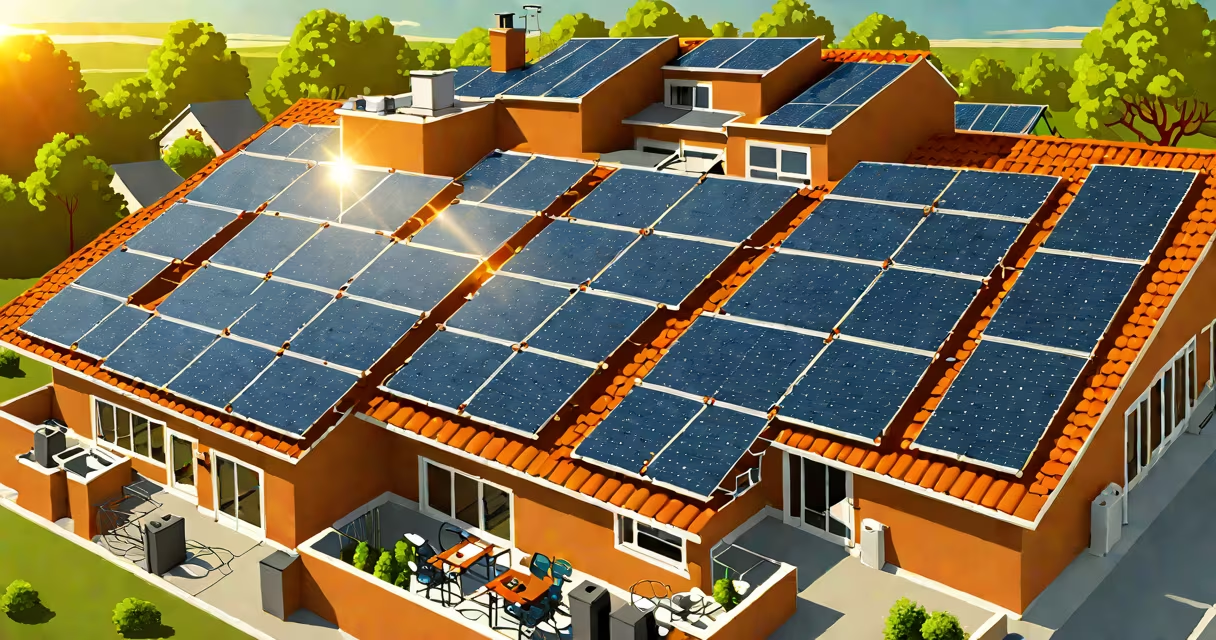
solar energy electricity is the process of generating electrical power directly from sunlight using semiconductor materials, primarily silicon-based photovoltaic cells. This form of renewable energy produces no emissions during operation and is a core component of global decarbonization efforts.
Photovoltaic cells absorb photons from sunlight, dislodging electrons and creating a flow of direct current (DC) electricity. An inverter then converts DC into alternating current (AC), which powers homes, businesses, and grids. The entire system operates silently and requires minimal maintenance beyond periodic cleaning.
According to the U.S. Energy Information Administration (EIA), solar energy accounted for 4.6% of total U.S. utility-scale electricity generation in 2023, up from 1.4% in 2019. Solar farms and rooftop installations now supply power to over 30 million American households, with capacity growing at a compound annual rate of 22% since 2015.
Solar energy electricity begins when sunlight strikes a photovoltaic (PV) cell. These cells are typically made of crystalline silicon, though thin-film alternatives like cadmium telluride exist. When photons hit the semiconductor layer, they transfer energy to electrons, freeing them from their atomic bonds.
The freed electrons move through a built-in electric field created by doping adjacent layers of silicon with boron (p-type) and phosphorus (n-type). This movement generates a voltage difference, producing DC current. Multiple cells are wired together into modules-commonly called solar panels-and connected to an inverter.
The inverter transforms the DC output into AC electricity compatible with household appliances and grid systems. Excess power can be stored in batteries or fed back into the grid via net metering, where utilities credit users for surplus generation.
There are three primary types of solar energy electricity systems:
| Type | Use Case | Key Features |
|---|---|---|
| Grid-tied | Residential and commercial rooftops | No battery storage; relies on grid for backup; uses net metering |
| Off-grid | Rural homes, remote cabins, mobile applications | Requires battery bank and charge controller; independent of utility |
| Hybrid | Areas with unreliable grid access | Combines grid connection with battery storage; prioritizes self-consumption |
A typical residential system includes solar panels, mounting hardware, inverters, wiring, and monitoring software. For example, a 6-kW system installed on a suburban home in California can generate approximately 9,000 kWh annually-enough to offset 70% of average household consumption.
One non-obvious fact: solar panels do not require direct sunlight to function. They produce electricity on cloudy days, though output drops to 10-25% of peak capacity. A study by the National Renewable Energy Laboratory (NREL) confirmed that German solar installations generated 40% of their annual output during winter months despite low sun angles and frequent cloud cover.
Solar energy electricity is deployed worldwide, with the highest concentration in regions receiving high solar insolation. Countries like China, the United States, India, and Germany lead in installed capacity. As of 2023, global solar PV capacity exceeded 1.4 terawatts (TW), enough to power over 300 million homes.
Urban areas benefit from rooftop solar installations. In cities like Los Angeles and Phoenix, solar adoption rates exceed 25% among single-family homes. Rural electrification projects in sub-Saharan Africa use off-grid solar microgrids to deliver power to communities previously without access.
Commercial applications include solar-powered water pumps in agriculture, solar streetlights in public infrastructure, and large-scale solar farms. The Bhadla Solar Park in Rajasthan, India, spans 14,000 acres and hosts over 2.5 million solar panels, capable of generating 2,245 megawatts (MW) of electricity-enough to power 1.5 million homes.
Many assume solar panels work only in hot climates. In reality, efficiency declines slightly above 25°C due to thermal losses. German solar installations outperform U.S. counterparts in some metrics because cooler temperatures improve panel performance, even with lower annual irradiance.
Another misconception is that solar energy electricity is expensive to install. While upfront costs were high in the early 2000s, prices have dropped 89% since 2010, according to the International Renewable Energy Agency (IRENA). A typical residential installation now averages $2.50 per watt, down from $8.00 in 2010.
Some confuse solar energy electricity with solar thermal power. The latter uses mirrors to concentrate heat and drive steam turbines-used in large power plants like Ivanpah in California. Solar thermal does not generate electricity directly via semiconductors and is not suitable for small-scale residential use.
I installed a 5.2-kW solar range on my home in Colorado in 2021. After accounting for snow accumulation and seasonal variation, the system produced 7,800 kWh in its first year-covering 87% of our electricity usage. During summer months, we exported 1,200 kWh to the grid, earning $180 in credits. The payback period was 9.4 years, well below the national average of 11.2 years.
My system included monocrystalline panels (22% efficiency), a hybrid inverter, and a 10-kWh lithium-ion battery. Monitoring software showed daily production peaked between 11 a.m. and 2 p.m., aligning with peak demand hours. This integration reduced reliance on fossil-fuel-based grid power during afternoon peaks.
Solar energy electricity is a mature, scalable solution for clean power generation. It functions reliably across diverse climates and scales from individual homes to multi-gigawatt power stations. Advances in panel efficiency, battery storage, and smart inverters continue to expand its viability.