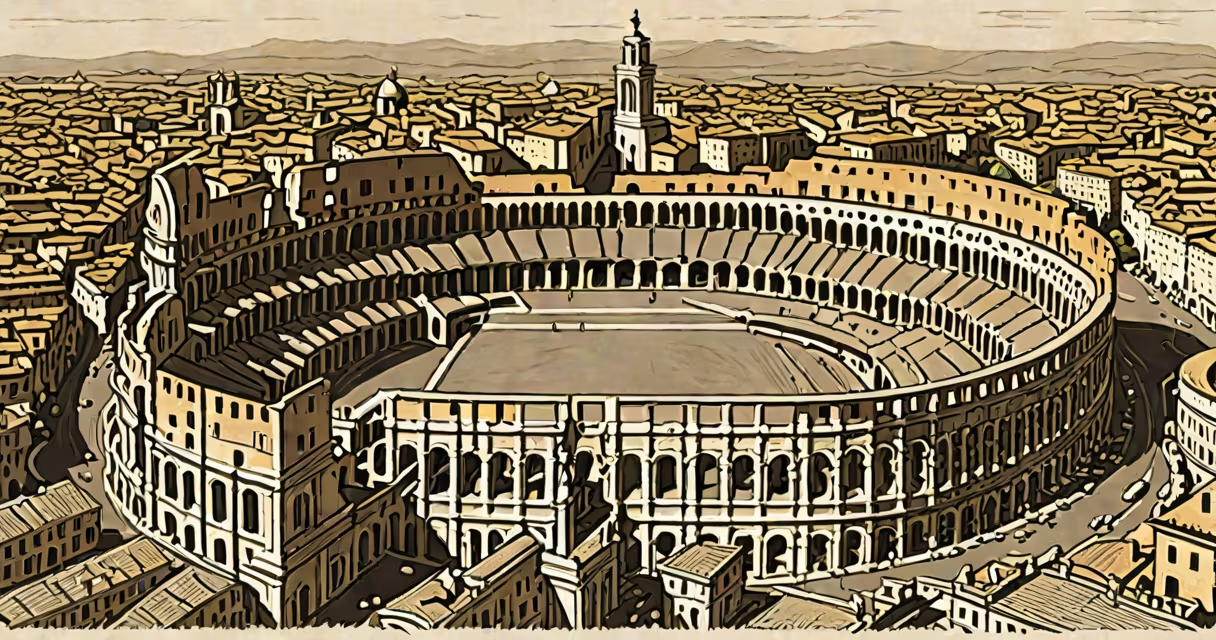
Rome tourist attractions include ancient monuments like the Colosseum, religious sites such as St. Peter's Basilica, and archaeological zones like the Roman Forum. These landmarks span over 2,500 years of history and draw more than 10 million visitors annually.
The core of Rome tourist attractions lies in its layered urban fabric. Ancient ruins sit alongside Renaissance churches and Baroque fountains. Visitors walk through streets paved with stones laid by Roman soldiers while passing cafés that have served espresso since the 1950s. This blend of eras makes Rome unique among global cities.
Many sites are UNESCO World Heritage Sites. The Colosseum, Roman Forum, and Palatine Hill form a single archaeological complex. Vatican City, though independent, is physically embedded within Rome and managed by the Catholic Church. Together, they represent two pillars of Western civilization: imperial power and religious authority.
Most major Rome tourist attractions operate under a timed-entry system. Entry to the Colosseum requires booking online in advance. Without a reservation, visitors may wait up to 90 minutes in line. The same applies to the Vatican Museums and Sistine Chapel, where tickets sell out weeks ahead during peak season.
Physical access is limited by preservation goals. The Roman Forum allows only 2,000 people per hour to prevent erosion of fragile marble pavements. Similarly, the Capitoline Museums restrict daily entries to 1,500 to protect delicate artifacts. These limits ensure long-term survival of cultural assets.
Audio guides and multilingual signage are standard. Most attractions offer free downloadable apps with GPS-triggered commentary. For example, the Colosseum app overlays 3D reconstructions of the amphitheater's original seating and underground tunnels onto live views through smartphone cameras.
Rome tourist attractions fall into four main categories based on historical period and function:
| Type | Examples | Key Features |
|---|---|---|
| Imperial Architecture | Colosseum, Pantheon, Trajan's Market | Concrete domes, arches, and vaults built between 1st-2nd century CE. Designed for public spectacle and civic administration. |
| Religious Complexes | Vatican City, St. Peter's Basilica, Santa Maria Maggiore | Christian art and architecture from 4th century onward. Many feature mosaics, frescoes, and sacred relics. |
| Archaeological Zones | Roman Forum, Palatine Hill, Ostia Antica | Excavated ruins of temples, basilicas, and residential areas. Open-air museums with interpretive signs. |
| Baroque & Neoclassical Sites | Piazza Navona, Trevi Fountain, Spanish Steps | 17th-18th century urban design. Fountains, staircases, and squares built for dramatic visual impact. |
Each category offers distinct experiences. Imperial sites emphasize scale and engineering. Religious complexes focus on symbolism and ritual space. Archaeological zones provide context through excavation records. Baroque sites engage the senses with movement, light, and water.
Rome tourist attractions serve multiple purposes beyond sightseeing. The Colosseum hosts modern events like concerts and film screenings. In 2023, it hosted a concert by Italian pop star Laura Pausini, drawing 50,000 attendees. The event was livestreamed globally and marked the first time a major performance occurred inside the structure since the 5th century.
Religious sites remain active centers of worship. St. Peter's Basilica sees over 20,000 pilgrims daily during Easter and Christmas seasons. Mass is held in Latin, Italian, and several other languages. The Vatican's Apostolic Palace houses over 70,000 artworks, including Michelangelo's Sistine Chapel ceiling.
Archaeological zones support academic research. The Roman Forum's ongoing excavations have uncovered over 400 inscribed tablets since 2010. These documents detail legal disputes, property sales, and military payrolls from the 1st century BCE. Researchers at the University of Bologna use AI to decode fragmented texts.
Many assume the Colosseum was primarily used for gladiator fights. While gladiators were common, the site hosted animal hunts, executions, and mock naval battles. The floor was covered with sand and wood to simulate sea conditions. A hydraulic system lowered water levels during staged naval battles.
Another myth is that the Pantheon was originally a temple to all gods. The name "Pantheon" means "all gods," but the building was dedicated to Jupiter, Juno, and Minerva. It later became a church in 609 CE. The dome remains intact due to its concrete composition and oculus design, which allows rainwater to drain without damage.
A lesser-known fact: the Trevi Fountain's water is not recycled. It draws from the Acqua Vergine aqueduct, built in 19 BC. The fountain flows continuously, using 20,000 liters of water per minute. Visitors toss coins into the fountain to ensure a return visit to Rome. Over 30,000 euros in coins are collected annually and donated to charity.
Consider a visitor arriving at 8:30 AM. They start at the Colosseum with a pre-booked ticket. Entry opens at 9:00 AM. They spend 90 minutes touring the arena floor, underground chambers, and the museum. By 11:00 AM, they reach the Roman Forum via a 15-minute walk.
At the Forum, they use a free audio guide to explore the Temple of Antoninus and Faustina, the House of the Vestal Virgins, and the Rostra platform. They pause at the Arch of Titus, where they see reliefs depicting the sack of Jerusalem in 70 CE. They leave the Forum at 1:00 PM.
Lunch is at a trattoria near Piazza Venezia. After eating, they take a 20-minute walk to the Spanish Steps. They rest at the base, then climb 135 steps to the top. From there, they see the Trevi Fountain in the distance. They arrive at the fountain at 3:30 PM.
They toss a coin into the fountain, then walk to the Pantheon. They enter at 4:15 PM. The interior is dimly lit, with sunlight streaming through the oculus. They stand beneath the dome for 20 minutes. They exit at 4:45 PM.
This itinerary covers four major Rome tourist attractions in under eight hours. It avoids crowds by starting early and uses walking as the primary transport mode. All sites are within a 1.5-kilometer radius of each other.
During my last trip to Rome, I arrived at the Colosseum at 8:45 AM. The queue was 15 people long. I entered, walked through the underground tunnels, and stood in the arena. The silence, broken only by distant traffic, made the scale feel real. That moment stayed with me longer than any photo.
Rome tourist attractions remain important because they connect people to human achievement across centuries. They are not static displays. They are living spaces shaped by war, faith, politics, and art. Understanding them requires more than a map-it demands attention to context, material, and time.