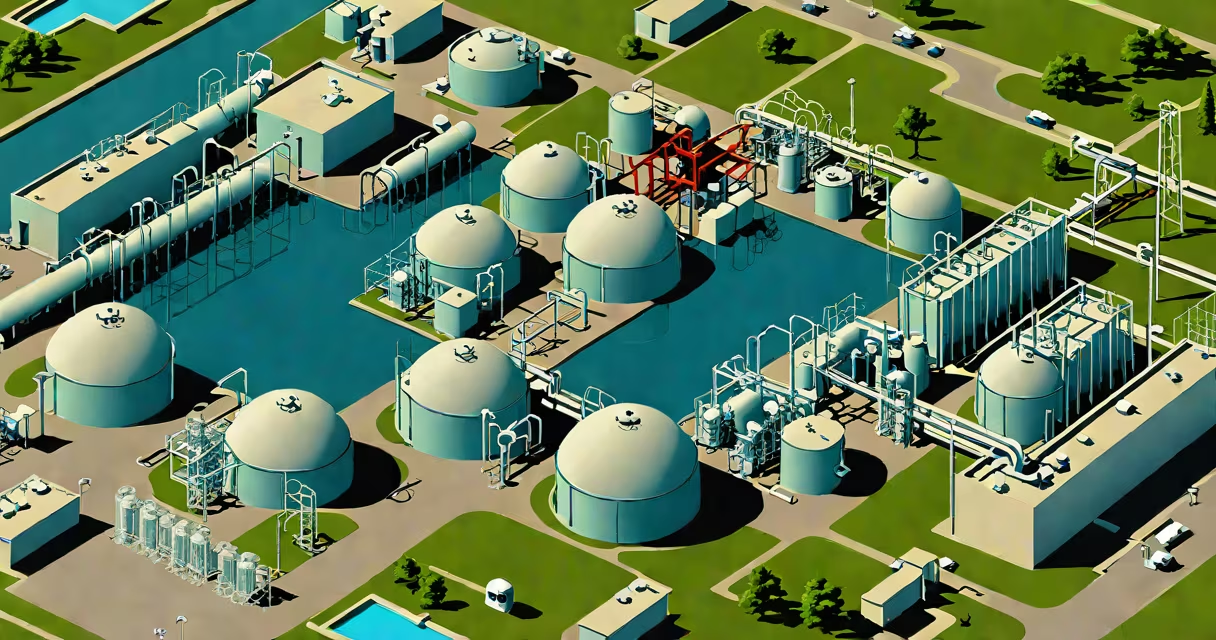
The city of Chicago water department is the municipal agency responsible for providing safe drinking water and managing wastewater collection and treatment for the city's 2.7 million residents. It operates under the authority of the City of Chicago Department of Water Management and oversees all aspects of water supply, quality control, stormwater management, and sewer system maintenance.
Water enters the system through intake structures on Lake Michigan, the city's primary source. From there, it flows into one of 16 water treatment plants, where it undergoes physical, chemical, and biological processes to remove contaminants and meet federal Safe Drinking Water Act standards. After treatment, water travels through 3,500 miles of distribution pipelines to homes, businesses, and public facilities.
Wastewater follows a reverse path. Sewer lines collect used water from sinks, toilets, and industrial drains and transport it to 13 wastewater treatment plants. These facilities use biological digestion, sedimentation, and disinfection to break down pollutants before releasing treated effluent into the Chicago River and eventually Lake Michigan. The department also manages combined sewer overflow systems designed to prevent flooding during heavy rainfall events.
Every day, the city of Chicago water department treats approximately 1.2 billion gallons of water. This volume comes entirely from Lake Michigan, which supplies 90% of the city's potable water. The remaining 10% comes from groundwater wells located in the southern suburbs, primarily for industrial use.
Treatment begins with coagulation, where chemicals like aluminum sulfate bind to suspended particles. The mixture then moves to flocculation chambers, where gentle mixing encourages particle clumping. Sedimentation tanks allow heavier flocs to settle out. Remaining solids are filtered through sand and activated carbon layers, followed by chlorine or chloramine disinfection to eliminate bacteria and viruses.
After treatment, water is stored in elevated reservoirs and distributed via gravity-fed and pressurized networks. Pressure regulators and flow meters monitor delivery in real time. The department uses a SCADA (Supervisory Control and Data Acquisition) system to track pressure, flow rates, and contamination alerts across the network. Any anomaly triggers immediate response protocols.
The city of Chicago water department maintains 3,500 miles of water mains and 3,700 miles of sanitary sewers. Pipes range from 4-inch cast iron to 10-foot-diameter reinforced concrete conduits. Most mains are over 50 years old, with 15% replaced annually through a capital improvement program funded by ratepayer fees and municipal bonds.
Service areas are divided into 12 zones based on geographic and hydraulic characteristics. Zone 1 covers the Loop and Near North Side, while Zone 12 includes the South and West sides. Each zone has dedicated field crews, meter readers, and customer service centers. Emergency response teams are dispatched within 90 minutes of reported leaks or pressure drops.
| System Type | Number of Facilities | Annual Capacity (gallons) | Primary Function |
|---|---|---|---|
| Drinking Water Treatment Plants | 16 | 438 billion | Remove turbidity, pathogens, and metals |
| Wastewater Treatment Plants | 13 | 325 billion | Biological and chemical pollutant reduction |
| Stormwater Management Sites | 180 | Varies by event | Reduce CSO discharges during rainstorms |
Many residents assume the city of Chicago water department is a private company. It is not. It is a government-run entity under the Mayor's Office, accountable to the City Council and subject to annual audits by the Cook County Board of Review. Its budget is approved by the City Council and funded through user fees, not property taxes.
Another misconception is that tap water in Chicago is unsafe. According to the U.S. Environmental Protection Agency (EPA), Chicago's drinking water consistently meets or exceeds all federal standards. In 2023, the city reported 99.9% compliance with contaminant limits, including lead, arsenic, and nitrates. The EPA's Safe Drinking Water Information System (SDWIS) confirms this data.
A less obvious point: the department does not manage water usage beyond billing. Conservation programs, such as rebates for low-flow toilets and rain barrel installations, are administered by the Department of Environment. The water department only provides data on consumption and infrastructure performance.
In January 2023, a 36-inch cast iron pipe ruptured near North Avenue and Clark Street. The break released 1.5 million gallons of water and caused street flooding. The city of Chicago water department responded within 45 minutes, shutting off valves in adjacent zones to isolate the affected area.
Field crews used acoustic leak detection tools to locate the rupture. Repair work took 18 hours, involving excavation, pipe replacement, and pressure testing. During the outage, the department issued boil advisories for 12,000 customers in the vicinity. All water samples taken after restoration passed microbiological and chemical tests.
This incident illustrates the department's rapid response protocols and reliance on real-time monitoring. It also shows the impact of aging infrastructure: the failed pipe was installed in 1948 and had undergone five prior repairs.
I once visited the Calumet Water Treatment Plant during a routine inspection. The facility processes 150 million gallons daily using advanced membrane filtration. I observed operators adjusting pH levels and monitoring turbidity sensors in real time. One technician noted that a sudden spike in chlorine demand required immediate adjustment to maintain disinfection levels. The precision required to balance safety, efficiency, and regulatory compliance was evident in every action.
Residents can access water quality reports, report leaks, and view service interruptions through the department's online portal. The portal also includes interactive maps showing pipe age, pressure zones, and recent maintenance activities.
The city of Chicago water department ensures clean water reaches homes and safely returns to the environment. It operates under strict federal and state regulations, with oversight from both the Illinois Environmental Protection Agency and the U.S. EPA. Its mission is to protect public health, preserve natural resources, and maintain resilient infrastructure for future generations.