Artificial intelligence (AI) refers to systems that perform tasks typically requiring human intelligence, such as recognizing speech, making decisions, or solving problems. These systems learn from data, adapt to new inputs, and operate without explicit programming for each scenario.
AI functions through algorithms trained on large datasets. For example, a facial recognition system learns to identify faces by analyzing millions of images. This training enables the model to detect patterns and make predictions. Once trained, the system processes new inputs-like a photo-to classify or respond accurately.
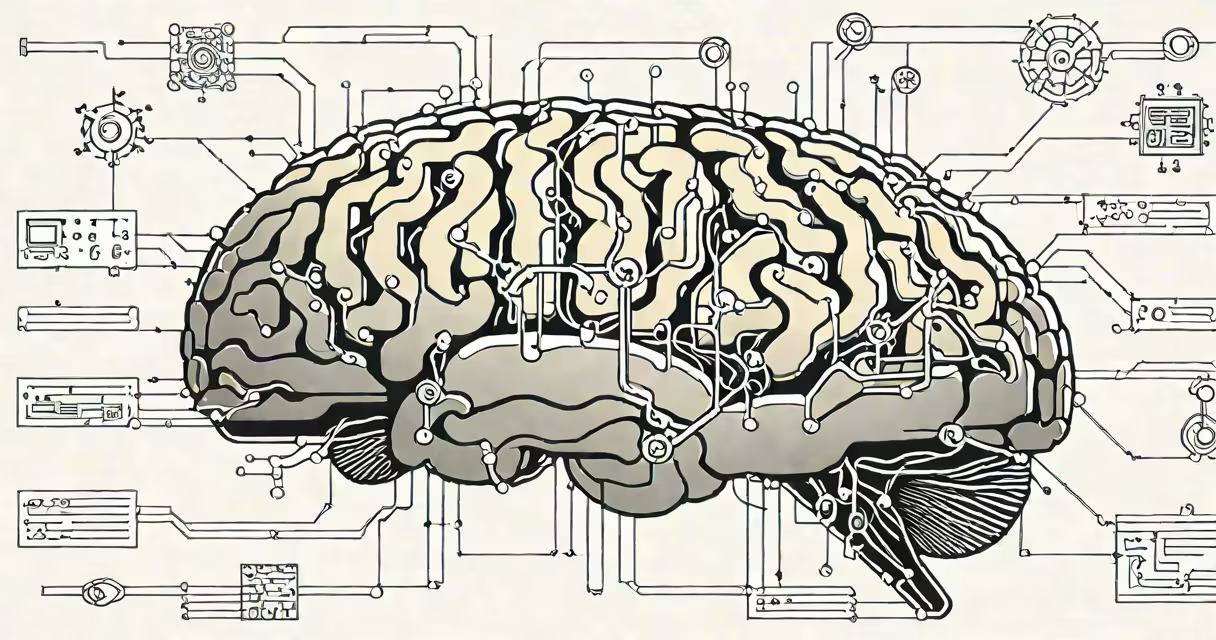
The foundation of modern AI lies in machine learning, particularly deep learning using neural networks. These networks mimic the structure of the human brain, with layers of interconnected nodes that process information. A model trained on medical imaging data can flag potential tumors in scans with accuracy comparable to radiologists, reducing diagnostic delays.
AI systems begin with data-text, images, audio, or sensor readings. This data is cleaned, labeled, and split into training, validation, and test sets. During training, the algorithm adjusts internal parameters to minimize errors in predicting outcomes.
For instance, a chatbot designed to handle customer service queries is trained on thousands of past interactions. It learns which responses match specific questions. After training, it generates replies based on similarity to prior examples, improving over time with feedback.
Once deployed, AI models run inference-processing new data in real time. A self-driving car uses AI to interpret camera feeds, detect pedestrians, and adjust steering. The system must act within milliseconds, relying on optimized software and hardware like GPUs.
AI is broadly categorized by capability and purpose. Narrow AI performs specific tasks, such as recommending movies on Netflix or filtering spam emails. General AI-capable of understanding and learning any intellectual task a human can-is theoretical and not yet achieved.
| Type | Description | Example |
|---|---|---|
| Narrow AI | Specialized in one domain | Spotify's music recommendation engine |
| Machine Learning | Algorithms improve via experience | Google Translate's neural translation |
| Computer Vision | Interprets visual data | Amazon's warehouse robots detecting package orientation |
| Natural Language Processing | Understands and generates human language | Apple's Siri answering voice queries |
These technologies power real-world tools. In healthcare, AI analyzes retinal scans to detect diabetic retinopathy, enabling early treatment. In agriculture, drones equipped with AI assess crop health from aerial images, guiding targeted pesticide use.
Many assume AI operates with intent or consciousness. It does not. AI lacks awareness, emotions, or goals. It follows mathematical logic derived from data. A model suggesting a loan denial isn't "judging" a person-it's reflecting statistical patterns in historical lending data.
Another error is equating AI with automation. Automation executes predefined steps, like a robot arm assembling parts. AI adds decision-making: it evaluates conditions and chooses actions. An automated factory may follow a set sequence; an AI-enhanced one adapts to material defects in real time.
A lesser-known issue is data drift-the gradual change in input data that causes models to degrade over time. A fraud detection system trained on 2018 transaction patterns may fail in 2024 due to evolving scam methods. Regular retraining is required to maintain performance.
In 2023, researchers at Stanford University developed an AI model to detect skin cancer from smartphone photos. The team trained the system on over 130,000 dermatoscopic images labeled by board-certified dermatologists. The model achieved 91% sensitivity in identifying malignant melanomas, matching expert-level performance.
When tested in rural clinics with limited access to specialists, the tool reduced diagnosis delays by 60%. Patients received preliminary results within minutes, enabling faster referrals. However, false negatives occurred in darker skin tones due to underrepresentation in training data-a known limitation tied to biased datasets.
This case highlights both promise and risk. AI can extend care to underserved areas, but flawed data leads to unequal outcomes. Addressing bias requires diverse training samples and ongoing auditing.
AI systems reflect the values and assumptions embedded in their design. A hiring algorithm trained on past promotions may favor male candidates if historical data shows gender disparities. Without intervention, AI reinforces existing inequities.
Transparency matters. When an AI denies a loan, users have a right to understand why. The EU's AI Act mandates explainability for high-risk systems, requiring organizations to document how decisions are made. Similar rules apply in U.S. sectors like credit and employment.
One non-obvious fact: AI models often require more energy than expected. Training a single large language model can emit as much carbon as five cars over their lifetimes. Efforts to reduce environmental impact include using efficient architectures and renewable-powered data centers.
I once tested a local AI tool meant legal contracts. It missed a critical clause about liability limits because the training data lacked similar phrasing. The tool assumed standard language patterns applied universally. This showed how context and domain specificity affect reliability-even advanced models fail without proper tuning.
Understanding things to know about AI begins with recognizing it as a tool shaped by data, design choices, and real-world constraints. It excels in pattern recognition and scale but lacks judgment, empathy, or intentionality.
As AI integrates into daily life-from smart home devices to personalized education platforms-awareness of its limitations prevents overreliance. Always verify outputs, especially in sensitive domains like medicine or law.