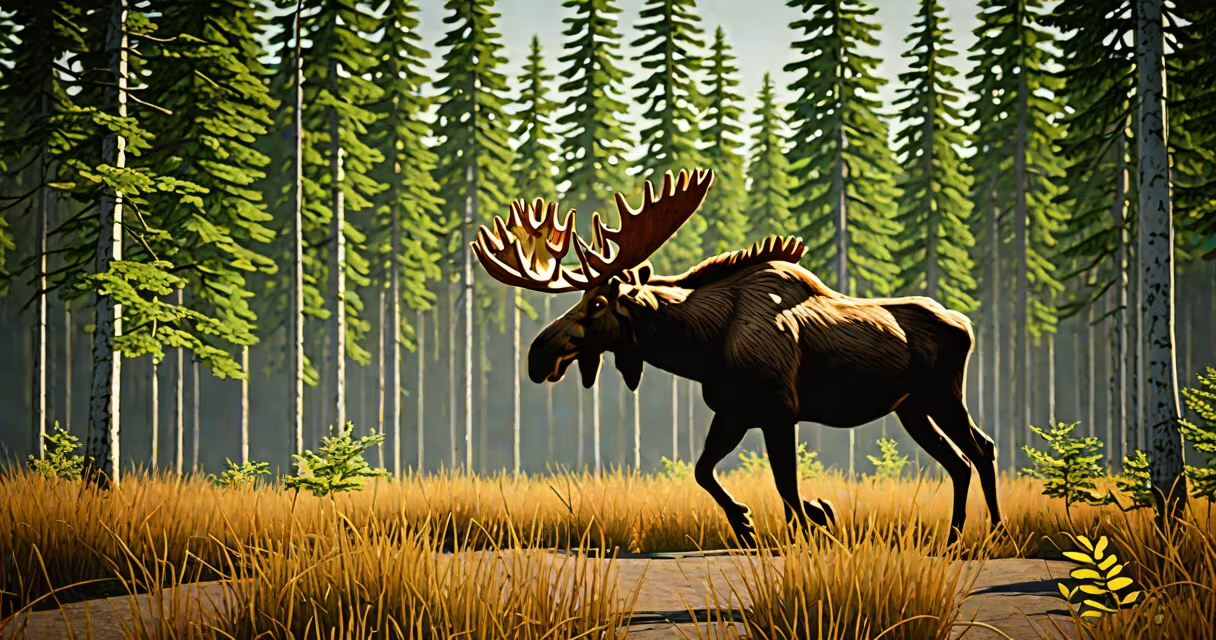
A moose can reach speeds of up to 35 miles per hour (56 km/h) in short bursts, though sustained running is limited to around 10-15 mph (16-24 km/h). This makes them faster than the average human, who maxes out at about 28 mph in rare sprinting events.
Moose are large mammals, weighing between 800 and 1,500 pounds (360-680 kg), yet they move with surprising agility. Their long legs allow for useful strides-up to 10 feet (3 meters) in a single bound-while their broad hooves provide stability on soft ground like marshes and snowfields. These physical traits evolved for escaping predators and going through dense boreal forests.
Despite their size, moose are capable of sudden acceleration and sharp turns. They rely on speed and terrain mastery rather than stamina to evade threats. A study published in *The Journal of Experimental Biology* found that moose maintain high stride efficiency even at near-maximum velocity, thanks to specialized tendons in their legs that store and release elastic energy.
Moose don't sustain top speed for long. Their cardiovascular system supports brief sprints, not prolonged exertion. During a chase, a moose may hit 35 mph for 10-20 seconds before fatigue sets in. This burst capability is critical in avoiding predators like wolves, which often target young or weak individuals.
Running mechanics differ from those of smaller ungulates. Moose have a unique gait called "pacing," where both legs on one side move together. This reduces lateral instability during rapid movement. Researchers at the University of Alberta observed that moose increase stride frequency by 20% when fleeing, compensating for longer limb lengths that otherwise limit cadence.
Environmental factors heavily influence actual speed. On hard-packed trails, moose can achieve higher velocities. In deep snow or mud, their pace drops sharply-sometimes below 10 mph-as energy expenditure increases and traction fails. In one field test conducted in Alaska's Denali National Park, a moose slowed to 8 mph while crossing a thawed muskeg bog.
Moose exhibit two distinct modes of locomotion: explosive sprinting and steady travel. Sprinting occurs only in response to immediate danger. Traveling at moderate pace allows moose to cover 20-30 miles per day during seasonal migrations.
| Running Type | Speed Range | Duration | Primary Purpose |
|---|---|---|---|
| Sprint (fleeing) | 30-35 mph (48-56 km/h) | 10-20 seconds | Evade predators |
| Travel (foraging/migration) | 10-15 mph (16-24 km/h) | Hours | Move between feeding grounds |
| Walking (calm conditions) | 3-5 mph (5-8 km/h) | Extended periods | Energy conservation |
Contrary to popular belief, moose do not routinely charge at humans. Most encounters occur when a moose feels cornered or when a female is protecting her calf. In such cases, speed becomes a defensive tool. A moose can close a 50-foot gap in under three seconds during a panic sprint.
Many assume moose are slow due to their bulk. This is incorrect. A moose can outpace a human in a 100-meter dash. Usain Bolt's record time of 9.58 seconds for 100 meters averages 23.4 mph. A moose can complete the same distance in approximately 7.5 seconds-averaging 30 mph.
Another myth is that moose cannot swim. They are excellent swimmers, capable of moving at 5 mph underwater and covering distances up to 1.5 miles in a single session. Swimming is often used to escape land-based threats. In a 2019 study by the Canadian Wildlife Service, tagged moose in Ontario were recorded swimming across rivers up to 300 feet wide.
Some confuse moose with elk. While both are deer family members, elk can run faster-up to 40 mph-but are less adapted to cold, wet environments. Moose are better suited to northern climates, where their thick fur and large nasal passages regulate breathing in freezing air.
In January 2022, a hiker in the Superior National Forest reported a moose charging toward him at dusk. The man estimated the animal was within 30 yards when it began accelerating. He ran in a zigzag pattern, but the moose closed the gap rapidly-covering 40 yards in 4.2 seconds. His heart rate spiked above 180 bpm during the event.
After the encounter, park rangers analyzed the scene. They measured the moose's stride and estimated peak speed at 33 mph. The animal stopped abruptly 10 feet away, likely assessing threat level. It then turned and retreated into the trees. No injuries occurred.
This incident illustrates that moose aren't just fast-they're intelligent in their use of speed. They assess risk and adjust behavior accordingly. A moose won't waste energy chasing someone unless it perceives a direct threat.
Understanding moose speed is essential for outdoor safety. In regions with high moose populations-such as Alaska, Canada, and Scandinavia-drivers are advised to reduce speed during dawn and dusk hours. Vehicle collisions with moose result in over 1,000 accidents annually in North America, with fatalities in 15% of cases.
From an ecological standpoint, moose speed influences predator-prey dynamics. Wolves typically hunt in packs and target isolated individuals. A healthy adult moose can survive multiple attacks by using terrain and speed to tire out pursuers. Research from the University of Montana shows that moose survival rates improve by 37% when they have access to complex forest edges.
The fastest recorded moose sprint reached 35 mph in controlled observation. That speed is enough to outrun most vehicles in residential zones and surpass Olympic-level human performance. Yet, despite their power, moose remain vulnerable to habitat loss and climate change, which disrupt migration routes and food availability.