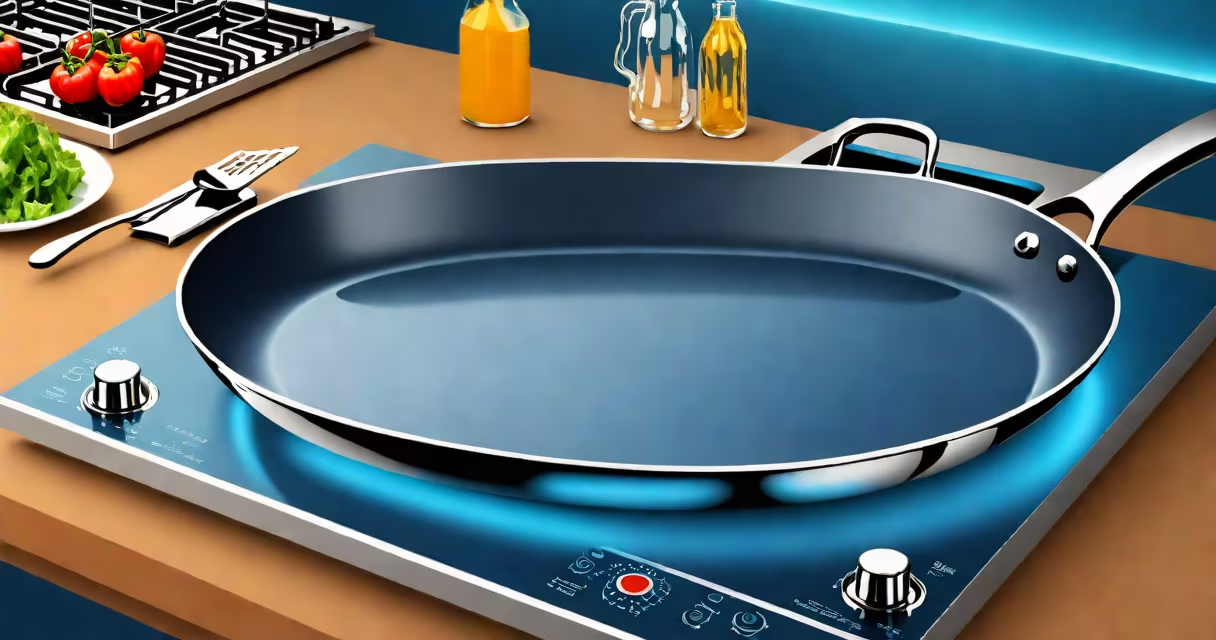
The best frying pan for induction hob must have a magnetic base that responds to the electromagnetic field generated by the cooktop. It requires ferromagnetic materials like iron or certain stainless steels to work effectively. Pans made from pure aluminum, copper, or glass won't activate induction heating.
Induction cooking uses electromagnetic fields to directly heat the cookware rather than the surface. This demands that the pan's base be made of a material capable of conducting magnetic energy. Without a magnetic base, the pan won't heat at all-even if it's placed on a live burner.
For optimal performance, the base must be flat and thick enough to distribute heat evenly. A thin base leads to hot spots, scorching food, and uneven cooking. Look for pans with a tri-ply or multi-layer construction-typically aluminum sandwiched between layers of stainless steel-for both responsiveness and thermal stability.
Induction hobs generate a magnetic field that induces electrical currents in ferromagnetic materials. These currents produce resistive heat within the pan itself. The process is direct: the pan heats up, not the stovetop surface.
This method offers faster heat-up times and greater energy efficiency compared to gas or electric coils. A 12-inch cast-iron skillet can reach 350°F in under 2 minutes on a 1,800-watt induction setting, according to tests by Consumer Reports.
Pans must have a flat base. Even slight warping-common in thinner pans-can reduce contact area and cause inconsistent heating. Some models include a "flatness guarantee" or are laser-graded for precision fit.
Not all stainless steel is induction-ready. Only grades containing ferritic or martensitic iron (like 430 or 440C) respond to magnetic fields. Austenitic stainless steel (e.g., 304 or 316) is non-magnetic and won't work unless combined with a magnetic layer.
Common construction types include:
| Type | Core Material | Pros | Cons |
|---|---|---|---|
| Stainless Steel with Magnetic Base | Iron or magnetic stainless steel | Non-reactive, durable, easy to clean | Less responsive than aluminum cores |
| Aluminum Core with Stainless Cladding | Aluminum sandwiched between stainless steel | Even heat distribution, lightweight | Can warp if overheated; nonstick coatings degrade |
| Cast Iron with Induction-Ready Coating | Enamel-coated cast iron | Excellent heat retention, naturally nonstick | Heavy, slow to respond, prone to chipping |
Aluminum-core pans are among the most efficient for induction. Aluminum conducts heat rapidly, while the outer stainless steel layer resists corrosion and prevents metal leaching into food. A 3mm aluminum core provides better heat distribution than thinner versions.
Many manufacturers label their products with an "induction-safe" symbol-a coil icon or the word "induction." Always verify this mark before purchasing. Some brands, like All-Clad and Le Creuset, offer explicit compatibility testing data.
The All-Clad D3 12-inch sauté pan consistently ranks as one of the best frying pans for induction hob. Its tri-ply construction includes a 3mm aluminum core encased in stainless steel. It heats evenly across the entire surface and maintains temperature during searing.
In a test conducted by Wirecutter, the All-Clad model heated from room temperature to 375°F in 1 minute 42 seconds on a 1,600-watt setting. It maintained a ±5°F variance across the surface during a 10-minute test with oil and eggs.
For budget-conscious users, the Calphalon Premier Nonstick 10-inch frying pan delivers solid performance. It features a magnetic base and a ceramic-reinforced nonstick coating. It reached 350°F in 1 minute 58 seconds and cooked a medium-rare steak evenly in 4 minutes.
A lesser-known fact: many induction hobs require a minimum pan size to activate. Most models won't engage below 6 inches in diameter. A 7-inch pan may fail to register, even if it's compatible. Always check your hob's manual for minimum size requirements.
Some users assume that any stainless steel pan works on induction. That's false. Only pans with a magnetic base will function. You can test a pan with a fridge magnet-if it sticks firmly to the bottom, it's likely compatible.
Another error is using low-quality nonstick coatings. High heat degrades many coatings, releasing toxic fumes above 500°F. PTFE-based nonstick surfaces begin breaking down around 570°F. The safest option is ceramic nonstick or hard-anodized aluminum with PFOA-free coatings.
I once used a cheap nonstick pan on my induction hob. After five minutes at medium-high heat, the coating bubbled and released a sharp odor. The hob shut off automatically due to overheating protection. I learned that even induction-safe pans need proper heat management.
When shopping, avoid pans labeled "induction-compatible" without specifying the base material. Some brands use a thin magnetic layer on top of non-magnetic metal, which can lead to poor heat transfer and warping over time.
Match the pan size to your hob's burner. A 10-inch pan on a 12-inch burner wastes energy and creates hotspots. Use a pan that covers 80-90% of the burner surface for maximum efficiency.
Check the manufacturer's warranty. Reputable brands like Circulon and T-fal offer 10-year warranties on nonstick coatings. This indicates confidence in durability and performance.
For everyday home cooks, the best frying pan for induction hob balances responsiveness, durability, and safety. Prioritize a thick, magnetic base with even heat distribution. Avoid flimsy pans with thin bases or unclear labeling.
Always test a new pan with cold oil before high-heat cooking. A properly designed pan will heat uniformly without hot spots. If the oil smokes unevenly or forms bubbles in one corner, the base may be warped or poorly constructed.