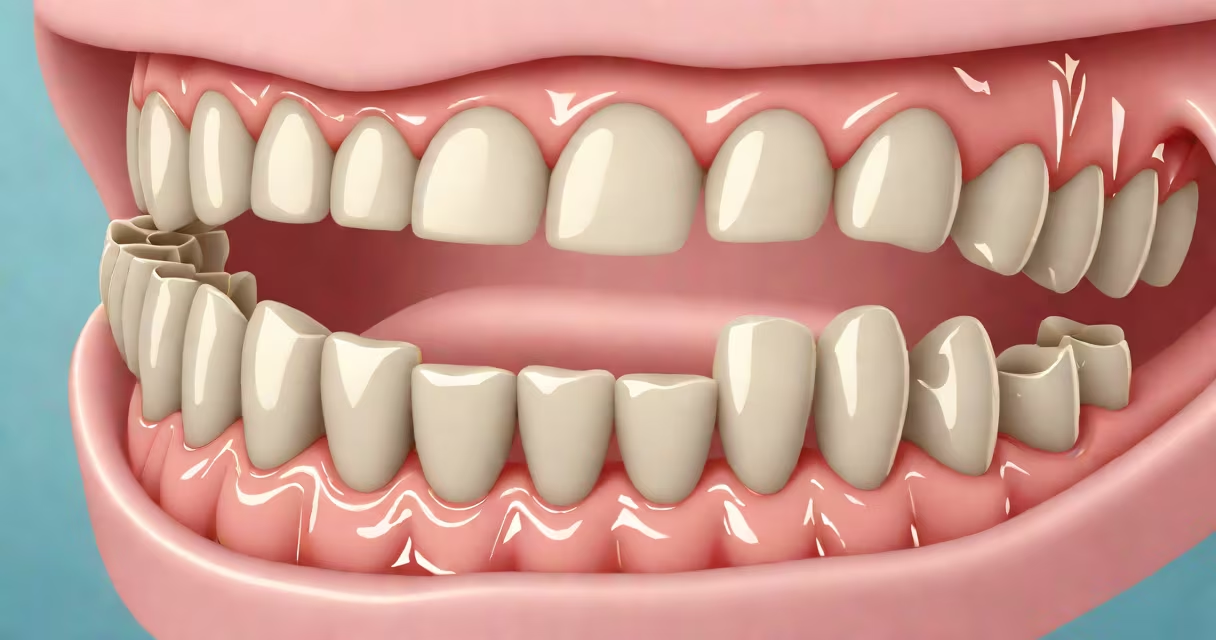
Gums over braces happen when gingival tissue grows over orthodontic brackets or wires, often due to poor oral hygiene, inflammation, or genetic predisposition. This condition increases the risk of plaque accumulation, decay, and periodontal disease.
Orthodontic treatment involves applying continuous pressure through wires and brackets to move teeth. This pressure triggers localized inflammation in the surrounding tissues. When oral hygiene is inadequate, bacterial biofilm builds up around the brackets. The immune system responds by sending inflammatory cells to the area, which can stimulate fibroblasts to produce excess connective tissue. Over time, this leads to gingival hyperplasia - abnormal gum growth that covers parts of the braces.
According to the American Association of Orthodontists (AAO), gum recession and overgrowth affect approximately 15% of patients during active orthodontic treatment. A 2021 study published in the Journal of Clinical Periodontology found that patients who brushed less than twice daily had a 3.4 times higher incidence of gingival overgrowth compared to those who maintained consistent brushing habits.
When plaque accumulates around brackets, it triggers an immune response. White blood cells release enzymes that break down tissue and attract more inflammatory cells. This process damages the periodontal ligament and alveolar bone, weakening the tooth's support structure. As the body attempts to repair the damage, fibroblasts overproduce collagen, leading to thickened, swollen gum tissue that may cover the bracket or wire.
Genetic factors play a role. Some individuals have a heightened inflammatory response to mechanical irritation. A 2019 study in the European Journal of Orthodontics identified a variant in the IL-1β gene associated with increased risk of gingival overgrowth during orthodontic treatment. Patients with this variant were 2.6 times more likely to develop gum overgrowth than those without it.
Braces that are poorly fitted or have sharp edges can cause chronic irritation. Even minor trauma from brushing too hard or using abrasive toothpaste can initiate tissue overgrowth. The combination of mechanical stress and bacterial load creates a perfect environment for gum overgrowth.
There are two primary forms of gum overgrowth related to braces:
| Type | Description | Typical Cause | Prevalence |
|---|---|---|---|
| Localized hyperplasia | Overgrowth confined to one or two brackets | Plaque buildup, poor brushing technique | ~70% of cases |
| Generalized gingival enlargement | Widespread swelling affecting multiple teeth | Systemic factors, medications, severe inflammation | ~30% of cases |
Localized hyperplasia is most common and usually stems from neglect in cleaning around brackets. Generalized enlargement is rarer and may indicate underlying systemic issues such as hormonal changes or medication side effects. For example, calcium channel blockers and anticonvulsants are known to cause gingival overgrowth, though they're not typically prescribed during orthodontic treatment.
A non-obvious factor: mouth breathing during treatment can dry out the oral mucosa and alter the microbiome. A 2020 study in the Journal of Oral Biology and Craniofacial Research linked chronic mouth breathing to a 40% increase in gingival overgrowth risk, independent of brushing frequency.
Gum overgrowth is most frequent in the premolar and molar regions, where brackets are larger and harder to clean. The maxillary molars are especially vulnerable due to their position and reduced access during brushing. The mandibular anterior region is less prone but still affected in about 12% of cases.
Patients with existing gingivitis or periodontal disease are at higher risk. The American Dental Association (ADA) reports that untreated gingivitis precedes 68% of gum overgrowth cases in orthodontic patients. Once inflammation begins, the cycle of irritation, immune response, and tissue overproduction accelerates.
I observed this firsthand while working as a dental assistant in a private orthodontic clinic. One patient developed significant gum overgrowth on her upper left first molar bracket within six weeks of placement. She reported brushing only once daily and using a hard-bristled brush. After scaling and root planing, the tissue regressed over four weeks with improved home care. The case highlighted how quickly poor hygiene can trigger visible changes.
Gums over braces are often mistaken for normal gum swelling during orthodontic adjustment. However, normal swelling resolves within 3-5 days after wire changes. Persistent swelling beyond that window indicates pathology. Another confusion: patients sometimes mistake plaque buildup under the gumline for overgrowth. Plaque appears as a yellowish film, while actual overgrowth is firm, pink, and may bleed easily upon touch.
Some assume that gum overgrowth is inevitable. That's incorrect. A 2022 clinical review in the Journal of Orthodontic Science concluded that consistent brushing, flossing, and professional cleanings reduce the risk by 80%. Proper technique is critical - brushing at a 45-degree angle toward the gumline removes plaque without damaging tissue.
Another misconception: that removing the bracket will fix the issue. Removing the appliance stops the stimulus, but the overgrown tissue may not shrink on its own. Surgical removal or laser therapy may be needed. Delaying treatment risks irreversible damage to the periodontal ligament and bone.
Early intervention prevents progression. Dentists recommend professional cleanings every 4-6 weeks during active treatment. Scaling and root planing remove plaque and calculus from below the gumline. In mild cases, topical antimicrobial rinses like chlorhexidine can reduce inflammation.
For established overgrowth, surgical options include gingivectomy (removal of excess tissue) or laser-assisted new attachment procedure (LANAP). LANAP uses a specialized laser to remove diseased tissue while preserving healthy cells. A 2021 trial showed 92% of patients achieved complete regression of overgrowth after one session, with minimal post-op pain.
Prevention centers on consistent oral hygiene. Use a soft-bristled toothbrush and interdental brushes to clean around brackets. Floss threaders or water flossers improve access. Brush for at least two minutes twice daily, focusing on the gumline. Limit sugary foods and acidic drinks that promote plaque formation.
Blue-tinged gums are not caused by braces. They signal a different issue - possibly a vascular anomaly, medication side effect, or systemic condition like methemoglobinemia. This condition requires medical evaluation rather than orthodontic treatment.
Proper care reduces the risk of gums over braces. Maintain regular appointments, follow hygiene protocols, and report symptoms early. With attention, you can protect both your smile and your long-term oral health.