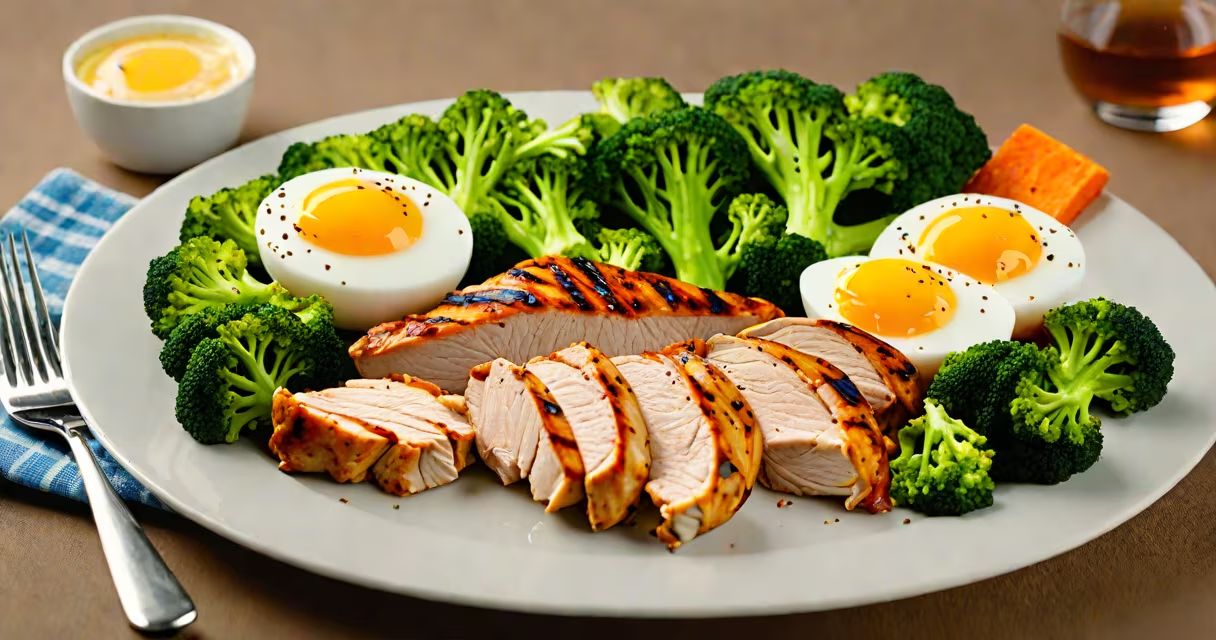
eating to lose weight and gain muscle is a nutrition strategy that combines controlled calorie deficit with high protein intake and resistance training to reduce body fat while building lean muscle mass. This process, known as body recomposition, relies on precise macronutrient distribution and consistent effort over time.
Unlike traditional weight loss or bulking phases, eating to lose weight and gain muscle avoids extreme calorie restriction or surplus. Instead, it aims for a moderate deficit-typically 10-20% below maintenance calories-while prioritizing protein to preserve and stimulate muscle growth. A 2022 study published in the Journal of the International Society of Sports Nutrition found that individuals consuming 1.6-2.2 grams of protein per kilogram of body weight daily during a calorie deficit maintained more lean mass compared to those on lower protein diets.
The core principle is energy balance: you must consume fewer calories than your body burns, but not so few that muscle breakdown occurs. Simultaneously, protein intake must be high enough to signal muscle synthesis. Carbohydrates support training performance and recovery, while fats maintain hormone function-especially testosterone, which influences muscle growth.
When you train with resistance, your muscles experience micro-tears. Repair requires amino acids from dietary protein, along with sufficient energy. If you're in a calorie deficit, your body may break down muscle for fuel unless protein intake is adequate. High protein intake signals the body to prioritize muscle repair over fat mobilization.
Research from the American College of Sports Medicine confirms that combining resistance training with a protein intake of 1.6-2.2 g/kg/day leads to net muscle gain even during a calorie deficit. For a 70 kg person, this equates to 112-154 grams of protein daily. Without this, muscle loss accelerates, reducing metabolic rate and making long-term fat loss harder.
A real-world example: a 35-year-old woman weighing 75 kg trains four days a week with progressive overload. She consumes 2,200 kcal/day-about 15% below her estimated maintenance level-and eats 140 grams of protein daily from eggs, salmon, Greek yogurt, and lentils. Over 12 weeks, she lost 5.5 kg of fat and gained 1.8 kg of lean mass, measured via DEXA scan. Her strength increased by 12% in squats and deadlifts.
Protein is the foundation. Aim for 1.6-2.2 g/kg of body weight daily. Distribute intake evenly across meals-around 30-40 grams per meal-to maximize muscle protein synthesis throughout the day. A 2021 meta-analysis in Nutrients showed that spreading protein intake across 3-4 meals outperforms consuming it all at once.
Carbohydrates fuel workouts and replenish glycogen. Consume 3-5 g/kg/day depending on activity level. On training days, prioritize carbs around workouts-within 1-2 hours post-exercise-to improve recovery and insulin response, which supports nutrient uptake into muscle cells.
Fats contribute to hormonal health. Include 0.8-1.2 g/kg/day from sources like avocado, nuts, olive oil, and fatty fish. Low-fat diets impair testosterone production, which can hinder muscle growth, especially in men.
| Nutrient | Target Range (per kg body weight) | Primary Role |
|---|---|---|
| Protein | 1.6-2.2 g | Muscle repair, satiety, thermogenesis |
| Carbohydrates | 3-5 g | Energy for training, glycogen restoration |
| Fats | 0.8-1.2 g | Hormone regulation, cell function |
Many assume they must choose between losing fat or gaining muscle. This is false. With proper training and nutrition, both can occur simultaneously-though progress is slower than in dedicated bulking or cutting phases.
Another error is relying solely on low-calorie diets. Cutting too much volume leads to fatigue, reduced workout intensity, and muscle loss. A 2023 review in Obesity Reviews found that deficits exceeding 25% below maintenance led to significant lean mass loss, even with high protein.
Some believe "clean eating" means avoiding all processed foods. But whole foods aren't always optimal. A 2022 study in the British Journal of Nutrition showed that protein shakes and canned tuna were more cost-effective and convenient for meeting protein targets than home-cooked meals in busy populations.
Consider a 30-year-old man weighing 80 kg who trains five days a week. His maintenance calories are ~2,800. He aims for 2,300 kcal/day-a 17.8% deficit. His macronutrient targets:
His daily meal plan:
Total: 2,300 kcal, 160g protein, 240g carbs, 75g fats. This aligns with evidence-based guidelines from the Academy of Nutrition and Dietetics and the International Society of Sports Nutrition.
After 10 weeks, he lost 4.2 kg of fat and gained 2.1 kg of muscle. His body fat percentage dropped from 18% to 14%, and his bench press increased from 110 kg to 125 kg.