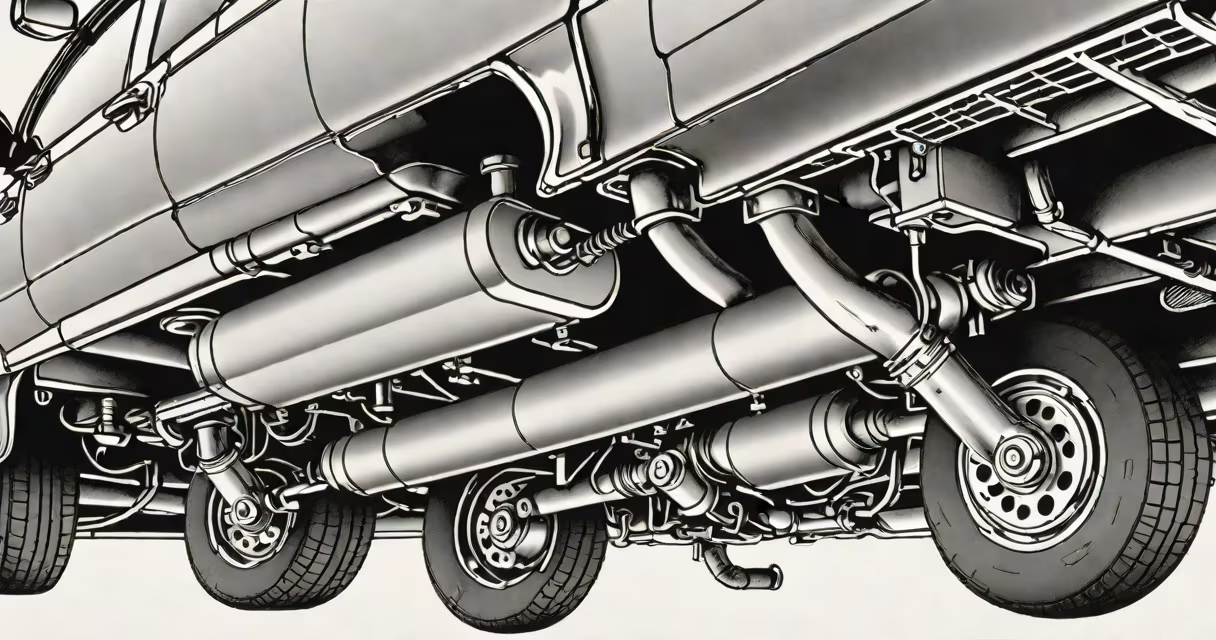
The catalytic converter is a metal housing mounted on the exhaust system, typically located between the engine's exhaust manifold and the muffler. It sits beneath the vehicle, usually within 12 to 24 inches of the engine's rear. This placement ensures hot exhaust gases pass through it before exiting the tailpipe.
Catalytic converters reduce harmful emissions by converting pollutants like carbon monoxide, nitrogen oxides, and unburned hydrocarbons into less toxic substances. They are required on all gasoline-powered vehicles sold in the United States since 1975, per the Environmental Protection Agency (EPA).
Most vehicles have one primary catalytic converter, though some high-performance or diesel models may have two or more. The unit is identifiable by its cylindrical or rectangular shape, often coated in heat-resistant material, and connected via exhaust pipes with flanges and bolts.
Exhaust gases exit the engine at temperatures exceeding 1,000°F (538°C). As they flow through the catalytic converter, they pass over a ceramic or metallic honeycomb structure coated with precious metals-platinum, palladium, and rhodium. These catalysts trigger chemical reactions that break down pollutants.
On most cars, the converter is bolted to the exhaust pipe just after the exhaust manifold. On front-wheel-drive vehicles, it's often mounted close to the engine on the driver's side. Rear-wheel-drive models may place it further back, sometimes near the center of the chassis.
For example, a 2018 Honda Civic has its catalytic converter located approximately 18 inches behind the exhaust manifold, secured with two high-temperature bolts and a heat shield. The unit is visible from underneath the car, positioned between the engine and the rear axle.
While the exact position varies by make and model, the catalytic converter generally appears in one of three zones:
A visual clue is the presence of heat shielding and thermal insulation around the unit. The converter is usually painted black or gray to resist corrosion and withstand high heat. It may also have a stamped serial number or manufacturer logo.
Some vehicles use a "dual converter" setup. For instance, a 2020 Ford F-150 with a 3.5L V6 engine features a primary catalytic converter near the manifold and a secondary unit downstream, both visible from under the truck bed.
People often mistake the catalytic converter for the muffler or resonator. While all three are part of the exhaust system, they serve different functions. The muffler reduces noise, the resonator dampens specific frequencies, and the catalytic converter treats exhaust gases.
Visually, the muffler is larger and often has a bell-shaped end. The resonator is smaller and may appear as a bulge in the exhaust pipe. The catalytic converter is typically shorter and more rigid, with a solid core rather than a perforated chamber.
A key distinction: the catalytic converter contains a catalyst substrate. You can confirm this by tapping the unit gently with a rubber mallet-if it produces a hollow sound, it may be damaged internally. A solid, dull thud suggests the internal honeycomb is intact.
I replaced the catalytic converter on my 2016 Toyota Camry during a routine emission test failure. The vehicle failed because the oxygen sensor readings showed high levels of CO and NOx. After removing the undercarriage shield, I located the converter just behind the engine's exhaust manifold.
It was secured with two 14mm bolts and had a small crack near the inlet pipe. The exterior was scorched black, and the interior substrate appeared crumbled when inspected through the access port. Replacing it restored the vehicle's emissions to EPA-compliant levels.
This repair took 1.5 hours and cost $320 for parts and labor. The new converter matched the original equipment manufacturer (OEM) specifications and passed a smog check on the first try.
Many assume catalytic converters are only found on older vehicles. In reality, all new cars sold in the U.S. since 1975 are equipped with them. The Clean Air Act Amendments of 1990 expanded requirements to include all light-duty vehicles, including hybrids.
Another misconception: catalytic converters are not interchangeable. Using a universal or aftermarket unit that doesn't match the vehicle's emissions control system can cause the check engine light to explain and fail state inspections. According to the EPA, improperly installed converters can increase emissions by up to 300%.
The converter is not designed to be removed or bypassed legally. Tampering with emissions controls violates federal law under the Clean Air Act. Penalties include fines up to $50,000 per violation, as enforced by the EPA and state agencies.
You may need to locate the catalytic converter during:
Thieves target catalytic converters because they contain valuable metals. The average converter holds 3-7 grams of platinum group metals. In 2023, the price of palladium reached $1,200 per ounce, making stolen units worth $300-$600 on the black market.
If you suspect your converter has been stolen, look for signs such as a loud roaring noise at idle, a strong smell of raw fuel, or a flashing check engine light. Immediate replacement is necessary to avoid engine damage and legal penalties.
Understanding where your catalytic converter is located helps ensure proper maintenance, compliance with environmental laws, and safe operation of your vehicle.