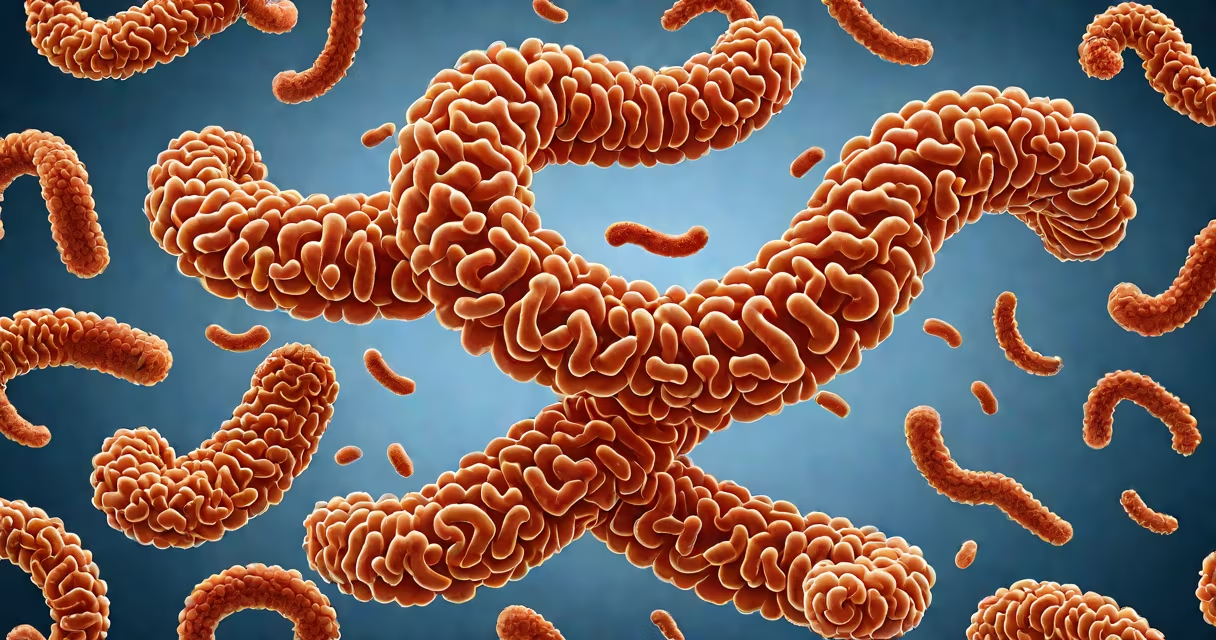
Crohn's and colitis are chronic inflammatory bowel diseases (IBD) that cause long-term inflammation in parts of the gastrointestinal tract. They differ in location and pattern of inflammation but share overlapping symptoms such as abdominal pain, diarrhea, fatigue, and weight loss. Both conditions involve immune system dysfunction, where the body attacks healthy gut tissue, leading to structural damage over time.
IBD is distinct from irritable bowel syndrome (IBS), which affects function but not structure. Crohn's can affect any part of the GI tract from mouth to anus, while ulcerative colitis (colitis) is limited to the large intestine and rectum. Diagnosis requires endoscopy, imaging, and biopsy to rule out infection or cancer. The American Gastroenterological Association notes that IBD affects approximately 3 million U.S. adults, with onset typically between ages 15 and 35.
Both conditions follow a relapsing-remitting course. Flares may last weeks to months and require medical intervention. Without treatment, complications like strictures, fistulas, or colorectal cancer risk increase. Early diagnosis improves outcomes. A 2022 study in Gastroenterology found that patients diagnosed within six months of symptom onset had better long-term remission rates than those delayed by over a year.
Immune cells in the gut wall mistakenly attack the lining of the intestines. This triggers ongoing inflammation, disrupting digestion, nutrient absorption, and barrier function. The exact trigger remains unknown, but genetic, environmental, and microbiome factors interact to initiate disease. A 2021 review in Nature Reviews Gastroenterology & Hepatology identified over 200 genetic variants linked to IBD, including NOD2 mutations strongly associated with Crohn's.
When inflammation damages the intestinal lining, fluid leaks into the bowel, causing diarrhea. Ulcers form in the mucosa, leading to bleeding and pain. Over time, scar tissue builds up, narrowing the lumen-this causes obstruction. In Crohn's, inflammation can penetrate all layers of the intestinal wall (transmural), leading to fistulas-abnormal connections between organs. Colitis primarily affects the innermost layer (mucosa), resulting in superficial ulcers and bloody stools.
For example, a 28-year-old woman presented with six months of intermittent bloody diarrhea, cramping, and unintentional weight loss. Colonoscopy revealed continuous ulceration from the rectum to the sigmoid colon-diagnostic of ulcerative colitis. Biopsy confirmed active inflammation with crypt abscesses. She was started on mesalamine and achieved remission after eight weeks. Her case illustrates how clinical presentation and endoscopic findings confirm diagnosis.
The two main forms differ in anatomy and pathology:
| Type | Primary Location | Inflammation Pattern | Common Symptoms | Complications |
|---|---|---|---|---|
| Crohn's disease | Any segment of GI tract; most common in terminal ileum | Segmental, transmural, skip lesions | Abdominal pain (right lower quadrant), diarrhea, weight loss, fever | Fistulas, strictures, abscesses, malnutrition |
| Ulcerative colitis (colitis) | Colon and rectum only; starts at rectum and extends proximally | Continuous, mucosal-only, superficial ulcers | Bloody diarrhea, urgency, tenesmus, fatigue | Toxic megacolon, colorectal cancer, severe anemia |
Some patients have indeterminate colitis-when features overlap and diagnosis remains unclear after evaluation. These cases often require long-term monitoring and repeated biopsies.
A key distinction missed by many is that Crohn's can affect the upper GI tract. A patient with Crohn's may present with mouth ulcers, esophageal strictures, or small bowel obstruction. Colitis never involves the small bowel or stomach. This anatomical difference guides diagnostic testing and treatment planning.
Many assume Crohn's and colitis are the same condition. They are not. While both fall under the IBD umbrella, they differ in pathology, treatment response, and surgical needs. For example, colectomy (removal of the colon) cures ulcerative colitis in most cases. In Crohn's, surgery is often palliative-bowel resection may relieve symptoms but doesn't cure the disease.
Another misconception is that diet alone controls symptoms. While food triggers can worsen flares, no diet eliminates IBD. The low-FODMAP diet may reduce bloating in some, but it does not alter disease progression. A 2023 randomized trial in Alimentary Pharmacology & Therapeutics showed no significant difference in remission rates between patients on dietary intervention versus standard care.
Some patients believe IBD is psychological. This is false. While stress can exacerbate symptoms, IBD is a biological disorder. Autoantibodies like anti-Saccharomyces cerevisiae antibodies (ASCA) are elevated in Crohn's, supporting immune involvement. Testing for these markers helps differentiate from other conditions.
Diagnosis begins with blood tests (CRP, ESR, anemia markers), stool tests (calprotectin, occult blood), and imaging (MRI enterography, CT enterography). Endoscopy with biopsy remains gold standard. A normal colonoscopy does not rule out Crohn's-small bowel involvement may require capsule endoscopy.
Treatment depends on severity and location. First-line therapy for mild-to-moderate ulcerative colitis includes topical mesalamine enemas or oral formulations. For Crohn's, steroids are used short-term, then immunomodulators like azathioprine or biologics such as infliximab (anti-TNF agent).
For example, a 35-year-old man with Crohn's disease involving the ileum and ascending colon failed corticosteroids. He was switched to adalimumab (Humira), a TNF inhibitor. After 12 weeks, his CRP dropped from 65 mg/L to 8 mg/L, and he reported fewer flares. His disease remained in remission for 18 months with maintenance dosing.
Biologic agents have improved outcomes. According to the Crohn's & Colitis Foundation, 70% of patients on anti-TNF therapy achieve clinical remission within 12 weeks. However, some develop antibodies against the drug, reducing effectiveness over time.
When medication fails, surgery may be necessary. For ulcerative colitis, proctocolectomy with ileal pouch-anal anastomosis (IPAA) offers a functional cure. For Crohn's, resection of diseased bowel is common, though recurrence occurs in up to 50% of patients within five years.
Research continues into microbiome modulation, fecal microbiota transplantation, and novel biologics targeting interleukins. Current trials explore JAK inhibitors and integrin antagonists. These offer hope for better control and reduced side effects.
Understanding Crohn's and colitis means recognizing them as lifelong conditions requiring consistent care. Early diagnosis, accurate classification, and adherence to treatment improve quality of life and reduce complications. Knowledge empowers patients to manage their health effectively.