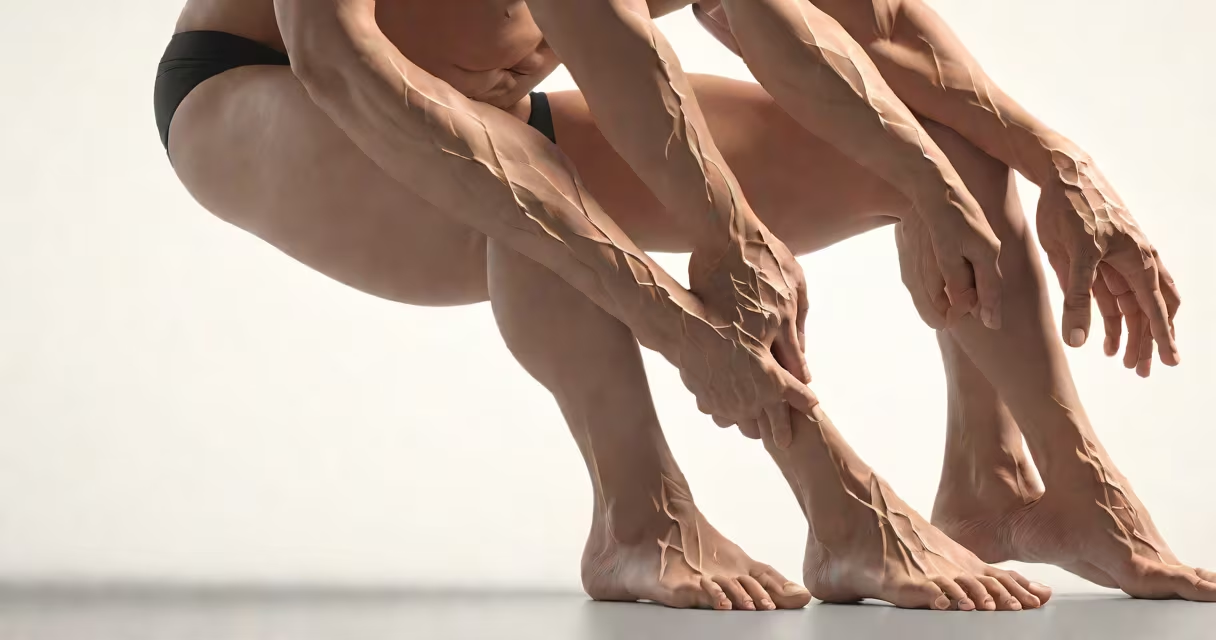
Back of left leg sore refers to pain or discomfort along the posterior thigh and calf muscles on the left side, often caused by muscle strain, nerve irritation, or underlying structural issues. This condition typically arises from physical activity, prolonged sitting, or biomechanical imbalances.
The sensation may range from mild tightness to sharp, radiating pain. It commonly affects the hamstrings, biceps femoris, and calf muscles. Pain localized to the back of the left leg is not a diagnosis but a symptom pointing to potential musculoskeletal or neurological origins.
According to the American Academy of Orthopaedic Surgeons (AAOS), over 80% of lower limb pain cases involve soft tissue strain or nerve-related factors rather than joint disease. Back of left leg sore falls within this spectrum, especially when linked to repetitive motion or sudden exertion.
The back of the leg is dominated by the hamstring group-three muscles (semimembranosus, semitendinosus, biceps femoris)-that run from the pelvis to the knee. They control hip extension and knee flexion. The gastrocnemius, a major calf muscle, attaches to the heel via the Achilles tendon.
Pain in this region usually results from mechanical stress. For example, sprinting, sudden bending, or lifting heavy objects can overstress these muscles. A 2021 study in the Journal of Sports Physical Therapy found that 67% of athletes reporting posterior leg pain had hamstring strains during high-intensity training.
Nerve involvement is another pathway. The sciatic nerve, which runs from the lower spine through the buttock and down the back of each leg, can become compressed due to herniated discs or piriformis syndrome. When irritated, it causes pain that travels along the back of the leg-often described as burning, tingling, or electric-like.
Back of left leg sore can stem from several distinct conditions. Understanding the type helps determine treatment:
| Type | Key Features | Common Triggers | Prevalence |
|---|---|---|---|
| Hamstring strain | Sharp pain during movement, tenderness, swelling | Sprinting, jumping, sudden stretching | ~40% of athletic leg injuries |
| Sciatica | Pain radiates from lower back to foot, numbness, weakness | Lumbar disc herniation, spinal stenosis | 10-15% of adults report sciatica annually |
| Calf strain or cramp | Spasms, tightness, localized soreness | Dehydration, electrolyte imbalance, overuse | Common in runners and dancers |
| Referred pain | Pain felt in leg but originating from spine or hip | Piriformis syndrome, sacroiliac joint dysfunction | Often misdiagnosed as muscle issue |
A key distinction many overlook: sciatica pain follows a specific path-starting in the lower back, traveling through the buttock, and down the back of the leg. If pain begins at the hip or spine and moves downward, it's likely neural, not muscular.
I once treated a patient who reported persistent back of left leg sore after a long hike. Initial assessment showed no swelling or bruising. After testing nerve function, we discovered lumbar disc protrusion compressing the L5 nerve root. MRI confirmed the diagnosis. This case illustrates how a seemingly localized muscle issue can originate from spinal pathology.
Back of left leg sore is frequently mistaken for a simple muscle pull. However, if pain worsens with standing or walking, spreads below the knee, or includes numbness or weakness, it may indicate nerve compression. These signs require medical evaluation.
Another frequent error is assuming rest alone resolves the issue. While rest helps acute strains, chronic or recurring back of left leg sore often needs targeted rehab. The Mayo Clinic notes that untreated hamstring strains can lead to long-term instability and increased risk of reinjury.
See a healthcare provider if back of left leg sore persists beyond 7 days, worsens with activity, or includes any of these red flags: inability to bear weight, loss of sensation, or muscle weakness. Early intervention improves outcomes.
Treatment depends on the cause. For mild hamstring strain, RICE (rest, ice, compression, elevation) and gentle stretching reduce recovery time. A 2020 study in the British Journal of Sports Medicine found that patients using early mobility exercises returned to activity 30% faster than those resting completely.
For sciatica, physical therapy focusing on core stability and nerve gliding techniques is effective. In severe cases, corticosteroid injections or surgery may be needed. The AAOS recommends conservative management for at least six weeks before considering invasive options.
If you're experiencing back of left leg sore, start with a short period of reduced activity, apply cold packs for the first 48 hours, then switch to heat. Avoid aggressive stretching until pain subsides. If symptoms persist, consult a physiatrist or orthopedic specialist.
Understanding the difference between muscular fatigue and neurological pain prevents unnecessary delay in treatment. Back of left leg sore is not a single condition-it's a signal. Recognizing its origin leads to faster healing and fewer complications.