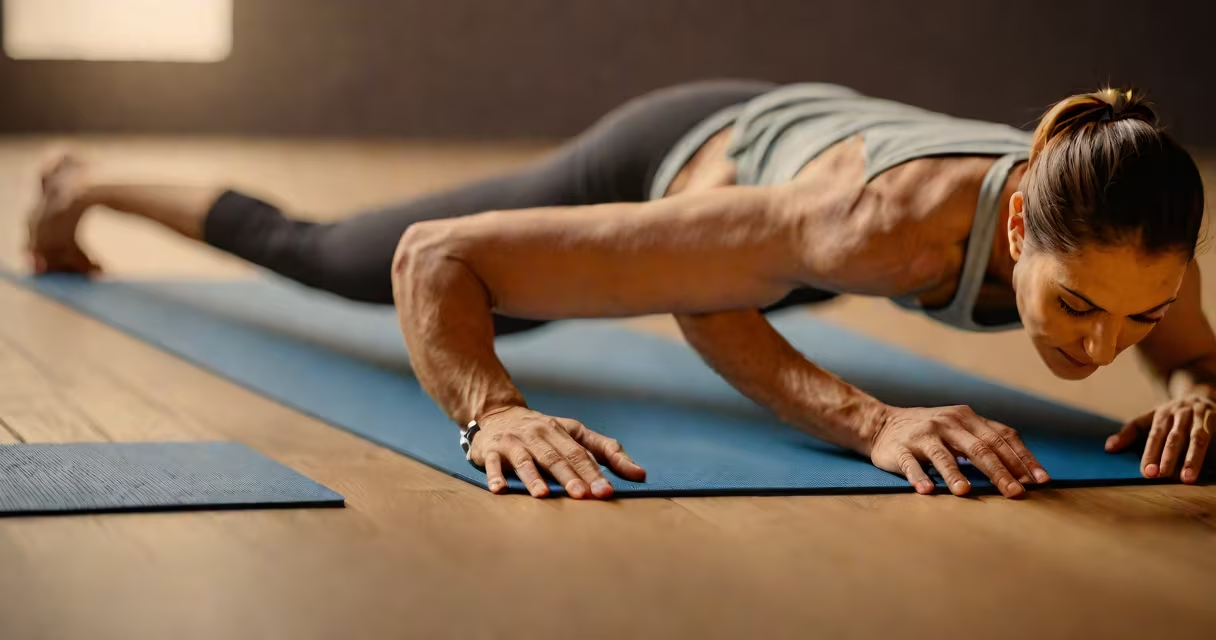
Planks are not a direct fat-burning exercise, but they strengthen the core, improve posture, and increase metabolic rate when done consistently as part of a balanced fitness routine. They do not burn enough calories alone to cause significant weight loss, but they support fat reduction by boosting muscle mass and stabilizing movement during higher-intensity workouts.
Planks engage multiple muscle groups simultaneously-the rectus abdominis, transverse abdominis, obliques, glutes, and lower back-making them efficient for functional strength training. A standard forearm plank holds a static contraction for 20 to 60 seconds, depending on fitness level. This sustained tension increases energy expenditure slightly, though not enough to be a primary tool for shedding pounds.
According to the American Council on Exercise (ACE), compound bodyweight exercises like planks contribute to increased resting metabolic rate over time due to muscle development. Muscle tissue burns more calories at rest than fat, so consistent plank practice supports long-term weight management when paired with cardiovascular activity and proper nutrition.
When you hold a plank, your body maintains a rigid, stable position against gravity. This requires constant activation of deep core muscles, especially the transverse abdominis-the body's natural corset. Over time, this leads to improved neuromuscular control and better alignment during daily movements and other exercises.
A 2019 study published in the Journal of Sports Science & Medicine found that participants who performed 3 sets of 30-second planks three times per week for eight weeks showed a 12% improvement in core endurance and a 5% reduction in waist circumference. While the waist change wasn't solely due to planks, it indicated that core stability training contributes to visible body composition improvements.
For someone doing 30 seconds of plank daily, the estimated calorie burn is between 2 and 5 calories. That's less than walking one city block. However, the benefit lies in muscle recruitment and neural adaptation. Stronger abs reduce strain on the lower back, improve posture, and improve performance in running, cycling, and resistance training-all of which burn more calories.
Not all planks are equal. Different variations target specific areas and increase difficulty. Here's how common types compare:
| Plank Type | Primary Muscles Worked | Calorie Burn Estimate (per 30 sec) | Best For |
|---|---|---|---|
| Standard Forearm Plank | Core, shoulders, glutes | 2-3 calories | Beginners, posture correction |
| High Plank (Push-up Position) | Core, chest, triceps, shoulders | 3-4 calories | Upper body integration |
| Side Plank | Obliques, hips, shoulders | 2-3 calories | Waist definition, balance |
| Plank with Leg Lift | Glutes, hamstrings, core | 4-5 calories | Increased intensity, hip stability |
Each variation adds challenge and recruits different muscle fibers. For example, a side plank with a hip dip activates the obliques under tension, improving rotational strength useful in sports and daily tasks like lifting groceries.
Many people believe that holding a plank for 10 minutes daily will lead to visible abs or rapid fat loss. This is incorrect. Spot reduction-losing fat from one area-is not possible through targeted exercise alone. Fat loss occurs systemically, driven by caloric deficit, not localized effort.
Another myth is that planks replace cardio. While they build endurance and strength, they don't improve heart rate enough to qualify as aerobic exercise. To burn fat effectively, you need sustained elevated heart rate-typically 65-85% of maximum heart rate-for at least 20 minutes. Planks fall short here.
A third error is poor form. Dropping the hips, letting the head hang, or arching the lower back reduces effectiveness and increases injury risk. According to the National Academy of Sports Medicine (NASM), improper plank form can strain the lower back and neck. Maintain a straight line from head to heels, engage the glutes, and breathe steadily.
Consider a 35-year-old woman aiming to lose 15 pounds over six months. She eats 1,800 calories daily, stays within her maintenance zone, and walks 30 minutes five days a week. She adds three sets of 30-second planks (forearm and side) on alternate days.
After 12 weeks, she loses 8 pounds. Her waist shrinks by 2 inches. Her doctor notes improved posture and reduced back pain. She attributes progress to consistent movement, not just planks. The planks helped stabilize her spine during walking and squats, allowing her to lift heavier and move more efficiently.
This outcome reflects research from the University of Wisconsin-Madison, which found that combining resistance training with steady-state cardio led to 2.5 times greater fat loss than cardio alone over 16 weeks.
Planks are best used as a component of a larger plan. They complement high-intensity interval training (HIIT), strength circuits, and daily movement. A 2021 review in the International Journal of Obesity confirmed that combining resistance training with aerobic exercise results in greater fat loss and lean mass retention compared to either alone.
If you're using planks for weight loss, focus on consistency, not duration. Aim for 3 sets of 20-30 seconds, 3-4 times per week. Progress by adding time or switching to changing variations like plank-to-push-up or mountain climbers.
I've seen clients gain confidence and strength from planks-not because they lost weight quickly, but because they felt stronger during everyday tasks. One client reported being able to carry laundry upstairs without straining her back after four weeks of daily planks. That's measurable progress, even if the scale didn't move much.
Planks aren't a standalone solution for weight loss. But they are a proven way to build foundational strength, improve movement efficiency, and support long-term health. When integrated into a full-body workout and balanced diet, they contribute meaningfully to sustainable fat loss and physical resilience.