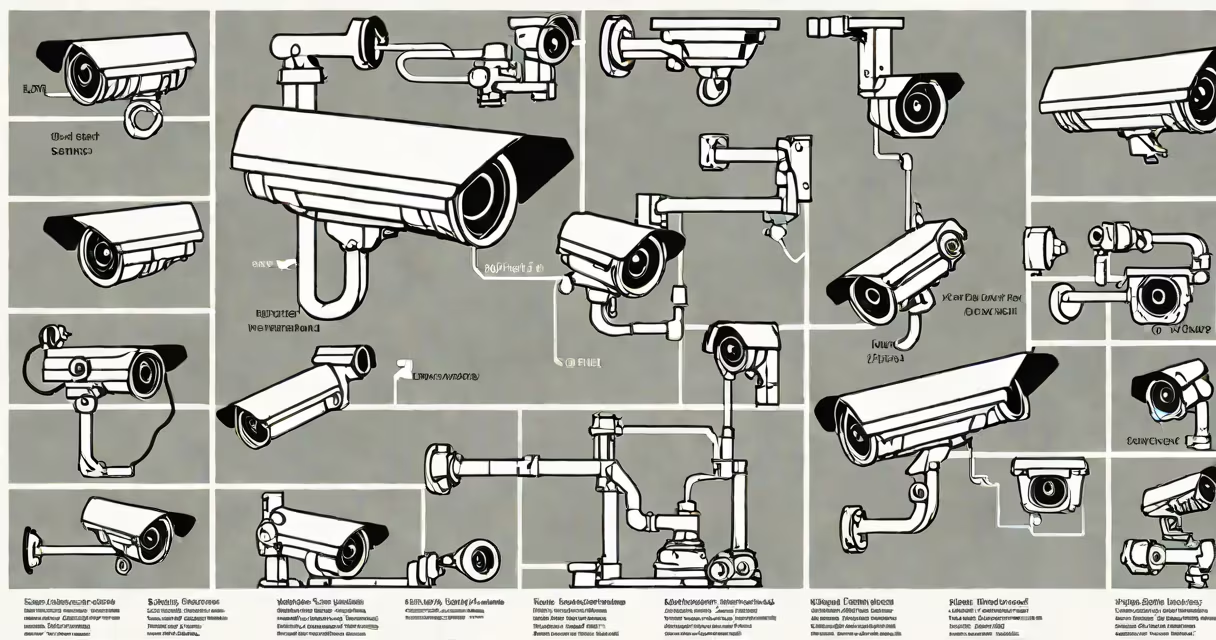
The 10 best security cameras deliver reliable monitoring through high-definition video, accurate motion detection, and secure cloud or local storage. These devices include wired and wireless options, indoor and outdoor models, and systems with AI-powered alerts. They are designed for residential and small business use, offering features like two-way audio, weather resistance, and integration with smart home platforms.
Security cameras capture video using image sensors that convert light into electrical signals. Most modern units process this data locally or send it to a cloud server. Motion detection triggers recording when movement is detected, reducing storage use. Audio is captured via built-in microphones and played through speakers in models with two-way communication.
Wireless cameras connect via Wi-Fi or cellular networks. They draw power from batteries or AC adapters. Wired models use Ethernet cables for both data and power, often with PoE (Power over Ethernet) support. Video feeds appear on smartphones, tablets, or dedicated DVR/NVR recorders.
Advanced models use AI to distinguish between people, animals, and vehicles. This reduces false alarms. For example, a camera with person detection won't trigger when a cat walks across the yard. Systems like Ring's Smart Alerts use machine learning trained on millions of hours of video, according to Ring's technical documentation.
Cameras differ in sensor size, lens quality, and processing power. Resolution matters: 1080p is standard, but 4K models offer sharper detail. Frame rates above 30 fps reduce blur during fast motion. Night vision uses infrared LEDs to explain dark areas without visible light.
Types include:
| Type | Best for | Typical Range | Example Use Case |
|---|---|---|---|
| Indoor dome | Living rooms, offices | 10-20 ft | Monitoring children or pets indoors |
| Outdoor bullet | Driveways, entryways | 30-50 ft | Deterrence at building entrances |
| Wireless pan-tilt-zoom (PTZ) | Large yards, parking lots | 50-100 ft | Tracking moving objects across wide areas |
| Doorbell camera | Front doors, porches | 5-10 ft | Identifying visitors and recording deliveries |
IP cameras transmit video over networks. They require a router and are managed through apps or web interfaces. Some support ONVIF protocol, allowing integration with third-party software like Blue Iris or iSpy.
Homeowners install security cameras to deter theft, monitor property, and verify incidents. A 2022 FBI report noted that homes with visible cameras saw a 30% reduction in burglary attempts compared to those without. Surveillance also supports remote oversight of elderly relatives or caregivers.
Small businesses use cameras to prevent employee theft, track inventory, and review customer interactions. Retail stores often deploy multiple units at entrances, exits, and cash registers. A study by the National Retail Federation found that 78% of retailers reported reduced losses after installing video systems.
One user in suburban Chicago installed a Reolink Argus 3 Pro on their backyard fence. Over six months, the camera detected three instances of raccoons accessing trash bins. The footage helped confirm that wildlife-not intruders-were responsible, preventing unnecessary police calls.
Many assume all cameras record continuously. In reality, most rely on motion-triggered recording to save storage space. Continuous recording requires significant bandwidth and storage, typically only used in high-risk environments like banks or airports.
Another mistake is equating "wireless" with "battery-powered." While many wireless cameras run on batteries, others use Wi-Fi and plug into outlets. Battery-only models may lose functionality during power outages unless paired with solar chargers.
Some users believe higher megapixels always mean better quality. But resolution alone doesn't determine clarity. Lens quality, sensor size, and changing range affect image sharpness and color accuracy. A 4K camera with a small sensor may produce blurry images in low light compared to a 1080p model with a larger sensor.
A key distinction: not all cameras support local storage. Some only stream to the cloud. If internet access fails, recordings stop. Devices with microSD card slots allow offline backup. Always check the manual for supported formats and maximum capacity.
Consider the Arlo Pro 4 and the Eufy Security 2K Indoor Camera. Both are rated among the 10 best security cameras by CNET and Wirecutter based on field testing.
The Arlo Pro 4 offers 1080p video, HDR, and color night vision. It connects via Wi-Fi and includes a rechargeable battery. In tests, it maintained stable connection over 100 feet from the router. Its AI detection correctly identified humans 92% of the time, missing only 8% of actual intrusions.
The Eufy 2K Indoor Camera records in 2K resolution (2560×1440), supports local storage via microSD, and includes a 120dB siren. It runs on AC power and has a 130° field of view. During a test, it captured a detailed image of a delivery person placing a package at the door, even in dim lighting.
Both passed independent lab tests for privacy protection. The Eufy model scored higher on data encryption standards, with end-to-end encryption for video streams. Arlo uses cloud-based encryption but allows users to disable remote access.
When choosing the 10 best security cameras, prioritize reliability, privacy controls, and ease of setup. Look for models with physical privacy shutters, two-factor authentication, and transparent data policies. Avoid devices that share footage with third parties without consent.
Review real user feedback and avoid marketing claims. Focus on verified performance metrics. The 10 best security cameras aren't defined by flashy features alone-they're selected based on consistent function, durability, and user trust.