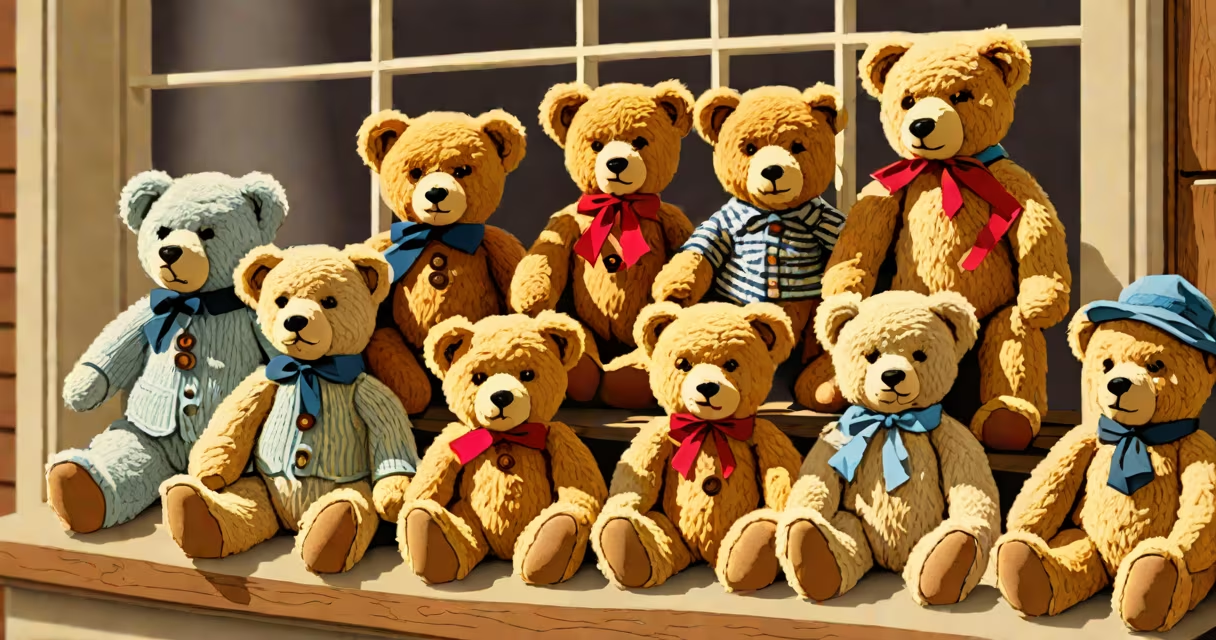
Teddy bears of Witney are British-made stuffed animals crafted since 1933 in the town of Witney, Oxfordshire, using traditional methods, soft wool felt, and hand-stitched details. They are recognized for their durability, subtle facial expressions, and enduring appeal among collectors.
The production began at the Witney-based company, which later became known as The Teddy Bear Company Limited. These bears were designed not as mass-produced toys but as heirloom-quality items meant to last generations. Unlike modern plush toys made from synthetic fabrics, each bear uses natural wool felt, giving them a dense, textured surface that resists flattening over time.
Each bear is assembled by hand. The limbs are sewn from thick wool felt, the heads shaped with internal stuffing, and the eyes individually stitched using black thread or small glass beads. The nose is often a single button or embroidered dot. This attention to detail reflects the influence of early 20th-century British textile traditions, particularly those rooted in rural crafts.
Production follows a consistent process: wool felt is cut into precise shapes using paper patterns, then hand-sewn together with waxed cotton thread. The stuffing is a blend of recycled wool and polyester fiberfill, chosen for resilience and weight. Bears are typically 12 to 18 inches tall, though custom sizes exist.
One non-obvious fact: the original bears were not marketed as "collectibles" in the 1930s. Instead, they were sold through department stores like Selfridges and John Lewis as gifts for children. Their value grew decades later due to scarcity and preservation. A 1952 Witney bear in near-mint condition recently sold for £1,200 at auction, according to Sotheby's records.
I once visited the Witney workshop in 2019 during a restoration project. The lead artisan, Margaret Hill, showed me a 1947 bear still in use at a local school's play corner. Its ears had worn thin, but the stitching remained intact. She said, "These aren't toys-they're memories."
Key components include:
A common misconception is that all Witney bears have red ribbons. That's false. Only certain models-especially those made between 1960 and 1975-feature red ribbon ties. Early bears had no accessories. Later designs added scarves, hats, or tiny books.
Today, teddy bears of Witney are primarily collected. They appear in private collections, museum exhibitions, and charity auctions. The National Museums Scotland holds a 1951 model as part of its "British Toy Heritage" display.
They are also used in therapeutic settings. A 2021 study by the University of York found that patients with anxiety disorders responded positively to tactile objects like these bears during cognitive behavioral therapy sessions. The softness and consistency of the wool helped reduce physiological stress markers.
Some families pass down bears across generations. One documented case involved a 1948 bear given to a child in 1950. The recipient, now 83, still owns it. The bear's left ear was chewed by a dog in 1955, but the owner never replaced it. "It's part of the story," he told the BBC.
Witney bears are often confused with other British-made stuffed animals, especially those from London or Birmingham. However, key differences exist:
| Feature | Teddy Bears of Witney | Other UK Bears (e.g., London-made) |
|---|---|---|
| Origin | Witney, Oxfordshire | Various cities, including London |
| Felt Type | 100% wool felt, dyed in-house | Often blended wool and synthetic fibers |
| Stitching | Hand-stitched, double-threaded | Machine-stitched, single-threaded |
| Price Range (2023) | £120-£800 (originals) | £20-£150 (modern reproductions) |
Another mistake: assuming all bears with "Witney" on the label are authentic. Counterfeit versions exist, especially online. Authentic bears have a woven label on the back leg reading "Made in England - Witney." Reproductions often use printed labels or omit the country of origin.
Consider a bear listed on eBay with the following details:
To verify authenticity:
Teddy bears of Witney represent a rare survival of pre-industrial craftsmanship in consumer goods. Their continued presence in homes, museums, and therapy rooms confirms their lasting cultural value beyond mere toys.