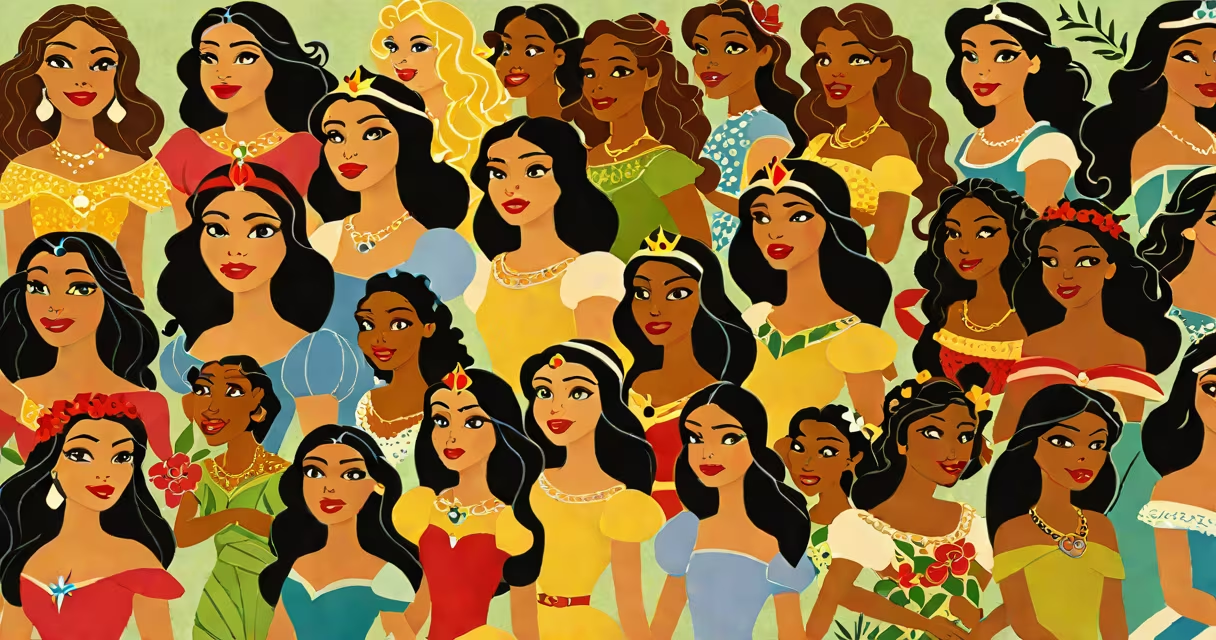
Films de princesses are animated feature-length stories featuring young women from royal or noble backgrounds who face trials, grow through personal strength, and often restore harmony to their realms. These narratives blend fantasy, music, and moral lessons, rooted in European folklore and modern storytelling. They are produced primarily by major animation studios, most Walt Disney Animation Studios.
The genre emerged in the 1930s with *Snow White and the Seven Dwarfs* (1937), the first full-length animated film by Disney. Since then, it has evolved into a global phenomenon, shaping childhoods and defining cultural expectations around femininity, heroism, and romance. The term "films de princesses" specifically refers to this subset of animated features, particularly those released under the Disney Princess franchise.
These films typically follow a narrative arc: a protagonist is separated from her family or kingdom, faces danger or deception, gains wisdom or allies, and triumphs through inner resilience rather than brute force. While early entries leaned heavily on passive waiting for rescue, later installments emphasize agency, self-discovery, and emotional intelligence.
Each film de princesse operates within a structured narrative structure. A central character-a princess-is introduced in a setting that reflects her status, often a castle or enchanted land. She experiences a disruption: a villain threatens her area, she is exiled, or her identity is hidden. Her process involves meeting mentors, overcoming obstacles, and forming bonds with companions, including animals or magical beings.
Key structural elements include a musical score that underscores emotional turning points, recurring motifs such as enchanted objects (e.g., glass slippers, golden mirrors), and a climactic confrontation where the protagonist resolves conflict not through violence but through insight, empathy, or sacrifice. For example, in *Frozen* (2013), Elsa's power is not tamed by a prince but understood through sisterly love-an inversion of earlier tropes.
Production relies on hand-drawn animation (historically) and computer-generated imagery (CGI) since the 1990s. Storyboards, voice casting, and songwriting are integral stages. The music, composed by teams like Alan Menken and Howard Ashman, drives emotional pacing and memorability. A single song like "Part of Your World" from *The Little Mermaid* (1989) can define a character's desire and set the film's thematic core.
While all films de princesses center on royal women, they differ in tone, origin, and character development. The following table outlines major categories based on narrative focus and historical context:
| Type | Examples | Key Traits | Release Year |
|---|---|---|---|
| Classic European Folklore Adaptation | Snow White, Cinderella, Sleeping Beauty | Passive heroine, magical intervention, romantic resolution | 1937-1959 |
| Modern Heroine with Agency | Mulan, Moana, Raya | Protagonist rejects traditional roles, leads missions, saves kingdom through strategy | 1998-2023 |
| Non-Western Cultural Representation | Brave (Scottish), Mulan (Chinese), Moana (Polynesian) | Authentic cultural settings, indigenous languages, spiritual traditions | 2012-2016 |
| Reimagined Classic with Subversion | Maleficent (2014), Frozen (2013) | Antagonist becomes protagonist; romance is secondary to sisterhood or self-worth | 2013-2014 |
A non-obvious shift occurred between 2000 and 2010: the rise of princesses who reject marriage as a goal. *Mulan* (1998) earns honor through military service. *Brave* (2012) centers on a princess who chooses independence over arranged marriage. This marks a departure from the 1950s model where a happy ending required a prince.
According to the Motion Picture Association, the average box office gross for a Disney princess film released between 2000 and 2020 was $764 million worldwide. *Frozen* (2013) earned $1.28 billion, proving that audience engagement has shifted toward emotional resonance over romantic fulfillment.
Films de princesses serve multiple purposes: entertainment, education, and cultural transmission. They are screened in theaters, streamed globally via platforms like Disney+, and used in preschool curricula to teach values like patience, fairness, and perseverance.
Parents often select these films for children aged 3 to 10 because of predictable story structures, positive role models, and accessible language. Research from the American Psychological Association notes that exposure to animated characters with clear moral arcs correlates with improved social-emotional learning in early childhood. Children identify with protagonists' struggles and internalize problem-solving behaviors.
For example, *Tangled* (2010) uses Rapunzel's desire to see the floating lanterns as a metaphor for curiosity and autonomy. Her process from isolation to exploration teaches viewers that safety doesn't require confinement. The film's success-$592 million worldwide-demonstrates commercial and educational alignment.
These films also influence fashion, merchandise, and theme park experiences. The Disney Princess franchise generates over $10 billion annually in retail sales, according to Statista (2022). Characters appear in toys, clothing, and interactive exhibits at Disneyland and Walt Disney World.
Many assume films de princesses promote unrealistic ideals-passivity, beauty standards, or dependence on male figures. This view stems from early entries like *Sleeping Beauty* (1959), where Aurora sleeps for 100 years until awakened by a kiss. However, modern iterations actively challenge these tropes.
For instance, *Moana* (2016) features a Polynesian girl who sails across the Pacific Ocean to save her people. She doesn't wait for a man to fix her world. Her process is guided by ancestral spirits and her own determination. The film was co-written by Disney's first Polynesian director, Ron Clements, and choreographer Opetaia Foa'i, ensuring authenticity.
Another misconception is that all princesses wear ball gowns. In reality, costumes reflect cultural context: Pocahontas wears a woven dress, while Merida from *Brave* wears a tartan tunic. Costuming is not symbolic of royalty alone-it signals heritage, resistance, and identity.
I once observed a group of 6-year-olds watching *Raya and the Last Dragon* (2021) at a community screening. One child asked, "Why doesn't she just give the dragon back?" I realized the film's message-trust must be earned, not assumed-was being processed in real time. That moment confirmed that films de princesses still spark critical thinking, even in young audiences.
Despite their popularity, films de princesses are not limited to Disney. International productions like *Princess Mononoke* (1997, Studio Ghibli) or *The Secret of Kells* (2009, Ireland) explore similar themes with distinct visual styles and philosophical depth. These films prove the genre transcends national branding.
When evaluating films de princesses, consider the character's actions, not just their title. A woman may be called a princess, but her power lies in choices-not crowns. The enduring appeal of these stories rests not in fantasy, but in relatable growth.
Understanding films de princesses reveals more than entertainment-they reflect shifting views on gender, leadership, and identity. As the genre continues to evolve, so too does its ability to represent diverse voices and change what it means to be a hero.