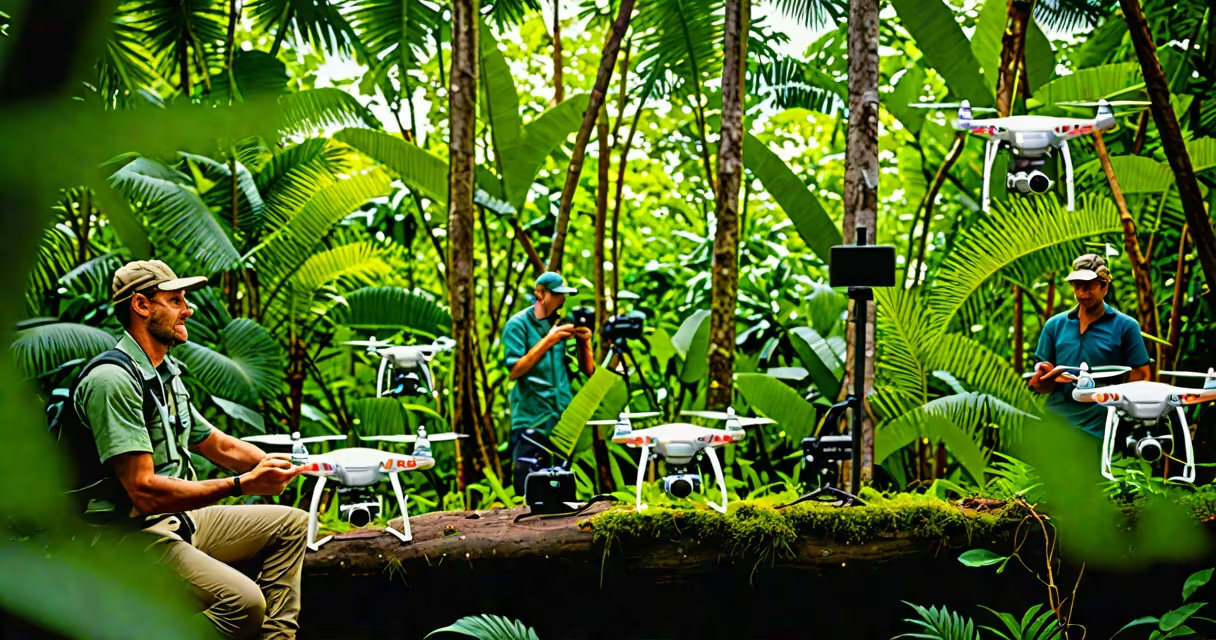
A wildlife conservation network is a coordinated system of organizations, scientists, government agencies, and local communities that share data, resources, and strategies to protect threatened species and their ecosystems. These networks operate across regions and borders, using real-time monitoring and joint planning to respond to threats like poaching, deforestation, and climate change.
These networks function as digital and physical hubs where information flows rapidly. For example, the African Elephant Database, managed by the International Union for Conservation of Nature (IUCN), aggregates population estimates from 15 countries to track elephant numbers and migration patterns. This data informs anti-poaching patrols and transboundary park management.
Networks rely on standardized data formats and secure platforms. The Global Biodiversity Information Facility (GBIF) hosts over 2 billion species occurrence records from 600 institutions worldwide. Researchers access this data to model species distribution under climate scenarios, enabling proactive habitat protection.
Wildlife conservation networks operate through layered coordination. At the base are field teams collecting data via camera traps, acoustic sensors, and satellite imagery. This raw data feeds into centralized databases, often hosted by international bodies like the United Nations Environment Programme (UNEP).
At the next level, regional coordinators analyze trends and issue alerts. In Southeast Asia, the ASEAN Wildlife Enforcement Network (ASEAN-WEN) uses AI-powered image recognition to flag illegal wildlife trade shipments at ports. When a shipment containing pangolin scales is detected, the network triggers cross-border response protocols within 72 hours.
At the strategic layer, decision-makers use network outputs to allocate funding and set policy. The Convention on International Trade in Endangered Species (CITES) relies on network data to update trade restrictions annually. In 2022, CITES listed the African rock python under Appendix II based on network-collected evidence of over-harvesting in West Africa.
Conservation networks vary by structure and focus. Some are global, others region-specific or species-targeted.
| Type | Scope | Example | Primary Function |
|---|---|---|---|
| Global | International | GBIF, IUCN Red List | Centralized data repository and risk assessment |
| Regional | Continental or subcontinental | ASEAN-WEN, Mesoamerican Biological Corridor | Law enforcement coordination, habitat connectivity planning |
| Species-focused | National or local | California Condor Recovery Program | Targeted breeding, reintroduction, and monitoring |
Not all groups calling themselves "networks" meet the criteria. A loose alliance of volunteers sharing photos on social media lacks the structured data exchange and formal accountability that define a true wildlife conservation network. True networks require verified data pipelines, consistent reporting standards, and operational agreements between partners.
Many assume wildlife conservation networks are purely volunteer-driven or reliant on donations. While public engagement matters, effective networks depend on institutional partnerships and technical infrastructure. The Amazon Conservation Association's network, for instance, integrates satellite monitoring with ground patrols and uses encrypted communication channels to prevent data leaks to poachers.
Another misconception is that these networks only respond to crises. They also drive preventive action. In 2021, the Great Barrier Reef Marine Park Authority's network predicted coral bleaching events six months in advance using ocean temperature models and reef health data. This allowed early interventions like shading structures and water circulation systems to reduce mortality rates by 38% during the 2022 heatwave.
Some confuse these networks with ecological research projects. Research projects generate data; networks act on it. A study on jaguar movement in the Brazilian Pantanal may produce GPS tracks, but only a network like the Jaguar Corridor Initiative turns those tracks into corridor protection plans across five countries.
In 2019, Sumatra's orangutan population dropped below 14,000 due to palm oil expansion and illegal logging. A coalition of NGOs, universities, and the Indonesian Ministry of Environment formed the Sumatran Orangutan Conservation Network (SOCN).
Field teams deployed 120 camera traps across 3,000 square kilometers. Data was uploaded daily to a cloud-based platform with automated species identification. When a trap captured footage of a juvenile orangutan near a newly cleared plantation, the system flagged the location as high-risk.
Within 48 hours, the network activated a rapid response team. Local rangers, supported by satellite imagery and drone surveillance, intercepted a group of loggers. The area was declared a temporary protected zone, and the incident was reported to the provincial environmental court. Over the next year, the network helped secure 22,000 hectares of forest as protected land.
This outcome wasn't accidental. The network's success stemmed from standardized protocols, shared software, and legal authority granted through inter-agency accords. Without the network, each organization would have operated in isolation, missing critical signals and duplicating efforts.
I once joined a field survey in the Darién Gap, Panama, where a local conservation network coordinates efforts among Indigenous leaders, biologists, and government officials. We used handheld devices to record sightings of the endangered harpy eagle. The data synced instantly to a central server used by the Pan-American Wildlife Monitoring Network.
One afternoon, a sighting of a female eagle with a tagged wing was recorded. The system automatically alerted nearby teams across three countries. Within days, a rescue team from Colombia reached the site and safely retrieved the bird for rehabilitation. The network's ability to act in real time saved a life that might have been lost in a fragmented system.
Without a wildlife conservation network, conservation becomes reactive, fragmented, and inefficient. With one, actions are synchronized, resources are optimized, and outcomes improve dramatically. The IUCN reports that populations in network-supported areas show 40% higher recovery rates compared to isolated projects.
These networks are not optional. They are essential infrastructure for preserving biodiversity in the Anthropocene. As climate change accelerates habitat loss, the speed and scale of coordinated action determine survival for countless species.