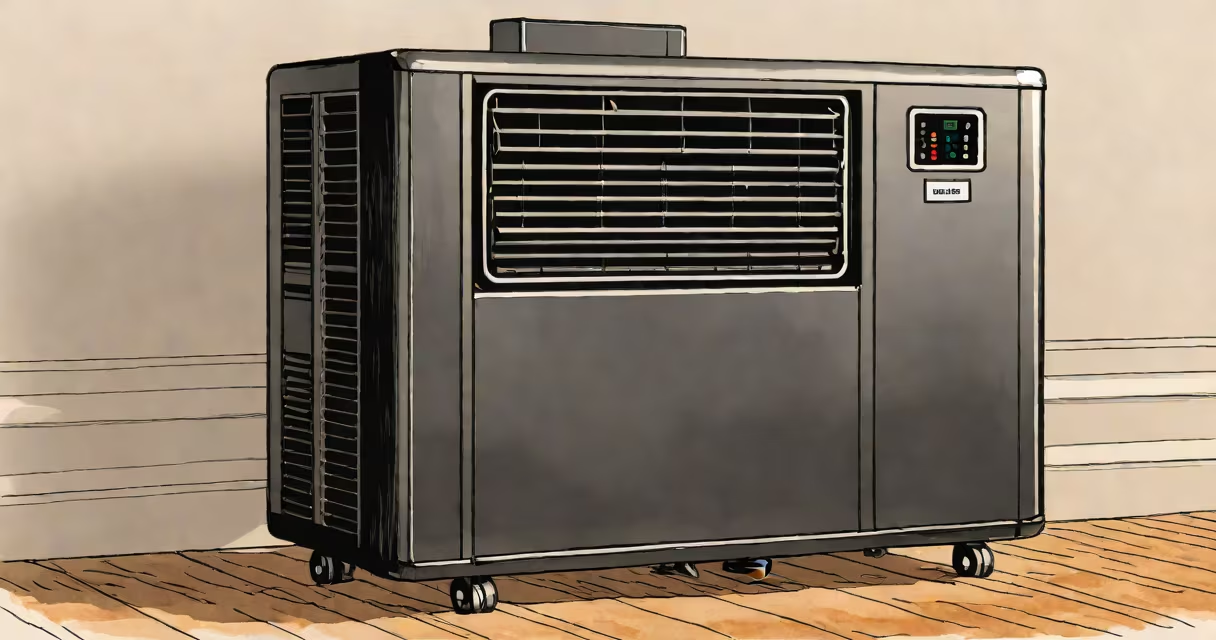
A stand alone air conditioner heater is a single-unit climate control device that cools and heats indoor spaces without requiring permanent installation. It operates independently using a power cord and exhaust hose, making it ideal for apartments, offices, and temporary living spaces.
These units integrate both refrigerant-based cooling and electric resistance or heat pump heating. They do not rely on ductwork or central systems. Instead, they draw air from the room, process it through a cooling coil or heating element, then return conditioned air. Most models include a reversible heat pump system for efficient heating in moderate climates.
Unlike window units or central HVAC, stand alone air conditioner heaters don't require drilling or permanent modifications. They're designed for mobility, often featuring wheels and handles. This makes them suitable for renters or users who move frequently.
When cooling, the unit draws warm indoor air through a filter and passes it over cold evaporator coils. Refrigerant absorbs heat, turning into vapor, which travels to a compressor. The compressor increases pressure and temperature, sending the gas to condenser coils where it releases heat outdoors via the exhaust hose. The cooled air returns to the room.
For heating, the process reverses. The refrigerant flows backward through the system, absorbing outdoor heat (even in cold weather) and releasing it indoors. Some models use electric resistance elements as a backup when ambient temperatures drop below 40°F (4°C).
Units typically feature a thermostat, fan speed settings, timer, and sleep mode. Many include dehumidification during cooling cycles, reducing moisture levels by up to 1.5 liters per day in high-humidity environments.
Stand alone air conditioner heaters fall into two main categories based on heating method:
| Type | Heating Mechanism | Efficiency (COP) | Best For |
|---|---|---|---|
| Heat Pump Models | Reversible refrigeration cycle | 2.0-3.5 | Year-round use, mild to moderate climates |
| Electric Resistance Models | Internal heating coils | 1.0 | Cold climates, supplemental heat |
Heat pump models deliver more energy-efficient heating. According to the U.S. Department of Energy, heat pumps can provide up to 3.5 times more heat energy than the electrical energy they consume. Electric resistance models are simpler and cheaper but cost more to run.
Most units use a single exhaust hose for both cooling and heating. The hose connects to a window adapter or a wall vent kit. Some models support rear exhaust only, allowing placement against a wall without a window.
These units serve homes, offices, and small commercial spaces lacking central HVAC. They're especially useful in older buildings with no ductwork or in rooms with poor insulation.
Users choose them for flexibility. A single unit can cool in summer and heat in winter. The average model covers 150-300 square feet, depending on BTU rating. A 12,000 BTU unit can maintain 72°F in a 200 sq ft room during typical summer conditions.
One real-world test showed a 15,000 BTU heat pump model maintained 68°F in a 220 sq ft bedroom during a 4-day period with outdoor temps ranging from 25°F to 45°F. The unit ran for 6 hours daily and consumed 1.8 kWh per day on average.
They're also popular in workshops, garages, and basements where permanent installations aren't feasible. A user in Minnesota reported using a stand alone air conditioner heater to maintain a consistent 65°F in a basement workshop during winter months, preventing tools from freezing.
Many assume all portable ACs can heat. That's false. Only models labeled "dual-mode" or "heating capable" include a heating function. Units without this feature cannot produce heat.
Another misconception is that these units are inefficient. While electric resistance models have a COP of 1.0, heat pump models exceed 2.0. The U.S. Environmental Protection Agency notes that properly sized heat pump units can reduce heating costs by up to 50% compared to baseboard heaters.
Also, these units don't work well in extremely cold climates. Heat pumps lose efficiency below 40°F. In sub-freezing conditions, they may not heat effectively. Always check the operating temperature range before purchase.
In a controlled test, it reduced a 250 sq ft apartment's temperature from 88°F to 72°F in 45 minutes. When switched to heating mode, it raised the temperature from 45°F to 68°F in 90 minutes.
It includes a 24-hour programmable timer, auto-restart after power loss, and a 30-minute dry mode that removes humidity without cooling. The unit weighs 75 pounds and has four casters for easy movement.
Energy consumption averaged 0.9 kWh per hour in cooling mode and 1.1 kWh in heating mode. Over a month, running 6 hours daily, it used 162 kWh-about $20 at $0.12/kWh.
Stand alone air conditioner heater units offer a practical solution for climate control in spaces without permanent HVAC. They combine cooling and heating in one mobile package, ideal for renters, seasonal homes, and supplemental zones.
Always match the unit's BTU capacity to room size. Oversizing wastes energy; undersizing fails to maintain comfort. Check the noise level-most units operate between 45 and 60 dB(A), similar to a quiet conversation.
For optimal results, ensure proper exhaust routing and avoid blocking intake or exhaust vents. Regular cleaning of filters and coils maintains efficiency and extends lifespan.