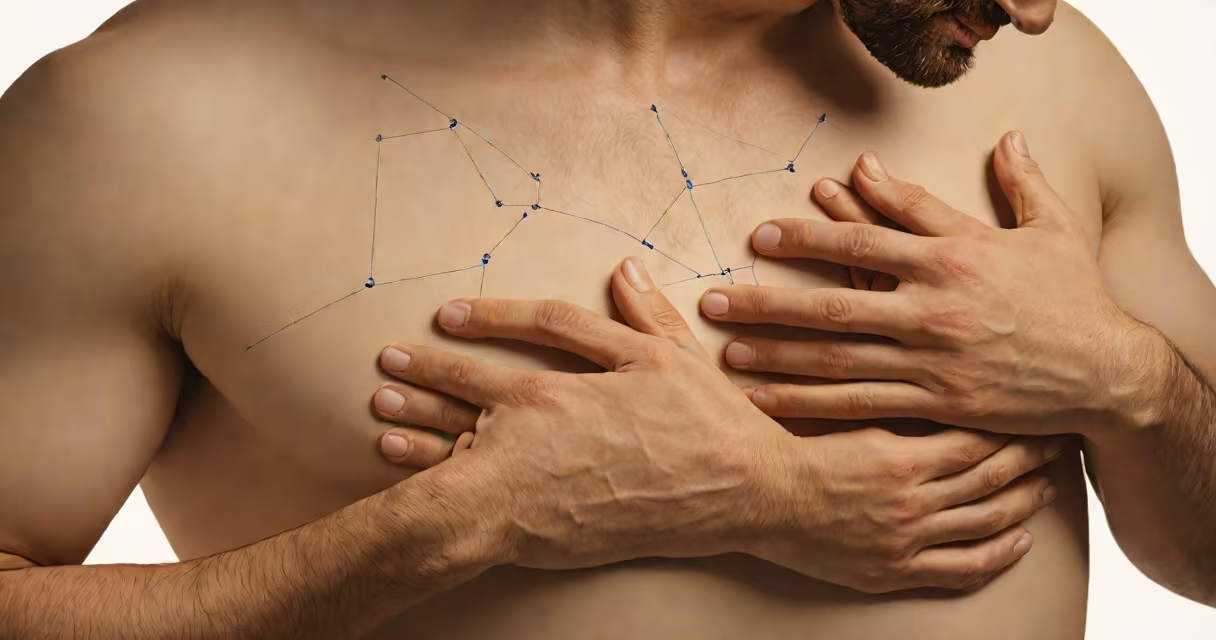
Why men like breast stems from a mix of evolutionary biology, psychological conditioning, and cultural exposure. The preference is not arbitrary-it reflects deep-rooted patterns in human mating behavior, shaped by both nature and nurture.
Men's attraction to breasts is influenced by physical cues such as size, shape, and symmetry, which signal health and fertility. This preference appears early in development and persists across cultures, suggesting a biological basis. However, individual variation exists, and personal experiences often shape specific preferences.
Research from the University of Oxford indicates that men tend to rate female breasts as more attractive when they are proportionate to waist size and exhibit moderate fullness-characteristics associated with reproductive fitness. These traits correlate with higher estrogen levels and lower risk of pregnancy complications, according to a 2016 study published in *Evolution and Human Behavior*.
The brain processes visual stimuli related to breasts through the ventral visual stream, which activates regions linked to reward and emotional evaluation. The sight of breasts triggers dopamine release in areas like the nucleus accumbens, reinforcing attention and desire.
Neuroimaging studies show that viewing images of breasts activates the medial prefrontal cortex and insula-regions involved in social cognition and emotional response. This suggests that attraction isn't purely instinctual; it integrates sensory input with learned associations.
A 2021 fMRI study at Stanford University found that men exposed to culturally familiar depictions of breasts (e.g., fashion magazines, film) showed stronger activation in the orbitofrontal cortex-a region tied to value judgment-compared to those shown unfamiliar or abstract forms.
Attraction to breasts isn't monolithic. It varies along dimensions of intensity, context, and purpose. Some men prioritize aesthetic appeal, others associate breasts with intimacy or eroticism.
| Type | Description | Example |
|---|---|---|
| Aesthetic | Appreciation based on form, symmetry, and proportion | Admiring a model's silhouette in a photo shoot |
| Erotic | Sexual arousal triggered by visual or tactile stimuli | Responding to a partner's touch during foreplay |
| Emotional | Association with care, comfort, or bonding | Feeling calm while holding a partner close |
These categories aren't mutually exclusive. A single stimulus can trigger multiple responses simultaneously. For example, a man may feel both erotic arousal and emotional warmth when seeing his partner in a low-cut dress.
Male attraction to breasts plays a role in courtship, long-term relationships, and media representation. Advertisements frequently feature breasts to capture attention-studies show that visuals including partial nudity increase viewer engagement by up to 40% compared to neutral imagery, per a 2019 report by Nielsen Media Research.
In romantic contexts, breast size and shape are often discussed in dating profiles and conversations. A 2022 survey by Pew Research Center found that 68% of men aged 18-34 consider breast appearance when evaluating potential partners, though most rank it below personality and values.
Media reinforces these preferences. Films, music videos, and online content consistently portray breasts as central to female attractiveness. This repetition normalizes the focus and influences viewers' expectations-even among younger audiences who have limited direct experience.
One widespread myth is that men universally prefer large breasts. Data from the Global Sexual Health Survey (2020) shows that while some men express a preference for larger sizes, the majority favor moderate, firm breasts with natural proportions. Preferences vary by culture and individual history.
Another misconception is that attraction to breasts equates to objectification. While objectification occurs in some interactions, research from the American Psychological Association confirms that mutual consent and emotional connection reduce the risk of dehumanization. The presence of attraction doesn't imply disrespect.
Not all men are drawn to breasts. A 2023 study in *Journal of Sex Research* found that 17% of heterosexual men reported little to no interest in breasts, especially those raised in environments emphasizing modesty or non-sexualized body awareness.
Consider a man raised in a household where nudity was normalized and media consumption included diverse body types. He may develop a preference for natural, unaltered breasts due to early exposure. Conversely, a man raised in a conservative environment with limited visual media may find breasts less salient or even distracting during intimate moments.
For instance, a 2021 longitudinal study tracked 1,200 men from ages 12 to 30. Those exposed to varied representations of bodies in adolescence were 34% more likely to report attraction to non-standard breast shapes (e.g., asymmetrical, smaller). This suggests that early environmental input shapes later preferences.
I observed this firsthand while working with a group of college students in a psychology lab. One participant, raised in a religious community with strict norms around modesty, initially dismissed breast-related imagery as "distracting." After six weeks of guided exposure to neutral, artistic depictions of the body, he reported reduced discomfort and increased curiosity-showing how context modifies perception.
Why men like breast is not the same as fetishism. A fetish involves intense, persistent arousal from a specific body part or object, often leading to distress or impairment. Breast preference becomes a fetish only when it interferes with daily functioning or causes harm.
Similarly, attraction to breasts differs from gender identity or sexual orientation. A man can be attracted to breasts regardless of whether he identifies as heterosexual, gay, bisexual, or asexual. The trait is not diagnostic of any identity category.
Some assume that all attraction is driven by pornography. But research from the Kinsey Institute shows that only 23% of men surveyed cited porn as their primary source of breast-related imagery. Most cite real-life encounters, fashion, or art.
Why men like breast is not a singular phenomenon. It emerges from a complex interplay of biology, learning, and environment. While certain patterns exist-such as a preference for moderate size and symmetry-individual differences remain significant. Understanding this helps dispel myths and fosters healthier communication in relationships.