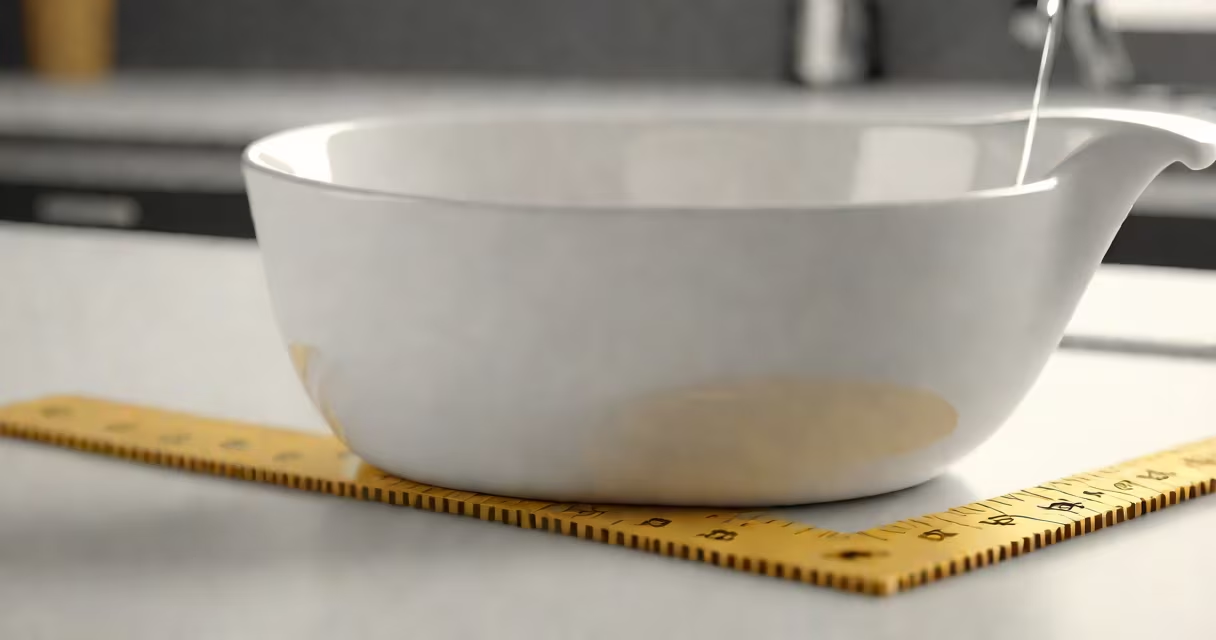
A cup in measurement is a unit of volume equal to 8 fluid ounces or approximately 236.6 milliliters in the United States customary system. It is widely used in cooking and baking for measuring both liquids and dry ingredients.
The cup is part of the US customary system, not the metric system. It is standardized by the U.S. National Institute of Standards and Technology (NIST), which defines a legal cup as exactly 236.5882365 milliliters. This standard ensures consistency across recipes and food packaging.
Cooking relies heavily on precise volume measures. A single cup can change the outcome of a cake or sauce. For example, using too much flour measured by volume can result in a dense, dry baked good. The cup is not interchangeable with imperial cups used in the UK, which differ slightly in size.
In kitchens, a cup is typically measured using a standard dry or liquid measuring cup. Dry measuring cups are designed to be filled level and then scraped flat with a knife. Liquid measuring cups have spouts and markings for accurate pour lines at eye level.
For accuracy, always use the correct tool. Measuring dry ingredients like flour or sugar in a liquid cup leads to errors because dry ingredients settle differently. A dry cup holds more volume than a liquid cup due to differences in design and intended use.
When following a recipe, read the ingredient list carefully. If a recipe calls for "1 cup of butter," it means 8 fluid ounces, not 8 ounces by weight. Butter weighs about 7.1 ounces per cup, so weight and volume differ. Confusing the two causes inconsistent results.
There are three main types of cups used in measurement:
| Type | Volume (US) | Common Use | Notes |
|---|---|---|---|
| Dry cup | 8 fluid oz (236.6 mL) | Flour, sugar, baking powder | Used for scooping and leveling; not for liquids |
| Liquid cup | 8 fluid oz (236.6 mL) | Milk, water, oil | Has a spout and clear markings; used for pouring |
| Measuring cup set | 1/4, 1/3, 1/2, 1 cup | General cooking tasks | Often sold in nested sets; includes multiple sizes |
Some recipes use fractional cups like 1/4 cup or 3/4 cup. These are standard divisions of the full cup. For example, 3/4 cup equals 6 fluid ounces or 177.5 milliliters. Knowing these fractions helps avoid guesswork.
One lesser-known fact: the cup is not a base unit in the International System of Units (SI). It is derived from the imperial gallon, which was standardized in 1824 by the British Parliament. The US adopted a slightly different version, leading to the current US cup being smaller than the imperial cup by about 4%.
People often mistake volume measurements for weight. A cup of flour weighs about 4.5 ounces, while a cup of sugar weighs about 7.1 ounces. Using a scale instead of a cup improves consistency, especially in baking.
Another error is assuming all measuring cups are the same. Some plastic cups labeled "1 cup" hold less than 236.6 mL. Always verify with a calibrated set. NIST recommends checking measuring tools annually for accuracy.
Confusion also arises between US customary cups and metric cups. A metric cup is 250 milliliters, which is 13.4% larger than a US cup. Recipes from European sources may assume metric cups unless specified otherwise.
Consider a vanilla cake recipe requiring 2 cups of all-purpose flour, 1 cup of granulated sugar, and 1/2 cup of milk. Using the correct tools ensures success.
Step 1: Measure 2 cups of flour using a dry measuring cup. Scoop flour into the cup, then level it off with a knife. Do not pack or tap the cup.
Step 2: Measure 1 cup of sugar using the same dry cup. Sugar is denser than flour, so it settles differently. Level it carefully.
Step 3: Pour 1/2 cup of milk into a liquid measuring cup. Place it on a flat surface and view the measurement at eye level to avoid parallax error.
If you substitute a different cup size, such as a 250 mL metric cup, you'll add 13.4% more flour and sugar. This alters the texture and sweetness. The cake may rise unevenly or collapse.
Knowing equivalent measures prevents errors. Here are common conversions:
Understanding the difference between A cup, B cup, and C cup is irrelevant in measurement contexts. These terms refer to bra sizing, not volume. Mixing them causes confusion. Always use "cup" in volume, not fashion or anatomy.
When in doubt, consult a trusted source. The USDA FoodData Central database lists ingredient weights and volumes for over 8,000 foods. It confirms that 1 cup of uncooked rice weighs 185 grams, while 1 cup of cooked rice weighs 200 grams due to water absorption.
Accuracy in measurement begins with understanding what a cup in measurement truly is. It is not a flexible term-it is a defined, standardized unit. Using it correctly ensures consistent results in every kitchen.