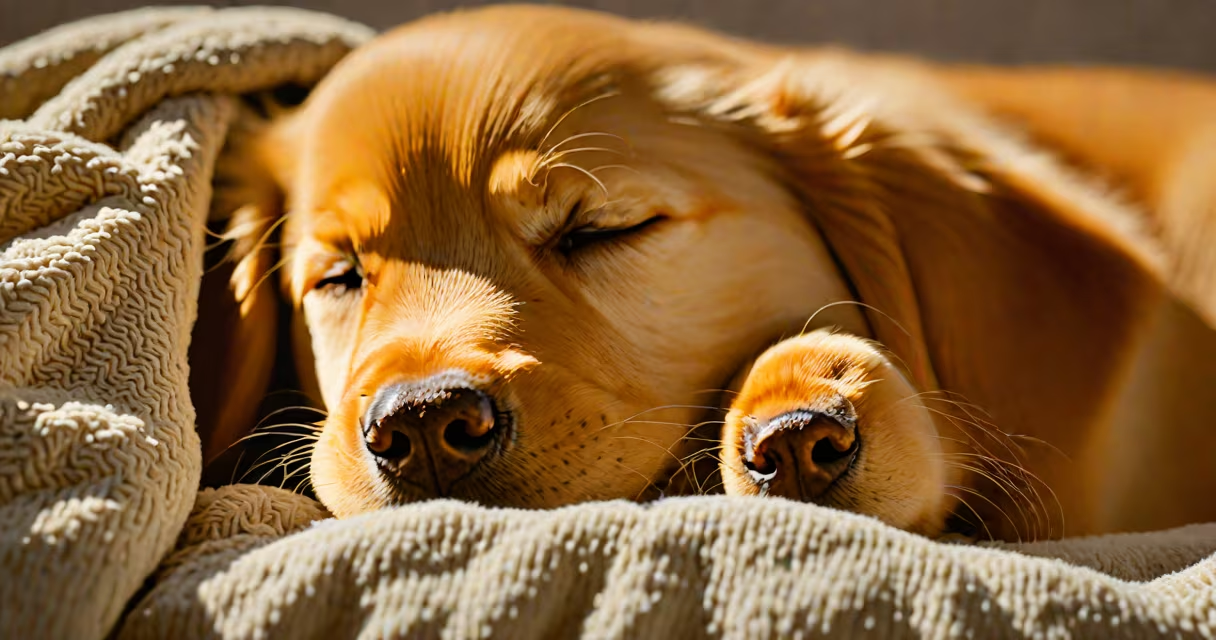
Puppies sleep 18 to 20 hours a day because their bodies and brains are developing rapidly, requiring intense rest for physical growth, neural wiring, and immune system strengthening. This high sleep demand is biologically necessary, not laziness.
During sleep, puppies' bodies produce growth hormones essential for muscle and bone formation. Their brains consolidate learning from the day-new commands, social cues, and environmental exploration-all while processing sensory input at a higher rate than adult dogs. Sleep supports synaptic pruning, which eliminates weak neural connections and strengthens useful ones, laying the foundation for long-term behavior and cognitive function.
Research from the American Kennel Club notes that puppies under six months old require more sleep than adult dogs. A 2021 study published in *Frontiers in Veterinary Science* found that young puppies spend nearly 60% of their time in REM sleep during early development, compared to 15% in adult dogs. This indicates that sleep is not passive downtime-it's an active phase of biological construction.
Puppies cycle through light and deep sleep phases multiple times per hour. Deep sleep (non-REM) enables tissue repair and hormone release. REM sleep, marked by twitching limbs and rapid eye movements, supports memory consolidation and emotional regulation. These cycles repeat every 20 to 30 minutes, especially in younger puppies.
Environmental factors influence sleep quality. Noise, temperature extremes, or frequent interruptions reduce rest efficiency. A quiet, warm, dark space with a soft bed promotes uninterrupted sleep. Overstimulation during waking hours-such as prolonged play or training sessions-can lead to exhaustion, causing a puppy to crash into deeper sleep earlier than usual.
A 2023 study from the University of Pennsylvania School of Veterinary Medicine showed that puppies raised in high-stimulation environments had shorter average sleep durations and exhibited more anxiety-related behaviors later in life. This suggests that consistent, restful sleep is not just recovery-it's preventative care.
Puppy sleep requirements change dramatically in the first year. The following table outlines typical daily sleep ranges based on developmental stages:
| Age Range | Daily Sleep Hours | Primary Development Focus |
|---|---|---|
| 0-8 weeks | 18-20 | Neural wiring, reflex development, feeding adaptation |
| 8-16 weeks | 16-18 | Socialization, basic command learning, motor coordination |
| 4-6 months | 14-16 | Teething, independence, housebreaking consistency |
| 6-12 months | 12-14 | Stabilizing routines, breed-specific traits emerging |
At eight weeks, a puppy may sleep 19 hours a day. By six months, that drops to around 14 hours. This decline reflects maturation of the nervous system and reduced metabolic demands per pound of body weight.
Many owners mistake excessive sleep for illness or low energy. However, sleeping 18+ hours is normal for puppies under four months. If a puppy sleeps consistently beyond 20 hours, shows signs of lethargy when awake, or refuses food, consult a veterinarian. These could indicate underlying health issues such as hypoglycemia or parasitic infection.
Another common error is assuming sleep equals boredom. Puppies aren't resting because they're uninterested-they're building the neurological infrastructure needed for future learning. A puppy that naps after a 10-minute training session is not lazy; it's integrating new information. The brain processes complex stimuli during sleep, making rest essential for behavioral progress.
Some confuse puppy sleep with adult dog sleep patterns. Adult dogs typically sleep 12-14 hours daily. If a puppy suddenly sleeps less than expected, it may signal stress or overexertion. Conversely, if a puppy sleeps more than average, it's often due to recent activity, illness, or environmental changes-not a problem unless persistent.
Consider a 10-week-old dachshund named Pip. His owner reports he sleeps 19 hours a day, wakes briefly to eat, then returns to sleep. He plays for 15 minutes twice daily, then rests. His vet confirmed normal growth metrics and healthy bloodwork.
Pip's schedule aligns with standard developmental norms. His sleep includes 12 hours of deep sleep and 5 hours of REM. During REM, his legs twitch, and he occasionally whimpers-signs of dreaming and neural processing. After each nap, he gains better focus during training sessions, showing improved retention of commands like "sit" and "stay."
This pattern reflects the biological reality: sleep is not downtime. It's the engine of growth. Without sufficient rest, puppies struggle with learning, immunity, and emotional stability.
While high sleep is normal, certain red flags warrant attention. If a puppy sleeps more than 20 hours daily, appears disoriented upon waking, or fails to gain weight despite eating well, contact a vet. Hypoglycemia (low blood sugar) is common in small breeds and can mimic extreme fatigue. Symptoms include weakness, trembling, and collapse.
Other concerns include sudden shifts in sleep patterns. A puppy who previously slept 18 hours but now sleeps 22 hours may be experiencing pain, infection, or neurological issues. Always monitor changes in appetite, stool, and behavior alongside sleep duration.
Why do puppies sleep a lot? Because their bodies are growing faster than any other stage of life. Sleep fuels development, learning, and resilience. Recognizing this helps owners provide appropriate rest environments and avoid misinterpreting normal behavior as a problem. Support healthy sleep habits, and your puppy will thrive.