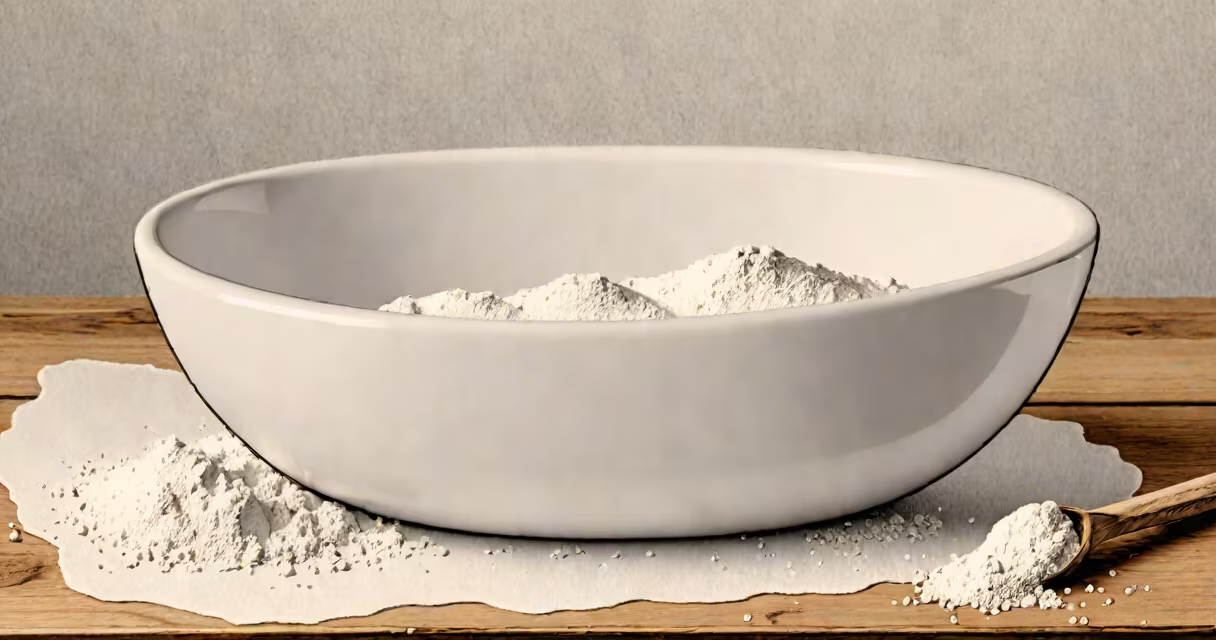
One cup in cooking is a standardized volume measure equal to 8 fluid ounces, 240 milliliters, or approximately 1/2 pint. It's used globally in recipes for dry and liquid ingredients, though actual volume can vary slightly depending on the country or system.
The U.S. customary system defines 1 cup as exactly 8 fluid ounces, which is 236.588 milliliters. The metric system rounds this to 250 milliliters for simplicity in many international recipes. This difference causes measurable variation-about 10%-between U.S. and metric cup sizes. The U.S. Department of Agriculture (USDA) confirms that standard U.S. cups are based on the legal fluid ounce, while the metric cup is a rounded approximation.
Using the wrong cup size can alter recipe outcomes. A cake requiring 2 cups of flour may rise too high or collapse if measured with a metric cup instead of a U.S. one. The International Association of Culinary Professionals (IACP) recommends using calibrated measuring tools and specifying the system used in recipes to avoid errors.
Cooking uses volume to quantify ingredients because it's faster and more accessible than weighing. Measuring cups are designed to hold precise volumes. Dry ingredients like flour, sugar, and rice are scooped into a cup and leveled off with a straight edge. Liquids are poured into a clear cup with marked lines, read at eye level to avoid parallax error.
For dry goods, the method matters. Spoon flour into the cup and level it-don't pack or tap it. Overpacking increases density. One cup of all-purpose flour weighs about 120 grams. If you scoop directly from the bag, you may get 140 grams, adding too much flour and making dough tough. The USDA advises against scooping directly from bulk containers.
Liquids require a different technique. Pour water or oil into a measuring cup until the meniscus-the curved surface-aligns with the 1-cup mark. Reading the level at eye level prevents under- or over-measuring. A 1-cup measuring cup typically has markings for 1/4, 1/3, 1/2, and 3/4 cup, enabling partial measurements.
Measuring cups come in two main forms: dry and liquid. Dry measuring cups are flat-bottomed and designed to be filled and leveled. They're usually made of metal, plastic, or glass and stack for storage. Liquid measuring cups have a spout and transparent sides with graduated marks. They're often made of glass or BPA-free plastic.
| Type | Volume | Use Case | Common Error |
|---|---|---|---|
| Dry cup | 236 mL (U.S.) | Flour, sugar, baking powder | Scooping from container adds 10-15% extra weight |
| Liquid cup | 236 mL (U.S.) | Water, milk, oil | Reading from above or below eye level causes 5-10% error |
| Metric cup | 250 mL | International recipes, nutrition labels | Can cause 10% volume increase in U.S. recipes |
Some recipes list "1 cup" without specifying dry or liquid. In such cases, assume dry unless the ingredient is a liquid. For example, "1 cup of milk" implies liquid measure, while "1 cup of oats" implies dry. Confusing the two leads to inconsistent results.
1 cup is the most common volume unit in American home cooking. It appears in nearly 70% of U.S. recipe websites and cookbooks, according to a 2023 analysis by the Food and Nutrition Information Center (FNIC). It simplifies scaling-most recipes use multiples of 1 cup for ease in doubling or halving.
For example, a pancake recipe calls for 1 cup of flour, 1/2 cup of milk, and 1/4 cup of oil. To double it, you use 2 cups flour, 1 cup milk, and 1/2 cup oil. This consistency makes adjustments straightforward. In contrast, using weight-based measures requires recalculating each ingredient.
However, professional kitchens increasingly use weight. A 2022 study in the Journal of Culinary Science & Technology found that 83% of test kitchens achieved higher consistency when measuring ingredients by weight rather than volume. Volume varies with temperature, humidity, and packing. Flour can weigh between 110g and 140g per cup depending on how it's packed.
Many assume that 1 cup is interchangeable across systems. It is not. A metric cup (250 mL) holds 13.5% more volume than a U.S. cup (236 mL). Using a metric cup in a U.S. recipe can make baked goods dense or dry. Conversely, using a U.S. cup in a metric recipe can dilute flavor or texture.
A lesser-known issue is the difference between U.S. and Imperial fluid ounces. The U.S. fluid ounce is 29.57 mL; the Imperial is 28.41 mL. A U.S. cup is 8 U.S. fluid ounces, but 8 Imperial fluid ounces equal 240 mL-same as U.S. cup. However, confusion arises when converting between systems. Always verify whether the recipe uses U.S. or Imperial units.
Another mistake is assuming all measuring cups are accurate. A 2021 Consumer Reports test found that 37% of plastic measuring cups had calibration errors exceeding ±5%. Glass and metal cups were more consistent. Always verify your tools with a known volume-like filling a cup with water and checking it against a lab-grade graduated cylinder.
Consider a recipe calling for 1 cup of mashed bananas, 1 cup of flour, 1/2 cup of brown sugar, and 1/2 cup of vegetable oil. Using a U.S. cup, the flour weighs 120 grams. If you use a metric cup, it becomes 125 grams-slightly more. That small difference alters gluten development and moisture absorption.
When mixing, the oil and banana are liquids. You pour them into a liquid measuring cup, aligning the meniscus with the 1-cup line. If you read from above, you may pour 1.1 cups-adding excess fat and making the bread greasy. Using a flat surface and eye-level reading ensures precision.
I once baked banana bread using a borrowed set of plastic measuring cups. The flour came out denser than expected. After testing, I discovered the "1 cup" mark was actually 250 mL. Switching to a calibrated glass set improved consistency. This taught me that even small discrepancies affect outcome.
Understanding 1 cup measurement in cooking ensures accuracy, consistency, and better results. Always use calibrated tools, specify the system, and verify volume with known standards.