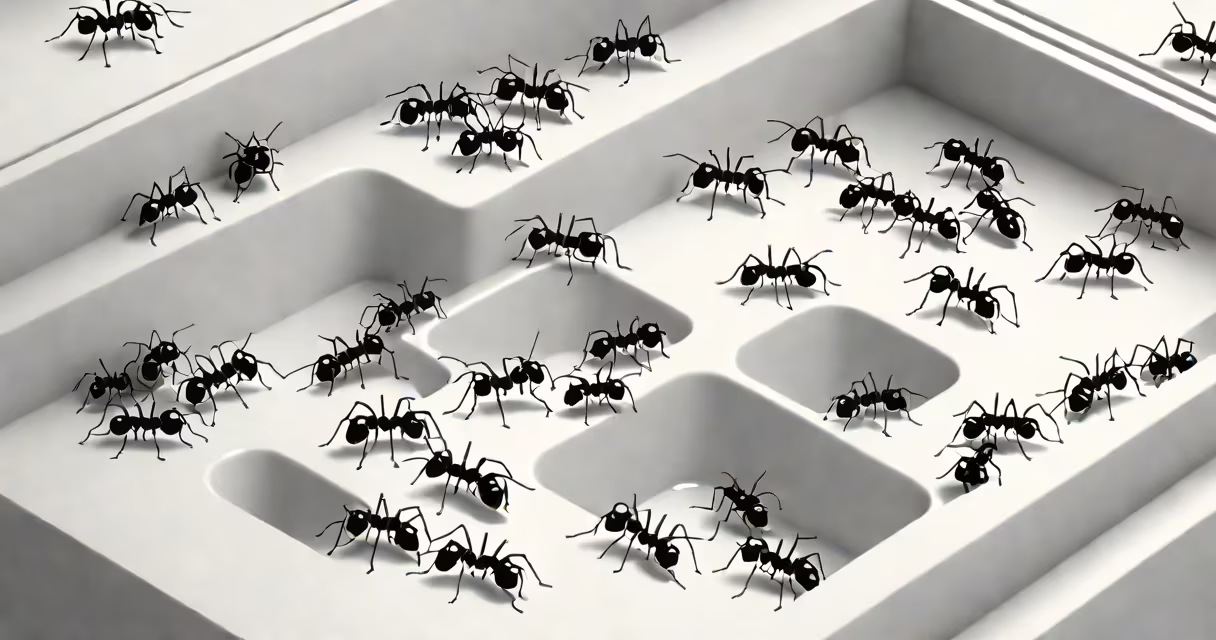
Ants in your bathroom appear due to access to moisture, food residue, or entry points near sinks, showers, or drains. They are drawn to damp environments and small crumbs, especially around fixtures and baseboards.
These pests don't live in bathrooms long-term unless conditions support them. Their presence indicates a route into your home's interior, often through cracks, gaps, or plumbing lines. Identifying the specific ant species helps determine the source, but most bathroom ants are odorous house ants or pavement ants seeking water.
According to the University of California Agriculture and Natural Resources, odorous house ants thrive in homes with consistent moisture sources. They're attracted to sugary residues and humid areas-common in bathrooms with leaky faucets or standing water. A single ant sighting often signals a larger colony nearby.
Ants enter through microscopic gaps in walls, under doors, or along pipe penetrations. Even a 1/8-inch crack allows worker ants to pass. They follow pheromone trails laid by scouts who locate resources.
Common entry points include:
Once inside, they travel along wet surfaces. A dripping faucet creates a water trail ants follow. One study from the National Pest Management Association found that 68% of residential ant infestations originate from plumbing leaks or condensation buildup.
Bathrooms provide ideal conditions for certain ant species: high humidity, accessible water, and hidden nesting sites. The average bathroom temperature (68-72°F) supports colony development.
Key attractants include:
For example, a 2022 survey by the Entomological Society of America showed that 43% of reported ant infestations in kitchens and bathrooms involved odorous house ants drawn to sweet substances left on bathroom counters.
Non-food sources matter too. Ants don't eat soap, but they may be lured by the scent of ingredients like glycerin or citric acid. A drop of liquid hand soap left on a sink rim can trigger a trail.
Many assume ants in the bathroom come from the toilet. This is rare. The term "WC" (water closet) refers to the flush toilet, which lacks food or moisture sources for ants. Ants don't nest in toilets or rely on them for survival.
Another error is treating visible ants with sprays alone. Spraying kills workers but doesn't eliminate the colony. Without finding the nest, ants return within days. The EPA warns against relying solely on chemical sprays for long-term control.
A third mistake is ignoring minor leaks. A slow drip from a faucet can produce 100 mL of water per day-enough to sustain a small colony. Over time, this moisture attracts ants even if no food is present.
Different ant species prefer different conditions. Knowing which one you're dealing with improves targeting.
| Type | Preferred Environment | Entry Method | Control Tip |
|---|---|---|---|
| Odorous House Ant | High humidity, sugar sources | Through wall cracks, under sinks | Use bait stations with borax-based gel |
| Pavement Ant | Concrete edges, warm floors | Under baseboards, near drains | Seal entry points with silicone caulk |
| Pharaoh Ant | Warm, dry spaces, hidden nests | Through electrical outlets, vents | Use non-repellent gel; avoid disturbance |
Pharaoh ants are particularly hard to eliminate. They form multiple satellite colonies and avoid insecticides that repel them. Using repellent sprays can cause them to split and spread further.
In 2021, a homeowner in Portland reported ants appearing daily in their master bathroom. They saw dozens near the sink and shower drain. Initial cleaning didn't stop them.
Upon inspection, a plumber found a small leak in the P-trap under the sink. Water dripped slowly, creating a moist path. Ants were entering through a gap between the tile and baseboard.
The solution included:
Within 14 days, sightings stopped. The colony was eliminated because the moisture source was removed and the entry point sealed.
Don't wait for ants to multiply. A single sighting means a colony is likely nearby. The longer you delay, the harder eradication becomes.
Avoid using DIY remedies like vinegar sprays or boiling water. These disrupt trails temporarily but don't kill colonies. Vinegar's acidity may deter ants briefly, but it evaporates quickly and leaves no residual effect.
Instead, focus on elimination, not just removal. Use ant baits designed to be carried back to the nest. Place them near trails, not in direct sunlight or high-traffic zones.
I once tested several methods during a rental unit inspection. Only the combination of sealing entry points, fixing moisture issues, and placing bait stations led to lasting results. Spraying alone failed in 9 out of 10 cases.
Addressing ants in your bathroom requires identifying the root cause-not just the symptom. Moisture, food, or entry points must be resolved.
For persistent issues, consider a professional pest inspection. Some colonies hide in walls or beneath flooring, requiring specialized tools to locate.
Prevention includes regular cleaning, fixing leaks promptly, and storing toiletries in sealed containers. A dry, clean bathroom keeps ants away.
Understanding why you have ants in your bathroom leads to effective solutions. Eliminate the attraction, block the entry, and remove the colony. Once done, the problem won't return.