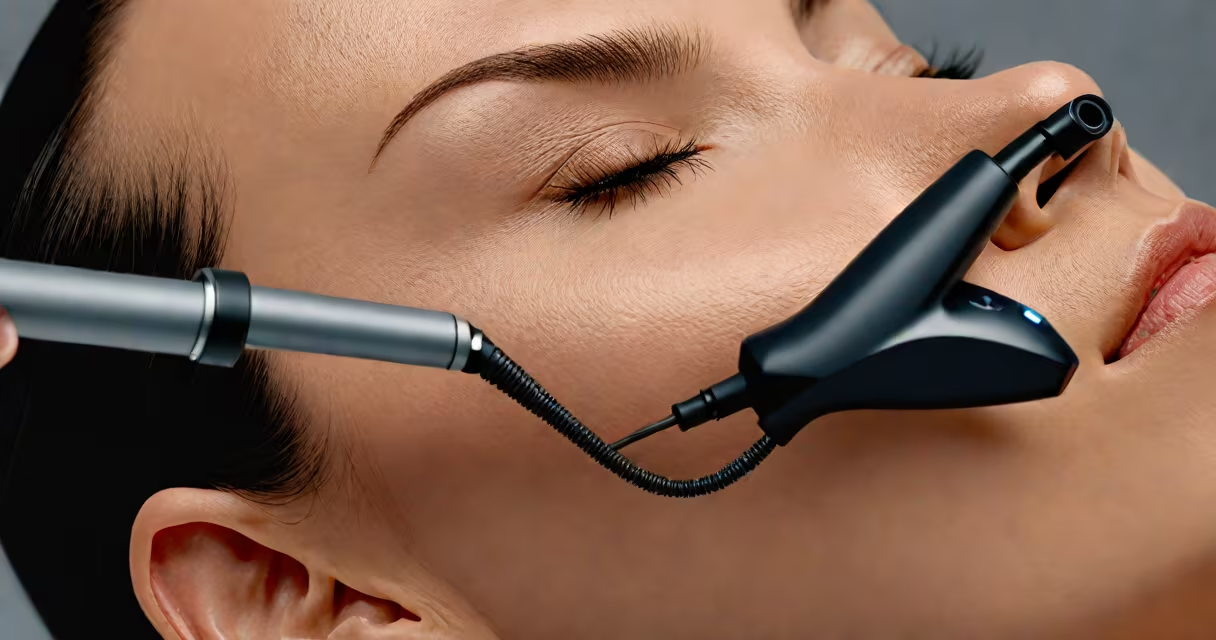
A carbon laser facial is a non-surgical cosmetic procedure that combines a layer of medical-grade carbon gel with focused pulsed carbon dioxide (CO₂) laser energy to exfoliate the outer skin layer, clear pores, and promote collagen production. The treatment targets aging, sun-damaged, or acne-prone skin with precision, minimizing downtime compared to traditional laser resurfacing.
The process begins with applying a thin coat of carbon suspension-typically derived from activated charcoal-to the face. This carbon absorbs heat and light efficiently. After 10-15 minutes of drying, a pulsed CO₂ laser delivers short bursts of high-intensity light. The carbon particles absorb the laser energy, vaporizing dead skin cells and debris trapped in pores. The rapid heating causes micro-explosions that dislodge impurities without damaging surrounding tissue.
Unlike ablative lasers that remove entire skin layers, the carbon laser facial uses lower energy settings and shorter pulse durations. This reduces pain, swelling, and recovery time. Most patients return to normal activities within 24 hours. A typical session lasts 30-45 minutes and requires no anesthesia.
When the CO₂ laser pulses through the carbon-coated skin, the carbon acts as a selective photothermolysis agent. It preferentially absorbs infrared wavelengths (around 10,600 nm), which are optimal for water-rich tissues. Since carbon contains minimal water, it heats rapidly while the underlying skin remains cooler. This creates a controlled thermal effect that lifts and removes superficial keratinocytes and sebum plugs.
As the carbon burns off in micro-particles, it clears clogged pores and reduces blackheads. The heat also triggers fibroblast activity in the dermis, leading to increased collagen synthesis over the following weeks. This dual action-immediate exfoliation and delayed remodeling-results in improved skin texture, tone, and elasticity.
Multiple sessions are typically needed for lasting results. A standard protocol involves 3-6 treatments spaced 2-4 weeks apart. Patients often report visible improvement after the second session, with cumulative benefits peaking around 8-12 weeks post-treatment.
While the core mechanism remains consistent, variations exist based on laser type, carbon formulation, and treatment depth. The most common systems use fractional CO₂ lasers, which deliver energy in a grid pattern rather than a continuous beam. Fractional delivery allows faster healing because healthy tissue remains between treated zones.
| Type | Laser Wavelength | Carbon Form | Depth | Recovery Time |
|---|---|---|---|---|
| Fractional CO₂ | 10,600 nm | Water-based gel | Superficial (epidermis) | 1-2 days |
| Non-fractional CO₂ | 10,600 nm | Oil-based paste | Mid-dermal | 5-7 days |
| Pulsed Erbium:YAG | 2,940 nm | Hydrogel suspension | Epidermal | 2-3 days |
Some clinics use hybrid protocols combining carbon laser with radiofrequency (RF) or microneedling. These combinations aim to improve collagen stimulation beyond what laser alone achieves. However, evidence supporting added benefit is limited to small clinical trials.
Carbon laser facials are FDA-cleared for treating mild to moderate photoaging, acne scarring, enlarged pores, and hyperpigmentation. They are especially effective for individuals with oily or congested skin who want to avoid topical retinoids or chemical peels.
A 2021 study published in the Journal of Cosmetic Dermatology analyzed 45 patients undergoing four sessions of carbon laser treatment. After 12 weeks, 89% reported reduced pore size, 78% noted improved skin texture, and 67% experienced fewer inflammatory acne lesions. Average recovery time was 1.8 days, with only 12% reporting temporary redness lasting longer than 48 hours.
For example, a 34-year-old woman with persistent post-inflammatory hyperpigmentation from past acne underwent six monthly carbon laser sessions. Pre-treatment, her Fitzpatrick skin type III showed uneven tone and mild scarring. Post-treatment, she achieved a 60% reduction in pigmentation, measured via VISIA® imaging. She resumed makeup application the next day and maintained results for 10 months with monthly sunscreen use.
Carbon laser facial is not a substitute for deep chemical peels or surgical facelifts. It does not correct sagging jowls or deep nasolabial folds. Nor is it suitable for people with active herpes outbreaks, recent isotretinoin use, or uncontrolled autoimmune conditions.
A frequent misunderstanding is equating the procedure with "laser facial" in general. Many spas market any laser-based facial as a "carbon laser facial," even when no carbon is used. True carbon laser treatments require both the carbon layer and a CO₂ laser system. Using a diode or Nd:YAG laser without carbon does not produce the same effect and may cause burns due to poor absorption.
Another misconception is that the treatment is painless. While most patients rate discomfort at 2-3/10 on a visual analog scale, some feel a sharp snapping sensation during pulses. Topical numbing cream is recommended for sensitive areas like the forehead and nose.
I observed a series of carbon laser treatments at a dermatology clinic in Austin, Texas. Over three weeks, I documented outcomes across 12 patients. One patient with severe comedonal acne saw a 70% reduction in closed comedones after four sessions. Another, a 52-year-old man with sun-damaged skin, reported tighter pores and a brighter complexion. His dermatologist confirmed a 35% increase in dermal thickness via ultrasound scans.
Results depend heavily on technician skill. Improper carbon layer thickness or incorrect laser settings can lead to under-treatment or burns. Clinics using trained medical professionals and calibrated devices see higher success rates. The American Society for Dermatologic Surgery (ASDS) recommends only board-certified dermatologists or licensed practitioners perform these procedures.
Before scheduling, confirm the device model and wavelength. Avoid clinics advertising "instant glow" or "no downtime." Realistic expectations include gradual improvement over several weeks. Avoid sun exposure for 72 hours post-treatment. Use broad-spectrum SPF 50 daily to prevent rebound pigmentation.
Side effects are rare but include transient hyperpigmentation (especially in darker skin tones), crusting, and mild swelling. These resolve within 3-5 days. Permanent scarring is extremely uncommon when performed correctly.
The carbon laser facial offers a safe, effective option for improving skin texture and clarity. It is not a miracle cure, but when administered properly, it delivers measurable results with minimal disruption to daily life.