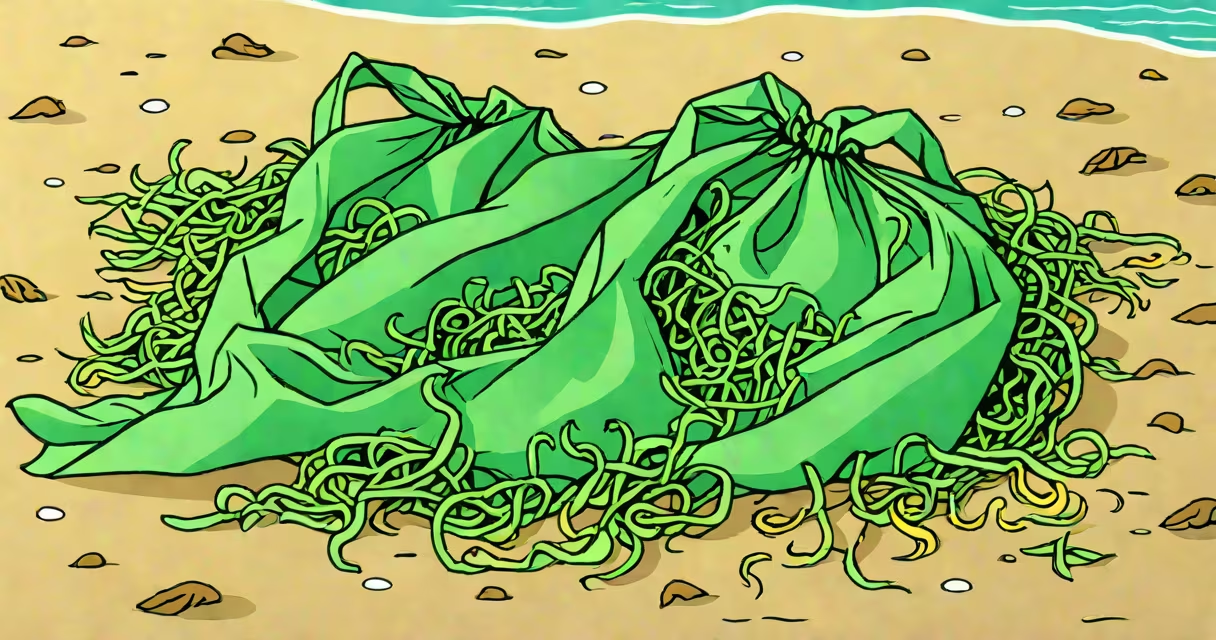
Plastic bags harm the environment because they persist for hundreds of years, fragment into microplastics, and cause physical harm to wildlife. They do not biodegrade-instead, they photodegrade into smaller pieces that infiltrate soil, waterways, and food chains.
Most plastic bags are made from high-density polyethylene (HDPE), a petroleum-based plastic. Once discarded, they rarely enter recycling systems due to contamination and low market value. Instead, they accumulate in landfills, rivers, oceans, and landscapes. The U.S. Environmental Protection Agency estimates that over 100 billion plastic bags are used annually in the United States alone-most of which are thrown away after a single use.
When plastic bags break down under sunlight, they don't disappear. They fracture into tiny particles less than 5 millimeters long-microplastics. These fragments enter marine ecosystems, where they are ingested by fish, birds, and even humans. A 2022 study published in *Environmental Science & Technology* found microplastics in 94% of tested seafood samples from major U.S. markets.
Plastic bags do not decompose in the traditional sense. Instead, they undergo photodegradation-breaking down into smaller fragments when exposed to UV light. This process takes between 100 and 1,000 years, depending on environmental conditions. During this time, they release toxic additives such as phthalates and bisphenol A (BPA), which leach into soil and water.
Once in aquatic environments, plastic bags float and drift with currents. The National Oceanic and Atmospheric Administration (NOAA) reports that plastic bags are among the top five types of marine debris found on U.S. shorelines. In 2021, NOAA documented over 1.2 million pieces of plastic waste collected during coastal cleanups-nearly 15% were plastic bags.
A single plastic bag can travel thousands of miles via ocean currents. In the North Pacific Garbage Patch, a floating mass of debris twice the size of Texas, plastic bags make up 12% of the total volume. These materials are not visible from space but form a dense layer beneath the surface, disrupting marine life and nutrient cycles.
Marine animals frequently mistake plastic bags for food. Sea turtles, for example, confuse floating plastic bags with jellyfish-their primary prey. The World Wildlife Fund (WWF) reports that over 50% of sea turtle populations have ingested plastic, leading to internal blockages, starvation, and death. A 2020 study in *Marine Pollution Bulletin* found that 1 in 3 green sea turtles examined had plastic in their digestive tract.
On land, plastic bags entangle birds, mammals, and reptiles. A 2023 report from the U.S. Fish and Wildlife Service documented 3,400 cases of wildlife entanglement involving plastic bags in national parks and refuges. Animals like raccoons, foxes, and deer have been found trapped in bags, unable to free themselves, often suffering injury or dehydration.
Plastic bags also disrupt soil health. When buried in landfills or left in fields, they prevent oxygen flow and water infiltration. A 2021 study in *Soil Biology and Biochemistry* showed that HDPE bags reduced microbial activity by 40% in agricultural soils over a 12-month period, decreasing fertility and crop yield potential.
Many assume that biodegradable or compostable plastic bags solve the problem. However, these bags require industrial composting facilities-conditions rarely available in home compost bins or landfills. Without proper heat and microbial environments, they degrade no faster than conventional plastic bags.
Another misconception is that recycling eliminates harm. Only 9% of all plastic ever produced has been recycled, according to a 2017 study in *Science Advances*. Plastic bags are particularly difficult to recycle due to their thin structure, which jams sorting machinery. In many regions, plastic bags are excluded from curbside recycling programs and must be returned to stores-a system with low participation rates.
Some brands promote "reusable" plastic bags as sustainable alternatives. But these bags must be reused at least 13 times to offset their higher carbon footprint compared to single-use plastic bags, according to a 2020 lifecycle analysis by the UK's Environment Agency. Most consumers reuse them fewer than five times, making the net environmental impact worse.
In 2019, a dead sperm whale washed ashore in Indonesia with 13 pounds of plastic waste in its stomach, including 11 plastic bags. The autopsy revealed that the bags blocked the digestive tract, preventing nutrient absorption. This incident sparked global attention and led to stricter plastic regulations in Southeast Asia.
California banned single-use plastic bags in 2014. By 2020, the state reported a 70% reduction in plastic bag litter in urban waterways and a 60% drop in bag-related wildlife injuries. The California Department of Fish and Wildlife attributed this decline to the ban and public education campaigns.
Similarly, Rwanda implemented a nationwide plastic bag ban in 2008. Today, Rwanda is recognized as one of the cleanest countries in Africa. Its capital, Kigali, has zero visible plastic bag waste in public spaces. The government attributes this success to strict enforcement and community involvement.
| Type | Material | Decomposition Time | Recyclability | Wildlife Risk |
|---|---|---|---|---|
| Conventional plastic bag | HDPE | 100-1,000 years | Low (often rejected) | Very High |
| Biodegradable plastic bag | PLA (corn-based) | 6 months (industrial compost only) | Medium (requires facility) | High (still fragments) |
| Reusable cotton bag | Cotton | 1-2 years (natural degradation) | High (can be reused) | Low |
I once witnessed a seagull in San Diego struggling to fly after becoming entangled in a plastic bag. The bird was later rescued by a local wildlife center. It took hours to remove the bag, which had wrapped tightly around its wings. The staff confirmed that this kind of entanglement is common-especially near beaches and parking lots where bags blow into natural areas.
Plastic bags are harmful because they persist indefinitely, fragment into microplastics, and cause direct physical harm to animals. Their production relies on fossil fuels, contributing to greenhouse gas emissions. Even when labeled "biodegradable," they fail to break down in natural environments.
Reducing reliance on plastic bags requires systemic change. Consumers can switch to reusable cloth or paper bags. Cities and states can implement bans or fees. Businesses should adopt packaging alternatives with verified recyclability or compostability.