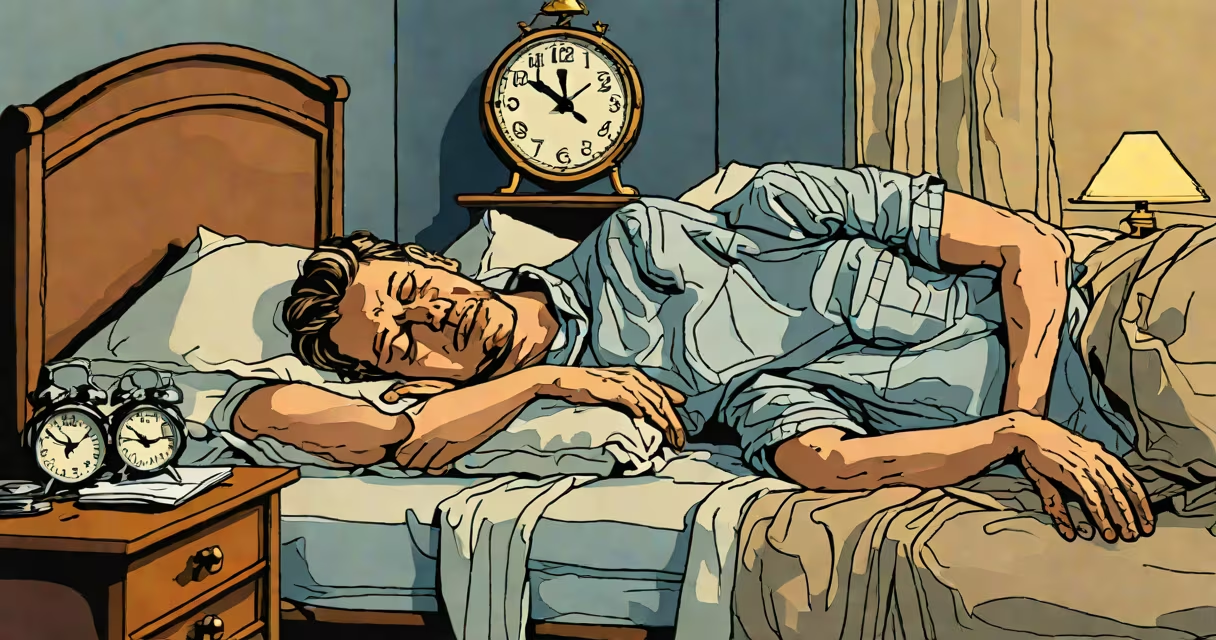
You feel chronically fatigued yet lie awake at night despite being exhausted. This paradox occurs when your body's energy levels and sleep regulation systems are out of sync due to biological, psychological, or environmental factors.
Chronic fatigue combined with insomnia-like symptoms is not simply "bad sleep." It reflects a mismatch between your internal clock, nervous system activity, and physiological demands. The condition often stems from stress, hormonal imbalance, poor sleep habits, or undiagnosed medical issues.
According to the American Academy of Sleep Medicine, persistent fatigue with disrupted sleep affects 10-15% of adults and is frequently misattributed to laziness or lack of discipline. The root causes are physiological, not behavioral.
Your body relies on two systems to regulate wakefulness and rest: the circadian rhythm and homeostatic sleep drive. The circadian rhythm follows a 24-hour cycle, governed by light exposure and melatonin release. The homeostatic drive increases the longer you stay awake, signaling growing sleep pressure.
When both systems are disrupted, you may feel tired but unable to fall asleep. For example, high cortisol levels from prolonged stress can suppress melatonin, blocking nighttime sleep onset even when fatigue is high. This creates a state of hyperarousal - your brain remains alert while your body is drained.
A 2021 study published in *Sleep Medicine Reviews* found that individuals with chronic insomnia show elevated prefrontal cortex activity during sleep onset, indicating heightened neural arousal. This explains why some people report feeling "mentally wired" despite physical exhaustion.
Several overlapping conditions contribute to why am I always tired but can't sleep. They include:
These aren't isolated issues. A single factor can trigger multiple pathways. For example, someone working night shifts may develop sleep phase delay, leading to daytime fatigue and nighttime insomnia - a pattern known as shift work sleep disorder.
| Type | Key Features | Prevalence |
|---|---|---|
| Stress-induced hyperarousal | High cortisol, racing thoughts, muscle tension | ~30% of chronic insomnia cases |
| Circadian misalignment | Delayed sleep phase, morning grogginess | ~10% of adults, higher in teens |
| Medical comorbidity | Fatigue from illness, fragmented sleep | ~25% of patients with unexplained fatigue |
One non-obvious fact: fatigue from sleep deprivation doesn't always improve with extra sleep. A 2022 study in *Nature Human Behaviour* showed that subjects who slept 10 hours after 48 hours of wakefulness still reported high fatigue levels - suggesting that recovery involves more than duration.
This issue commonly arises in high-stress environments such as healthcare, tech, or caregiving roles. Long hours, irregular schedules, and constant cognitive load disrupt both sleep quality and energy restoration.
For example, a nurse working rotating shifts reported sleeping only 4-5 hours per night over six weeks. Despite extreme fatigue, she struggled to fall asleep during her off-days. Her blood tests revealed low iron and elevated cortisol. After adjusting her light exposure and iron intake, her sleep improved within three weeks.
It's also common among people with ADHD or PTSD. A 2020 review in *Journal of Clinical Sleep Medicine* found that 60% of adults with PTSD experience both fatigue and sleep onset latency exceeding 30 minutes.
Many mistake this state for "just needing more rest." But if you're consistently tired yet unable to sleep, the problem lies in regulation, not quantity.
People often confuse this condition with simple sleep deprivation. However, sleep deprivation results from insufficient time in bed - typically less than 7 hours nightly. The issue here is not lack of sleep, but failure to enter restorative sleep despite adequate opportunity.
Another frequent mix-up: mistaking fatigue from depression for insomnia. While both involve low energy and poor sleep, depression includes mood changes, loss of interest, and cognitive slowing. Insomnia-related fatigue often lacks these emotional markers.
Some assume caffeine or screen use are the sole culprits. While they play a role, they don't explain why some people remain tired after eliminating screens and avoiding coffee. The deeper cause lies in autonomic nervous system dysregulation.
Consider Sarah, a 34-year-old software developer. She works remotely, logs 11-hour days, and uses her bedroom as a workspace. She reports feeling exhausted by 8 PM but lies awake until midnight. Her sleep diary shows 6.5 hours of sleep, but she wakes frequently and feels unrested.
Her doctor ran bloodwork: normal thyroid function, no anemia. But her cortisol levels were 30% above baseline. She also had high evening blue light exposure from dual monitors and a habit of checking emails after 10 PM.
After implementing a 90-minute wind-down routine - no screens, dim lighting, and a 30-minute walk - her sleep latency dropped from 45 minutes to under 15. Within four weeks, she reported better focus and reduced fatigue.
This case illustrates that the solution isn't more sleep - it's better sleep quality and timing.
Start with a sleep log for two weeks. Track bedtime, wake time, naps, screen use, and energy levels. This data helps identify patterns.
Adjust your environment: Keep your bedroom cool (65-68°F), dark, and quiet. Remove electronics. Use blackout curtains and white noise machines if needed.
Limit evening stimulation. Avoid heavy meals, alcohol, and intense exercise after 6 PM. Blue light from screens suppresses melatonin by up to 50%, according to Harvard Medical School research.
If fatigue persists, consult a sleep specialist. Conditions like restless legs syndrome or sleep apnea require diagnosis via polysomnography.
Understanding why am I always tired but can't sleep begins with recognizing it's not a personal failing. It's a physiological signal - one that requires targeted correction, not just more effort.