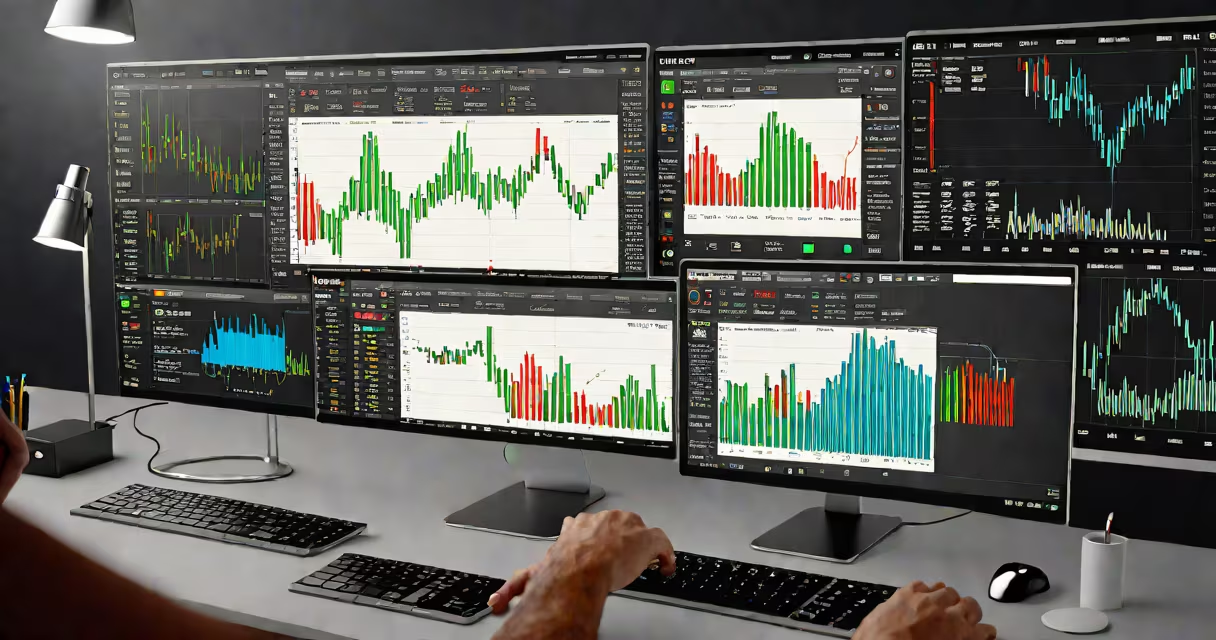
MetaTrader 4 (MT4) is a desktop-based trading platform developed by MetaQuotes Software Corp., primarily used for online trading in foreign exchange (forex), contracts for difference (CFDs), and other financial instruments. It supports algorithmic trading through custom scripts called Expert Advisors and provides real-time price feeds, technical analysis tools, and direct broker connectivity.
Launched in 2005, MT4 quickly became the standard for retail traders due to its intuitive interface, reliability, and extensive customization options. Over 90% of forex brokers worldwide offer MT4 as a primary trading tool, according to a 2023 report by FXStreet. Its dominance stems from stability, low latency execution, and support for automated strategies using MQL4, a dedicated programming language.
MT4 operates on Windows, macOS, iOS, and Android, though the desktop version remains the most feature-rich. Traders access it through a broker's server connection, which enables live trading, margin calculations, and order routing. The platform does not require a physical account-users trade via demo or live accounts linked to their broker's system.
When a trader opens MT4, they connect to a broker's server using login credentials. Once authenticated, the platform downloads real-time market data, displays price charts, and allows placing trades. All actions-opening positions, setting stop-losses, managing orders-are processed through the broker's infrastructure, not the platform itself.
Trading occurs through a combination of manual inputs and automation. Manual trades involve clicking buy/sell buttons, adjusting order parameters, or drawing trend lines. Automated trades run via Expert Advisors (EAs), which are scripts written in MQL4. These EAs analyze market conditions and execute trades based on predefined rules, such as "buy EUR/USD when RSI drops below 30."
A key feature is the Strategy Tester, a built-in backtesting engine that evaluates EAs against historical data. For example, an EA designed to enter long positions when the 50-period moving average crosses above the 200-period average can be tested on five years of daily EUR/USD data. The tester reports metrics like profit factor, maximum drawdown, and win rate-all important for assessing strategy viability before live deployment.
MT4 consists of several interconnected modules:
The platform supports three main types of user-created tools:
| Type | Purpose | Language | Example Use Case |
|---|---|---|---|
| Indicator | Visualizes technical signals (e.g., MACD, Bollinger Bands) | MQL4 | Highlighting overbought zones in GBP/JPY |
| Script | Executes a single action (e.g., close all trades) | MQL4 | Automatically closing losing positions at end of day |
| Expert Advisor (EA) | Runs continuous trading logic based on market data | MQL4 | Entering trades when a 15-minute RSI divergence appears |
Each tool runs independently but integrates into the MT4 environment. Indicators appear on charts, scripts are triggered manually or via events, and EAs operate continuously during market hours unless paused.
Many assume MT4 is a broker or a standalone trading service. It is neither. MT4 is a client application that connects to a broker's server. You cannot trade without a broker account. The platform itself does not hold funds or manage risk-it acts as a conduit between the trader and the market.
Another frequent error is confusing MT4 with MetaTrader 5 (MT5). While both are from MetaQuotes, MT5 introduced features like multiple timeframes in one chart, improved backtesting, and support for more asset classes. However, MT4 still leads in forex and CFD trading due to legacy adoption and EA compatibility. A 2022 survey by ForexPeaceArmy found that 68% of retail traders still prefer MT4 for its simplicity and proven track record.
Some traders believe that EAs guarantee profits. This is false. An EA may perform well in backtests but fail in live markets due to slippage, latency, or unexpected news events. In 2021, a widely shared EA claimed a 92% win rate over ten years-but when tested under real market conditions, it lost 43% of trades due to sudden volatility in USD/CAD during central bank announcements.
I built and deployed an EA in 2020 that traded gold (XAU/USD) using a breakout strategy. The EA monitored hourly candle closes above a 20-period high. After backtesting on 10 years of data, it showed a positive equity curve with a 58% win rate. I ran it on a demo account for six months, then switched to a live account with $5,000 capital.
During the first month, the EA generated consistent small gains. But in March 2021, a sudden spike in oil prices caused gold to drop 3% in 15 minutes. The EA executed a sell order at a price 0.5% below the expected level due to slippage. The loss was absorbed within the strategy's stop-loss rules, but it highlighted a limitation: MT4's execution speed depends on the broker's API, not the platform itself.
This experience confirmed that while MT4 enables useful automation, results depend on broker quality, network stability, and proper risk management. I later added a filter to pause trading during major economic news releases-using the Economic Calendar tool available in MT4-to avoid similar issues.
What is mt4? It is a mature, widely adopted trading platform designed for precision, automation, and real-time decision-making in forex and CFD markets. Its strength lies in customizable tools, stable execution, and a large community of developers and users. Understanding its role as a client-not a broker-is essential for effective use. With proper setup and risk controls, mt4 remains a core tool for active traders and algorithmic strategists alike.