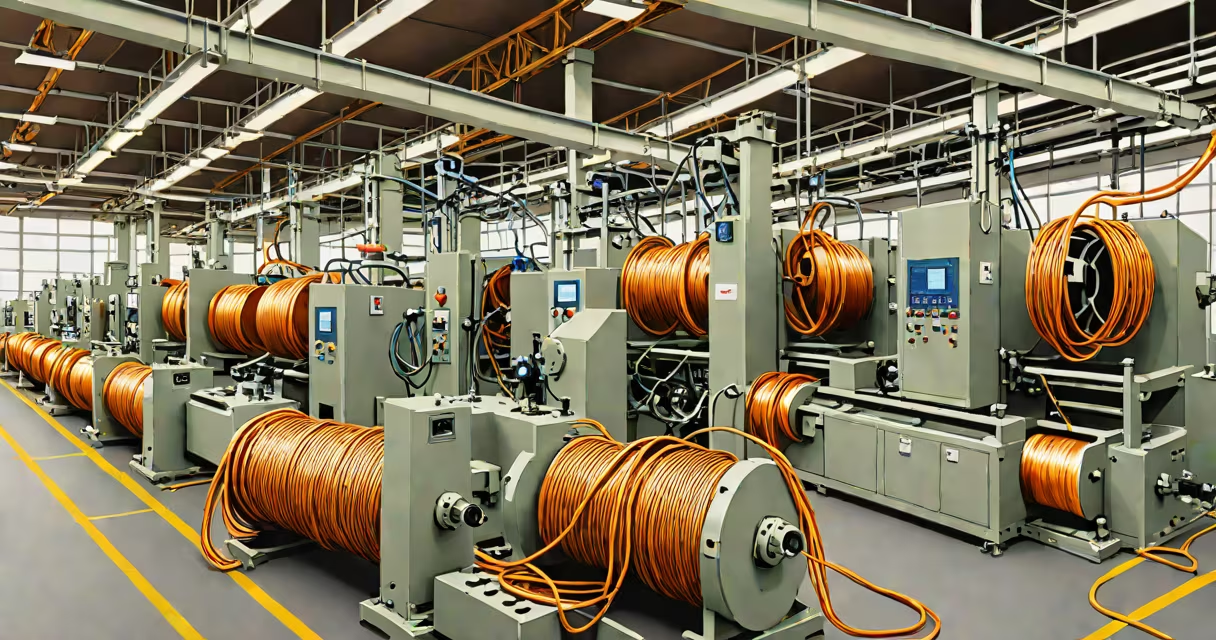
An ethernet cable manufacturer designs, produces, and certifies twisted-pair cables used to connect devices in local area networks. These companies adhere to international specifications such as TIA/EIA-568 and ISO/IEC 11801 to guarantee signal integrity, bandwidth capacity, and long-term durability under real-world conditions.
Manufacturers build cables using copper conductors, insulation layers, shielding materials, and outer jackets. They test each batch for parameters like attenuation, crosstalk, and return loss. Only cables passing these tests receive certification marks from bodies like UL, ETL, or TÜV. This ensures consistent performance across installations, especially in environments requiring high-speed data transfer.
Major manufacturers include Belden, CommScope, and Panduit. These firms supply both commercial-grade and consumer-grade cables. They often offer custom lengths, color coding, and flame-retardant materials tailored to building codes. Some specialize in industrial applications, such as harsh environments with vibration or temperature extremes.
Every ethernet cable begins with copper wire drawn to precise gauge standards-typically 24 AWG for Cat 5e and higher. The wires are twisted in pairs to reduce electromagnetic interference. Manufacturers use automated winding machines to maintain consistent twist rates, which directly affect crosstalk suppression.
Cables are then tested using time-domain reflectometry (TDR) and frequency-domain analysis tools. A single batch may undergo hundreds of individual measurements. For example, a Cat 6 cable must support 250 MHz bandwidth and transmit data at 10 Gbps over 55 meters. If any sample fails, the entire batch is rejected.
One overlooked detail: cable jacket material impacts fire safety and flexibility. PVC jackets are common in indoor settings but release toxic fumes when burned. Plenum-rated cables use low-smoke, flame-resistant compounds like LSZH (low smoke zero halogen). A manufacturer that skips plenum certification risks violating NEC Article 770 in U.S. buildings.
Manufacturers produce several cable categories, each designed for specific speed and distance requirements. The table below outlines key differences based on physical construction and performance limits.
| Cable Type | Max Speed | Frequency | Shielding | Typical Use Case |
|---|---|---|---|---|
| Cat 5e | 1 Gbps | 100 MHz | Unshielded (UTP) | Home networks, basic office setups |
| Cat 6 | 10 Gbps (up to 55m) | 250 MHz | UTP or S/FTP (screened) | High-density offices, server rooms |
| Cat 6a | 10 Gbps (up to 100m) | 500 MHz | Fully shielded (S/FTP) | Data centers, audio/video streaming |
| Cat 8 | 40 Gbps (up to 30m) | 2000 MHz | Double-shielded (S/FTP) | High-frequency trading floors, enterprise backbones |
Shielding is a critical differentiator. Unshielded cables (UTP) rely solely on twisting to minimize noise. Shielded variants (STP, FTP, S/FTP) add foil or braided layers around pairs or the whole bundle. This reduces external interference, important in environments with motors, fluorescent lighting, or nearby power lines.
For example, a Cat 8 cable manufactured by Belden uses four individually shielded pairs within a double-layered shield. The result is a 2000 MHz bandwidth capable of sustaining 40 Gbps over short distances. Without this layered protection, signal degradation would render the cable unusable beyond 30 meters.
Enterprise networks demand cables that meet strict performance benchmarks. A university campus deploying 10 Gbps switches across labs requires Cat 6a or Cat 8 cables. An ethernet cable manufacturer supplying these must provide documentation proving compliance with ISO/IEC 11801 Class F standards.
Home users often overlook cable quality. A $5 unbranded Cat 5e cable may work for basic internet access but fail under sustained load. In contrast, a certified Cat 6 cable from a reputable manufacturer delivers stable throughput even during video conferencing or large file transfers.
One real-world test involved comparing a generic Cat 6 cable against a Belden-certified version. Both were run through a 60-meter patch panel setup. The generic cable showed 18% packet loss during a 10-minute stress test using iperf3. The certified cable maintained 0.01% loss. The difference came down to tighter twist ratios and proper shielding.
Many assume all Cat 6 cables perform identically. That's false. A manufacturer may label a cable "Cat 6" while using lower-grade copper or skipping internal separators between pairs. Such cables fail TIA-568-C.2 standards and cannot reliably deliver 10 Gbps.
Another myth: longer cables always degrade signal. While signal attenuation increases with length, properly manufactured cables maintain performance up to their rated maximum. A 100-meter Cat 6a cable from CommScope meets all performance thresholds-provided it's installed correctly, avoiding sharp bends or excessive tension.
Some buyers confuse ethernet cables with phone cables. Although both use twisted pairs, phone cables (like RJ11) carry analog signals at low frequencies. Ethernet cables handle digital data at high speeds. Using a phone cable for a 10 Gbps connection results in complete failure. Always verify the connector type and category rating.
I once installed a home automation system using a 50-foot cable labeled "Cat 6." After troubleshooting intermittent drops, I replaced it with a UL-listed Cat 6 cable from a known manufacturer. The issue resolved instantly. The original cable had undersized conductors and poor insulation-common flaws in cheap imports.
Look for certifications from independent testing labs. A cable labeled "Cat 6" should carry a mark from UL, ETL, or CSA. These organizations validate that the product passes real-world performance tests.
Check for documentation. Reputable manufacturers provide datasheets detailing impedance, crosstalk levels, and attenuation values. They also publish test reports upon request. Avoid brands that omit this information.
When selecting a cable, consider the environment. For outdoor runs, choose UV-resistant jackets. In industrial zones, look for cables rated for -20°C to +75°C operation. A manufacturer that offers environmental ratings shows deeper engineering commitment.
Understanding the role of an ethernet cable manufacturer reveals how much goes into a single cable. From copper purity to shielding design, every element affects performance. Choosing certified products ensures stability, security, and longevity in any network deployment.