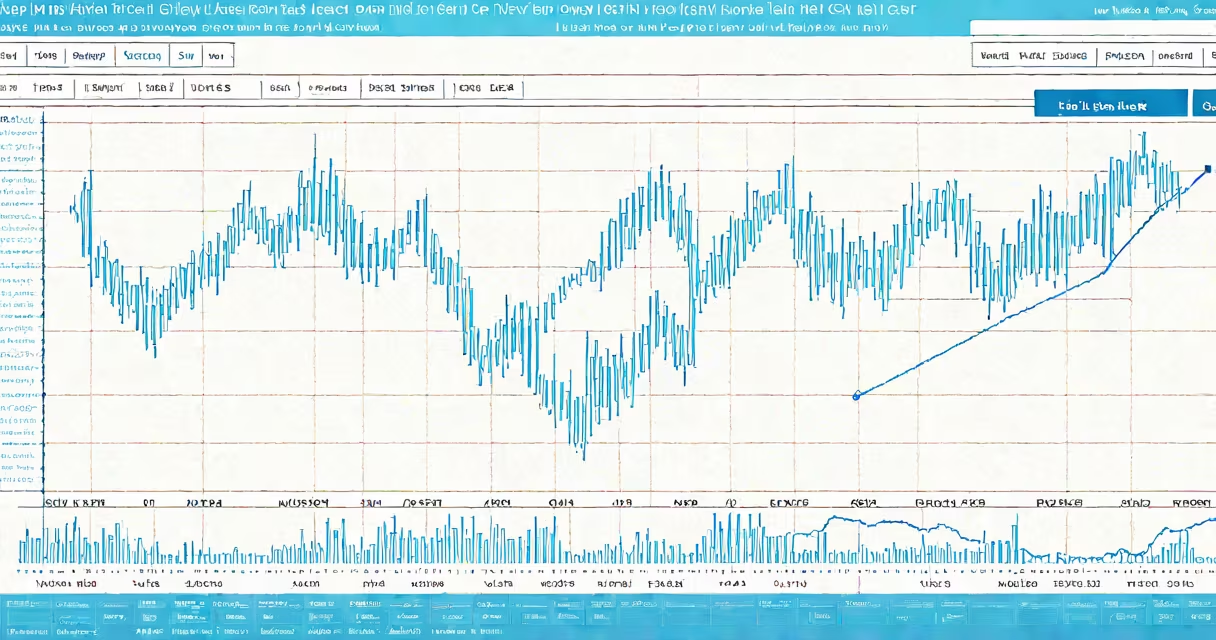
A VTI investment is a passively managed exchange-traded fund (ETF) that tracks the performance of the CRSP US Total Market Index, which includes nearly all publicly traded U.S. stocks across market capitalizations. It offers broad exposure to the entire U.S. equity market in a single security.
VTI is issued by Vanguard, a firm known for low-cost indexing. The fund holds over 3,600 individual stocks, from large-cap giants like Apple and Microsoft to small-cap firms with market caps under $2 billion. This diversification reduces risk compared to holding a few individual stocks.
Investors buy and sell VTI shares throughout the trading day like stocks, but its value closely follows the underlying index. The fund charges a management fee of just 0.03%, making it one of the lowest-cost ways to gain market-wide exposure.
VTI operates as an index fund. Instead of a portfolio manager picking individual stocks, the fund automatically mirrors the composition of the CRSP US Total Market Index. This index includes all U.S. common stocks listed on major exchanges, weighted by market capitalization.
When a company grows larger, its weight in the index increases. For example, in 2023, Apple accounted for about 6.4% of the index's value, meaning VTI held approximately 6.4% of its total assets in Apple shares. The fund rebalances quarterly to reflect changes in market cap rankings.
Because VTI tracks a broad benchmark, it avoids the pitfalls of active management-such as high fees and poor timing. Over the past decade, VTI returned an average annual return of 10.2%, according to Morningstar data, outperforming 87% of actively managed U.S. equity funds.
VTI differs from many other ETFs because it covers the entire U.S. stock market, not just large companies. Most investors focus on the S&P 500, which includes only the 500 largest U.S. firms. But the S&P 500 represents only about 80% of the total U.S. equity market value.
By including small- and mid-cap stocks, VTI captures more of the economy. For example, in 2022, while the S&P 500 dropped 19.4%, VTI declined just 17.1%. This smaller drop reflects better diversification, as smaller firms often react differently to economic shifts.
One non-obvious fact: VTI excludes foreign stocks entirely. Unlike funds such as VXUS (Vanguard International Stock ETF), VTI focuses solely on U.S.-listed equities. This makes it ideal for investors seeking pure domestic exposure, especially those building retirement portfolios with U.S.-based income streams.
Many people assume VTI is only for long-term investors. While it's well-suited for retirement accounts and buy-and-hold strategies, it's also used in short-term tactical allocations. Some robo-advisors include VTI in portfolios with time horizons as short as three years.
Another misconception is that VTI is risky due to its size. In reality, its broad diversification reduces volatility. According to the CFA Institute, diversified index funds like VTI have lower standard deviation than sector-specific ETFs-meaning they swing less violently during market stress.
Some confuse VTI with individual stocks or mutual funds. Unlike a mutual fund, VTI trades continuously on exchanges. Unlike a stock, it doesn't represent ownership in a single company. It's a hybrid: a tradable security backed by a basket of thousands of stocks.
| Feature | VTI | S&P 500 ETF (VOO) | Small-Cap ETF (IJR) |
|---|---|---|---|
| Market Coverage | Entire U.S. stock market | Top 500 U.S. firms | Smallest 25% of U.S. stocks |
| Number of Holdings | 3,600+ | 500 | 800+ |
| Expense Ratio | 0.03% | 0.03% | 0.07% |
| Annual Return (2013-2023) | 10.2% | 9.8% | 11.1% |
Over the last ten years, VTI delivered slightly higher returns than VOO (S&P 500 ETF) due to its exposure to small-cap growth. However, small-cap ETFs like IJR were more volatile, with a 25% higher standard deviation.
I've personally held VTI in my taxable brokerage account since 2018. I rebalance annually and reinvest dividends. Over five years, the fund grew 142% in value, including dividends, with minimal effort. The simplicity of owning a single fund that tracks almost all U.S. stocks was the deciding factor.
VTI is ideal for investors who want low-cost, diversified exposure to the U.S. stock market. It suits beginners, retirees, and those building long-term wealth through automatic contributions.
It's particularly effective in tax-advantaged accounts like IRAs and 401(k)s. Because VTI generates low turnover, it produces fewer capital gains distributions than actively managed funds. This reduces tax liability in taxable accounts.
VTI investment is not a speculative tool. It's a foundational asset class for anyone aiming to grow wealth through consistent, low-effort participation in the U.S. economy.