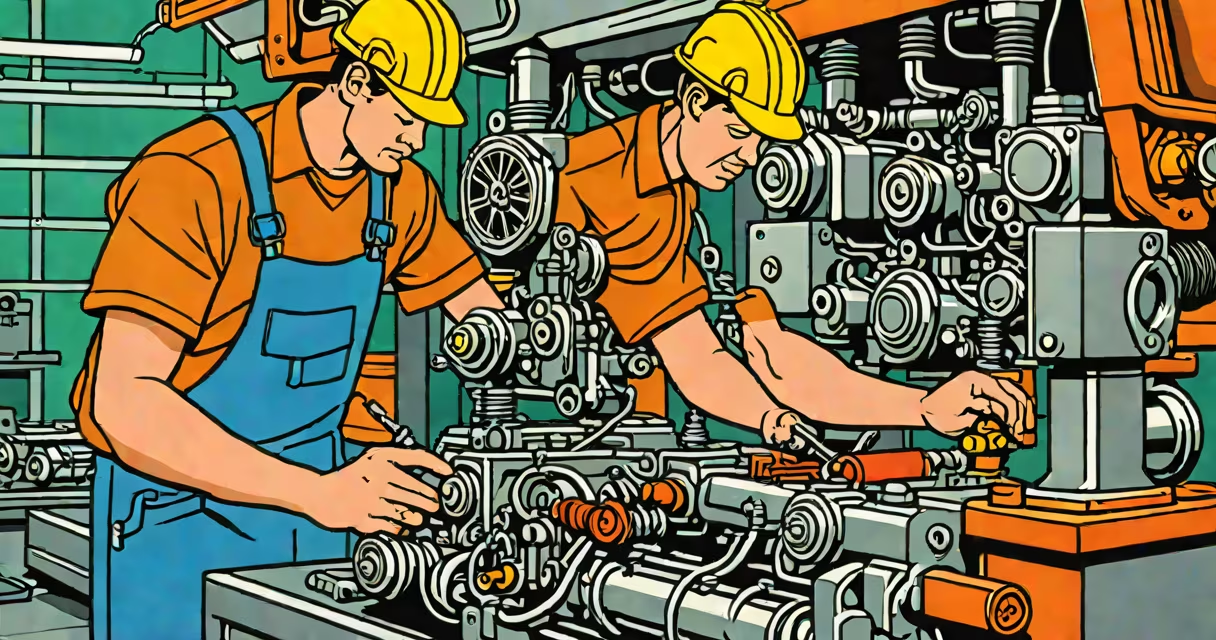
A diesel tech is a trained mechanic specializing in the diagnosis, maintenance, and repair of diesel-powered engines used in commercial vehicles, construction equipment, and industrial machinery. These professionals work with high-compression engines that run on diesel fuel, requiring specialized knowledge of fuel injection systems, turbochargers, and emissions controls.
Diesel technicians are essential in transportation and logistics networks. They ensure vehicles meet safety standards and operate efficiently under demanding conditions. According to the U.S. Bureau of Labor Statistics, diesel techs earned a median annual wage of $56,450 in 2023, with employment projected to grow 6% through 2032-faster than average for all occupations.
Diesel techs begin each repair with a diagnostic phase. They use onboard computer systems and handheld scan tools to read fault codes from the engine control module. For example, a code P0087 indicates low fuel rail pressure, which may stem from a clogged fuel filter, failing fuel pump, or air in the fuel system.
Once a fault is identified, the technician performs physical inspections and tests. This includes checking fuel delivery pressure using a gauge, verifying injector spray patterns with a test stand, and measuring compression in each cylinder. A single faulty injector can reduce engine efficiency by up to 15%, leading to increased fuel consumption and emissions.
After repairs, diesel techs recalibrate systems and verify performance. Modern diesel engines often require software updates via a laptop connected to the vehicle's CAN bus. Failure to update firmware can result in incorrect fuel timing, causing excessive smoke or engine knock.
Diesel techs rely on both mechanical and electronic expertise. They must understand thermodynamics, fluid dynamics, and electrical circuitry. Common tools include torque wrenches, multimeters, compression testers, and diesel-specific fuel pressure gauges.
Advanced diagnostics involve interpreting data from engine sensors. For instance, a failed exhaust gas recirculation (EGR) valve can trigger a P0401 code. Without proper testing, a technician might replace the EGR valve unnecessarily. Instead, they check vacuum lines, solenoid operation, and carbon buildup in the intake manifold.
Some diesel techs specialize in specific vehicle types. Heavy-duty truck technicians focus on long-haul freight systems, while those in agriculture or mining work with machines operating in extreme temperatures and dust-heavy environments. These roles demand familiarity with manufacturer-specific procedures and service bulletins.
| Role Type | Typical Work Environment | Common Vehicles/Equipment | Specialized Skill Focus |
|---|---|---|---|
| On-Road Truck Technician | Trucking fleets, repair shops | Class 8 semi-trucks, delivery vans | Fuel injection calibration, emission compliance |
| Off-Road Equipment Tech | Construction sites, mines, farms | Excavators, bulldozers, tractors | Hydraulic systems, cold-weather starting |
| Marine Diesel Technician | Shipyards, marinas | Commercial fishing boats, cargo vessels | Corrosion resistance, saltwater exposure |
| Industrial Maintenance Tech | Power plants, factories | Generators, conveyor systems | Continuous monitoring, predictive maintenance |
Each role requires different certifications. For example, marine diesel techs often hold NCCER (National Center for Construction Education and Research) credentials, while industrial techs may pursue ISO 14001 environmental management training.
Diesel engines dominate long-haul freight and heavy equipment due to their high torque and fuel efficiency. A 2022 report from the American Trucking Associations found that 95% of long-haul freight in the U.S. moves via diesel-powered trucks. Without skilled diesel techs, these operations face costly downtime.
For example, a regional delivery company experienced a 30% drop in fleet availability after a series of uncorrected turbocharger failures. After hiring certified diesel techs and implementing scheduled inspections, uptime improved to 98%. The company saved $120,000 annually in lost revenue and emergency towing costs.
Diesel techs also play a critical role in meeting environmental regulations. The EPA mandates strict limits on nitrogen oxides (NOx) and particulate matter. Diesel techs install and maintain selective catalytic reduction (SCR) systems and diesel particulate filters (DPF), ensuring vehicles pass emissions testing.
Many assume diesel techs only perform basic maintenance like oil changes and filter replacements. In reality, modern diesel engines have complex electronic control systems. A single misaligned fuel injector can cause engine misfires, reduced power, and increased fuel burn.
Another misconception is that diesel techs don't need formal education. While hands-on experience matters, most employers require at least a certificate or associate degree in diesel technology. Programs accredited by the National Institute for Automotive Service Excellence (ASE) cover topics such as advanced electronics, hybrid diesel systems, and alternative fuels.
One non-obvious fact: diesel engines do not use spark plugs. Ignition occurs through compression heat. A failure in the glow plug system-used to aid cold starts-can prevent a diesel engine from starting in winter. Technicians must test glow plug resistance and verify battery voltage during cold weather diagnostics.
I once diagnosed a recurring engine stall in a 2018 Freightliner Cascadia. The truck had no fault codes, and the fuel system appeared clean. After replacing the fuel filter and bleeding the system, the issue persisted. Using a scan tool, I discovered intermittent communication errors between the ECM and the fuel metering valve.
Further inspection revealed a corroded ground connection at the engine block. Cleaning the terminal and reapplying dielectric grease resolved the issue. This case highlights that even minor electrical faults can mimic major mechanical problems. A diesel tech must consider both mechanical and electronic root causes.
As diesel engines evolve with stricter emissions standards and integration of AI-driven diagnostics, ongoing education becomes essential. The ASE offers certification exams in areas like drivetrain systems, electrical systems, and alternative fuels-each requiring documented field experience and passing scores.
Understanding what is a diesel tech reveals a profession grounded in precision, adaptability, and continuous learning. These specialists keep important infrastructure running, ensuring goods move, machines operate, and industries remain productive.