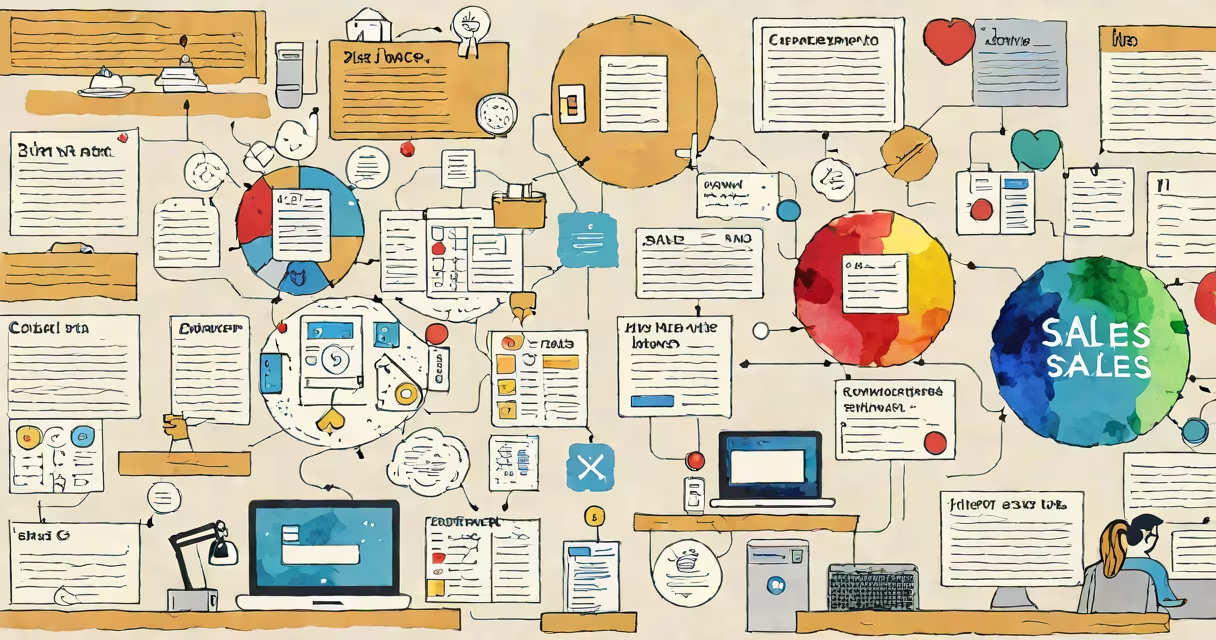
Siloed data occurs when information is stored in isolated systems or departments, making it inaccessible to others who need it. This creates fragmented views of operations, limits collaboration, and reduces organizational agility. Data remains trapped within specific units rather than flowing freely across teams.
When data is siloed, different departments often maintain their own versions of the same information-such as customer records or inventory levels-without synchronization. This leads to inconsistencies, duplicated efforts, and poor decision-making based on incomplete or outdated facts. For example, a marketing team may launch a campaign using outdated customer purchase history because the sales database hasn't been updated in six months.
The problem isn't just technical-it's structural. Siloed data arises from legacy systems, lack of integration protocols, and cultural resistance to sharing. According to Gartner, 70% of enterprises still operate with significant data silos, leading to inefficiencies in reporting and strategy execution. A 2022 McKinsey report found that companies with integrated data systems achieve 2.5 times faster time-to-market for new products compared to those with fragmented data.
Data becomes siloed when systems don't communicate. A sales team uses a CRM tool, HR relies on an HRIS platform, and finance runs on spreadsheets. These tools don't share data automatically. Even when they're connected via APIs, inconsistent formats or missing authentication prevent smooth flow.
For instance, a hospital might store patient medical histories in one system, billing data in another, and appointment scheduling in a third. Without integration, a doctor cannot instantly see if a patient has missed a payment or if a medication is covered under insurance-leading to delays in care and potential errors.
Access control policies can also contribute. While security is essential, overly restrictive permissions prevent authorized users from retrieving needed data. A regional manager may not have access to national sales figures due to role-based restrictions, even though the data exists and is relevant.
There are several patterns through which data becomes isolated:
| Type | Source System | Impact |
|---|---|---|
| Departmental silos | Marketing, Finance, Operations | Teams make decisions without full context, causing misalignment. |
| Legacy system silos | Old ERP, mainframe, or standalone apps | Difficult to integrate; often lack modern API support. |
| Cloud application silos | Google Sheets, Salesforce, Slack | Users copy data manually between platforms, increasing error risk. |
| Geographic silos | Regional offices with independent databases | Global strategies fail due to localized data gaps. |
Many organizations inherit silos during mergers or acquisitions. After a company acquires another, both entities retain their existing data systems. If no central integration plan is executed, the combined business operates with two separate data ecosystems-one for each former entity.
A common misconception is that siloed data only affects large corporations. Small businesses face similar issues when relying on multiple SaaS tools without syncing them. A local retail chain using a POS system, a separate email marketing tool, and a paper-based inventory log ends up with conflicting stock counts and missed customer follow-ups.
Isolated data undermines trust in analytics. When reports pull from different sources, discrepancies emerge. One department may claim revenue grew by 15%, while another shows a 5% decline-both correct, but based on different data sets.
Regulatory compliance suffers too. GDPR and HIPAA require accurate, consistent data handling. If patient records are split across departments, a single request for data access can take days to fulfill, risking fines. The European Data Protection Board reported that 43% of data breach incidents in 2023 stemmed from poor data governance, including siloed storage.
Even innovation slows. Product development teams need real-time feedback from customer service logs, sales performance, and support tickets. Without unified access, they build features based on assumptions rather than actual usage patterns.
I once worked with a mid-sized logistics firm that used Excel sheets for dispatch, a custom web app for tracking, and a paper log for driver sign-ins. Dispatchers spent hours reconciling delivery times across three systems. We implemented a centralized data warehouse using Apache Airflow to automate daily syncs from all sources. Within 60 days, dispatch accuracy improved by 38%, and planning meetings dropped from 90 minutes to 30.
Modern approaches include data lakes, master data management (MDM), and API-first architectures. MDM ensures a single version of truth-for example, defining "customer" as a unique ID linked to all transactions, emails, and support calls. A 2023 Forrester study showed companies using MDM reduced duplicate records by 62% and improved customer retention by 17%.
Another solution is adopting a data mesh model, where data ownership is decentralized but governed centrally. Each team manages its domain data (e.g., finance, supply chain), but all adhere to shared standards for naming, format, and access. This prevents isolation while preserving autonomy.
Breaking silos isn't just about tech. Culture change is required. Leaders must incentivize data sharing and reward cross-functional collaboration. At one financial services firm, leadership introduced quarterly "data sprint" events where teams from different departments co-developed dashboards using shared datasets. Participation rose from 12% to 74% in one year.
Siloed data is not the same as secure data. Security protects data from unauthorized access; siloing prevents legitimate access even when authorized. A well-secured system can still be siloed if access rights aren't properly aligned across roles.
It's also not synonymous with data redundancy. Redundancy means keeping copies for backup or disaster recovery. Siloing means storing unrelated or unlinked versions that contradict each other. Two departments may both store customer addresses-but one uses "St." and the other "Street," leading to mismatches.
Finally, siloed data doesn't imply poor quality. A dataset can be accurate and complete yet remain isolated. The issue is availability, not correctness. A research lab may have flawless genomic data, but if it's locked in a private server with no export options, it cannot inform clinical trials.
What is siloed data? It's information trapped in isolated systems, limiting visibility, consistency, and speed across an organization. Breaking down these barriers improves decision-making, enhances compliance, and accelerates innovation. Organizations that treat data as a shared asset-not a departmental possession-gain measurable advantages in efficiency and responsiveness.