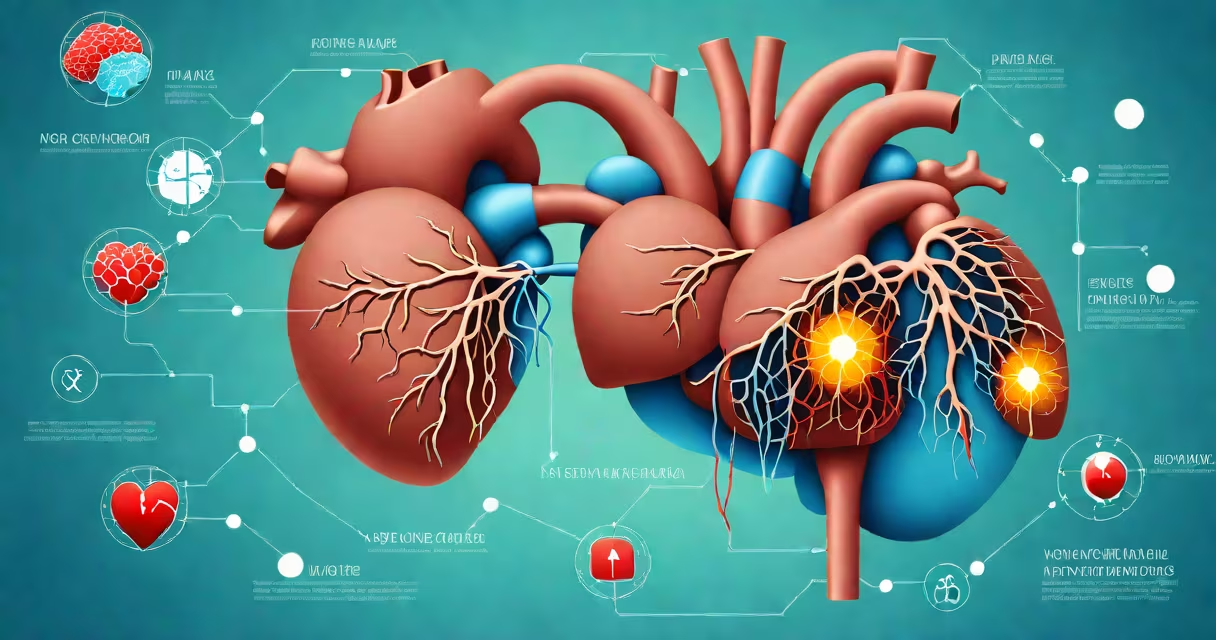
Vfib stands for ventricular fibrillation, a dangerous cardiac arrhythmia where the heart's ventricles quiver chaotically instead of contracting effectively. This disrupts blood flow, leading to sudden cardiac arrest within seconds if untreated.
Ventricular fibrillation occurs when abnormal electrical impulses fire randomly in the ventricles-the heart's main pumping chambers. These disorganized signals prevent synchronized contractions, reducing the heart's ability to pump blood. Without immediate intervention, brain damage begins within 4 minutes, and death follows within 10.
The condition is often triggered by underlying heart disease, such as coronary artery blockage, prior heart attacks, or cardiomyopathy. It can also result from electrolyte imbalances, drug toxicity, or genetic conditions like long QT syndrome. A person experiencing vfib loses consciousness rapidly and stops breathing.
Normal heart function relies on coordinated electrical activation. The sinoatrial node generates a regular impulse that travels through the atria, then the atrioventricular node, and finally down the Purkinje fibers to the ventricles. This sequence ensures efficient ejection of blood.
In vfib, multiple wavelets of electrical activity emerge simultaneously in the ventricles. These waves interfere with each other, creating a disorganized pattern. The heart muscle contracts in unison, resulting in ineffective pumping. On an electrocardiogram (ECG), vfib appears as irregular, chaotic undulations without discernible QRS complexes.
Without treatment, the heart cannot maintain systemic perfusion. Blood pressure drops to zero. Organs, especially the brain, suffer ischemic injury. Survival depends entirely on rapid restoration of organized rhythm.
Vfib is not classified into subtypes like some arrhythmias, but it can occur in different clinical contexts:
| Context | Common Causes | Incidence Rate |
|---|---|---|
| Out-of-hospital cardiac arrest | Acute myocardial infarction (heart attack) | ~60% of cases |
| During surgery | Anesthesia complications, hypoxia | ~1-2% of cases |
| Genetic predisposition | Long QT syndrome, Brugada syndrome | Rare, but high risk in young adults |
One non-obvious fact: vfib is more common in men than women, particularly between ages 40 and 65. The ratio is approximately 2:1. This difference correlates with higher rates of coronary artery disease in males and delayed symptom recognition.
Another misconception is that vfib only happens in people with known heart disease. While structural heart issues increase risk, healthy individuals can develop vfib due to rare inherited ion channel disorders. For example, a 2021 study published in the New England Journal of Medicine documented a case of sudden death in a 22-year-old athlete with no prior symptoms, later diagnosed with a mutation in the SCN5A gene linked to increased vfib susceptibility.
Recognizing vfib requires immediate assessment. Signs include sudden collapse, absence of pulse, gasping breaths (agonal respirations), and unresponsiveness. Anyone witnessing this should call emergency services and begin CPR immediately.
Defibrillation is the definitive treatment. Automated external defibrillators (AEDs) analyze heart rhythm and deliver a shock if vfib is detected. Public access AEDs have reduced mortality by up to 30% in out-of-hospital settings, according to the American Heart Association (AHA).
For example, in 2022, a man collapsed at a shopping mall in Chicago. Bystanders used a nearby AED, which delivered a single shock after detecting vfib. Paramedics arrived within 4 minutes and continued advanced cardiac life support (ACLS). The patient regained spontaneous circulation and was discharged from hospital after 10 days with minimal neurological deficit.
After initial stabilization, patients undergo coronary angiography to assess for blockages. If significant stenosis is found, percutaneous coronary intervention (PCI) may be performed. Long-term management includes beta-blockers, implantable cardioverter-defibrillators (ICDs), and lifestyle changes to reduce recurrence risk.
Vfib is frequently mistaken for other arrhythmias. It is not the same as atrial fibrillation (afib), which affects the upper chambers and typically causes palpitations rather than sudden collapse. Afib increases stroke risk but rarely leads to immediate cardiac arrest.
It is also sometimes confused with asystole-a flatline ECG pattern. Asystole indicates no electrical activity, while vfib shows chaotic activity. The treatment differs: defibrillation is effective for vfib but harmful in asystole. Misidentifying the rhythm delays proper care.
A third confusion arises with torsades de pointes, a polymorphic ventricular tachycardia associated with prolonged QT intervals. Though both can cause sudden death, torsades de pointes responds to magnesium sulfate, whereas vfib requires defibrillation.
One real-world example: In 2019, a hospital in Boston reported a misdiagnosis of vfib in a patient who actually had ventricular tachycardia. The error led to unnecessary shocks and prolonged ICU stay. The incident prompted a review of ECG interpretation protocols and emphasized the need for continuous training.
If someone collapses and is unresponsive, start CPR and use an AED if available. Do not wait for a doctor. Every minute without defibrillation reduces survival by 7-10%.
For those with known heart disease, regular follow-up with a cardiologist is essential. If you've had a previous episode of vfib or are at high risk, discuss ICD implantation with your provider. The device automatically detects and treats vfib episodes.