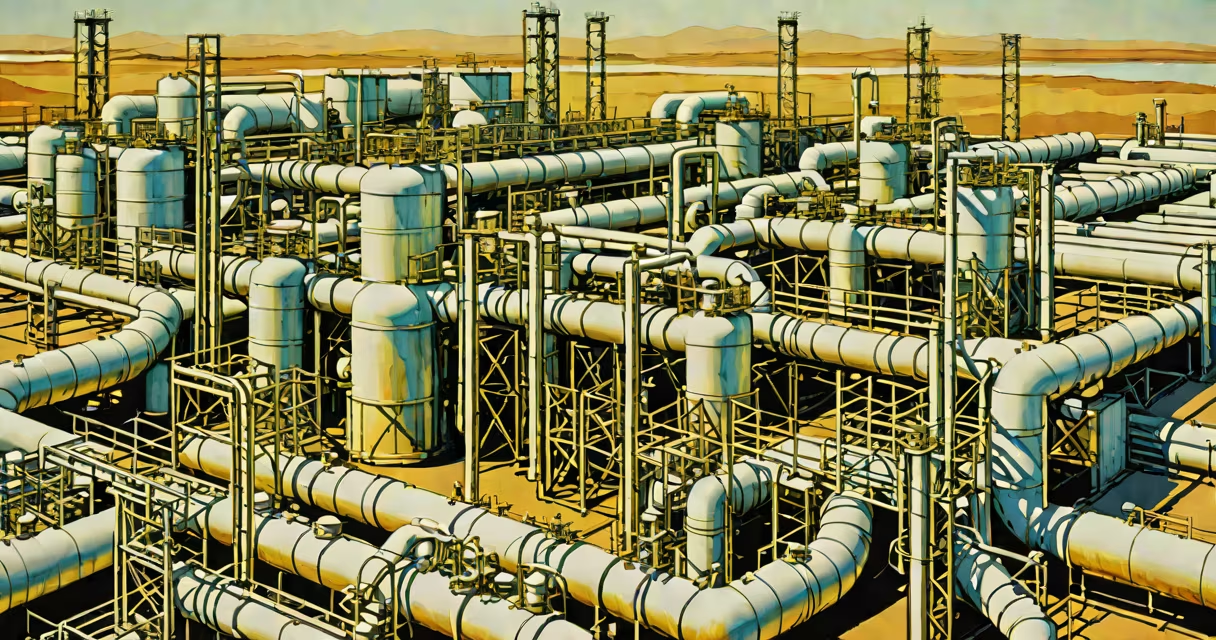
Oil infrastructure stocks are publicly traded equities in companies that own and manage physical assets essential to transporting, storing, and processing crude oil and refined petroleum products-such as pipelines, terminals, and storage hubs-without extracting or refining the oil themselves.
These companies operate under long-term contracts with energy producers and refiners, generating predictable cash flows through fees based on volume moved. Unlike exploration and production firms, they are not exposed to volatile commodity prices, making them a core holding for investors seeking steady income and capital preservation.
For example, Enterprise Products Partners L.P. (EPD) owns over 50,000 miles of pipelines and 160 million barrels of storage capacity across North America. Its revenue comes from gathering, processing, and transporting natural gas liquids and crude oil under long-term agreements, not from selling the commodities themselves.
These companies function as midstream energy providers-midway between upstream extraction and downstream refining. They build and maintain infrastructure that connects oil fields to refineries, ports, and markets. Revenue is generated via tariffs or throughput fees charged per barrel moved, regardless of oil price fluctuations.
Because their earnings are tied to volume rather than commodity pricing, they offer downside protection during oil price crashes. For instance, when oil fell below $30 per barrel in 2020, EPD's distribution coverage ratio remained above 1.5x, indicating strong ability to pay dividends even during market stress.
Infrastructure firms often reinvest in expansion projects to grow capacity and increase fee-based revenue. These expansions are typically funded through debt and equity, with credit ratings maintained at investment grade due to stable cash flows. This financial structure supports consistent dividend payouts.
Oil infrastructure stocks fall into three primary categories: pipeline operators, storage and terminal operators, and natural gas liquids (NGL) processors. Each plays a distinct role in the supply chain.
| Type | Function | Examples | Key Metric |
|---|---|---|---|
| Pipeline Operators | Transport crude oil and refined products across regions | Enterprise Products Partners (EPD), Energy Transfer (ET) | Throughput volume (barrels/day) |
| Storage & Terminals | Store crude and products before shipment or refining | Magellan Midstream Partners (MMP), NuStar Energy (NS) | Storage capacity (barrels) |
| NGL Processors | Separate natural gas liquids from raw gas streams | Plains All American Pipeline (PAA), TC Energy (TRP) | Processing volume (barrels/day) |
Most of these firms are master limited partnerships (MLPs), structured to pass through most of their taxable income to investors as distributions. This avoids corporate income tax, enabling higher yields compared to traditional corporations.
A lesser-known fact: MLPs are taxed at the investor level, meaning returns are reported on a K-1 form annually. This can complicate tax filing for individual investors, especially those using tax software not designed for pass-through entities.
Investors favor oil infrastructure stocks for their high dividend yields-often exceeding 6%-and low volatility relative to upstream oil stocks. During periods of rising interest rates, they outperform many growth equities due to their defensive nature and inflation-linked fee structures.
They are frequently mistaken for pure commodity plays. However, unlike oil producers whose profits rise and fall with crude prices, infrastructure firms earn fees regardless of whether oil trades at $50 or $100 per barrel. Their performance depends on volume and contract renewals, not spot prices.
Another misconception is that they are immune to energy transitions. While demand for oil may peak by 2030 according to the IEA, infrastructure remains important for decades. Pipelines carry not just oil but hydrogen and carbon dioxide for carbon capture projects. For example, TC Energy is developing the Heartland Hydrogen Hub, which will repurpose existing pipeline rights-of-way for clean fuel transport.
I observed this firsthand while reviewing quarterly reports from 2022-2023: several MLPs added green hydrogen and CO₂ transport projects to their development pipelines. One firm, Enbridge (ENB), announced plans to spend $1.2 billion on low-carbon infrastructure by 2025, including upgrading existing lines for hydrogen delivery.
Consider EPD's 2023 annual report. The company operated 168,000 barrels per day of crude oil pipeline capacity and earned $1.3 billion in distributable cash flow. It paid $1.1 billion in distributions to unitholders, resulting in a distribution coverage ratio of 1.18x-well above the minimum threshold of 1.0x considered safe.
Its average tariff rate increased by 4.2% year-over-year due to volume growth and new contracts. Even though oil prices dropped 15% in Q3 2023, EPD's cash flow rose 7% due to higher throughput volumes from new pipeline expansions in the Permian Basin.
This illustrates a key principle: infrastructure income is volume-driven, not price-driven. A 10% drop in oil prices doesn't reduce revenue unless volume declines. As long as producers keep shipping, fees continue flowing.
For investors seeking exposure to energy fundamentals without commodity risk, oil infrastructure stocks provide a direct route. They offer resilience through cycles and consistent income, backed by real assets and long-term contracts.
If you're evaluating oil stocks right now, consider the difference between upstream volatility and midstream stability. Infrastructure firms deliver income without the emotional swings of oil price headlines.