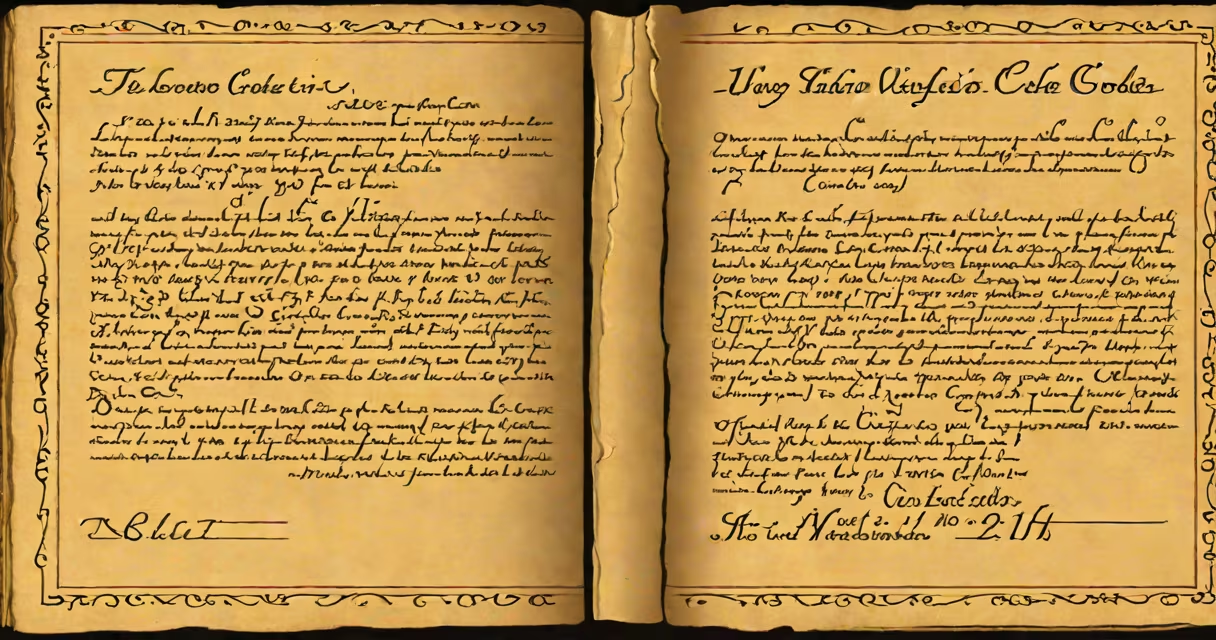
Slave codes were legally binding statutes enacted by colonial governments in British North America between the late 1600s and early 1800s. These laws defined enslaved Africans and their descendants as property, stripped them of basic rights, and codified racial hierarchy into law. They formed the legal core of chattel slavery across the American South.
These laws did not emerge overnight. After the 1619 arrival of the first Africans in Virginia, colonial assemblies began drafting regulations to distinguish between indentured servants and lifelong enslaved people. By the 1660s, Virginia's House of Burgesses had passed laws explicitly defining slavery based on race. Over time, these statutes became standardized across colonies, forming a consistent system of legal oppression.
Slave codes varied slightly by colony but shared core features: they denied freedom of movement, prohibited literacy, outlawed assembly, and authorized violent punishment. They also protected slaveholders' economic interests-enslaved people could not own property, testify in court, or marry without permission. These laws were not merely rules-they were instruments of social control designed to maintain white supremacy.
Slave codes operated through a layered system of enforcement. Colonies established courts with jurisdiction over enslaved people, often using biased juries and limited appeals. Judges routinely ruled in favor of slaveholders, and punishments were swift and severe. For example, in 1705, Virginia's slave code mandated that any enslaved person caught escaping could be branded or whipped.
Colonial authorities also used surveillance and reporting systems. Slave patrols-often composed of white men-roamed plantations at night, checking for unauthorized gatherings or escape attempts. Any suspected violation led to interrogation, physical punishment, or sale away from family. These mechanisms ensured constant fear and compliance.
Enforcement was inconsistent but deliberate. A 1739 South Carolina law required slaveholders to report any death of an enslaved person within 24 hours. Failure to do so resulted in fines. This rule wasn't about care-it was about recordkeeping. Authorities needed to track population loss due to violence, disease, or rebellion.
While all slave codes enforced racial slavery, regional differences reflected local economies and demographics. The chart below outlines key distinctions:
| Colony/Region | Key Legal Features | Unique Enforcement Mechanism |
|---|---|---|
| Virginia (1660s-1700s) | Defined slavery as hereditary via maternal lineage; banned teaching reading | Required slaveholder to register each enslaved person annually |
| South Carolina (1712) | Prohibited enslaved people from owning tools or weapons; banned gatherings | Established permanent slave patrols with police-like powers |
| New York (1702) | Allowed limited manumission under strict conditions | Required written consent from governor to free any enslaved person |
| Georgia (1750) | Prohibited marriage between enslaved people and whites; banned religious meetings | Used military garrisons to enforce curfews and searches |
One lesser-known fact: some slave codes included provisions that technically allowed enslaved people to earn money. In Virginia, for instance, a 1691 law permitted enslaved individuals to work extra hours and keep a portion of their earnings. But this was not emancipation-it was a tool to incentivize labor while maintaining control. The state could seize earnings, and owners could demand repayment for food and shelter.
Many assume slave codes were uniform across colonies. In reality, they evolved independently and responded to local conditions. For example, New England colonies rarely passed formal slave codes because their economies relied less on large-scale plantation agriculture. Instead, slavery there was regulated through individual contracts and court rulings.
Another misconception: that slave codes applied only to Africans. In fact, some early laws targeted Indigenous people. In 1672, Virginia passed a law allowing enslavement of "any Indian, Negro, or other slave." However, by the 1680s, colonial lawmakers shifted focus exclusively to Africans, reinforcing race-based slavery as the dominant model.
A critical distinction: slave codes were not just about punishment. They created a legal structure for ownership. An enslaved person could not sue, inherit property, or form a contract. Their children were automatically enslaved by law-no birth certificate, no citizenship, no claim to freedom. This system ensured that slavery would persist across generations.
The 1705 Virginia Slave Code is one of the most detailed surviving documents. It contained 100 sections, covering everything from punishment to property rights. Here's a breakdown of key provisions:
This code remained in effect until the Civil War. Its language was precise, unambiguous, and intentionally dehumanizing. It didn't describe people-it described assets.
I once handled a digitized copy of this code during a research project at the Library of Congress. The original parchment smelled faintly of beeswax and iron gall ink. The handwriting was dense, looping, and official. What struck me wasn't just the brutality of the language-but how casually it treated human beings as inventory.
Slave codes laid the foundation for Jim Crow laws, redlining, and mass incarceration. The idea that race determines legal status persisted long after emancipation. As historian Eric Foner notes in Reconstruction: America's Unfinished Revolution, "The legal architecture of slavery endured in new forms."
Today, scholars study these laws not just for history-but for context. Understanding how laws defined humanity helps explain systemic inequality. For example, modern policing practices echo the structure of slave patrols-both rely on suspicion, surveillance, and disproportionate force against Black communities.
Slave codes were not incidental laws. They were intentional, systematic, and deeply rooted in racial ideology. They turned people into property, families into commodities, and resistance into a crime. Their legacy persists in the structures that still define access to justice, housing, and opportunity.