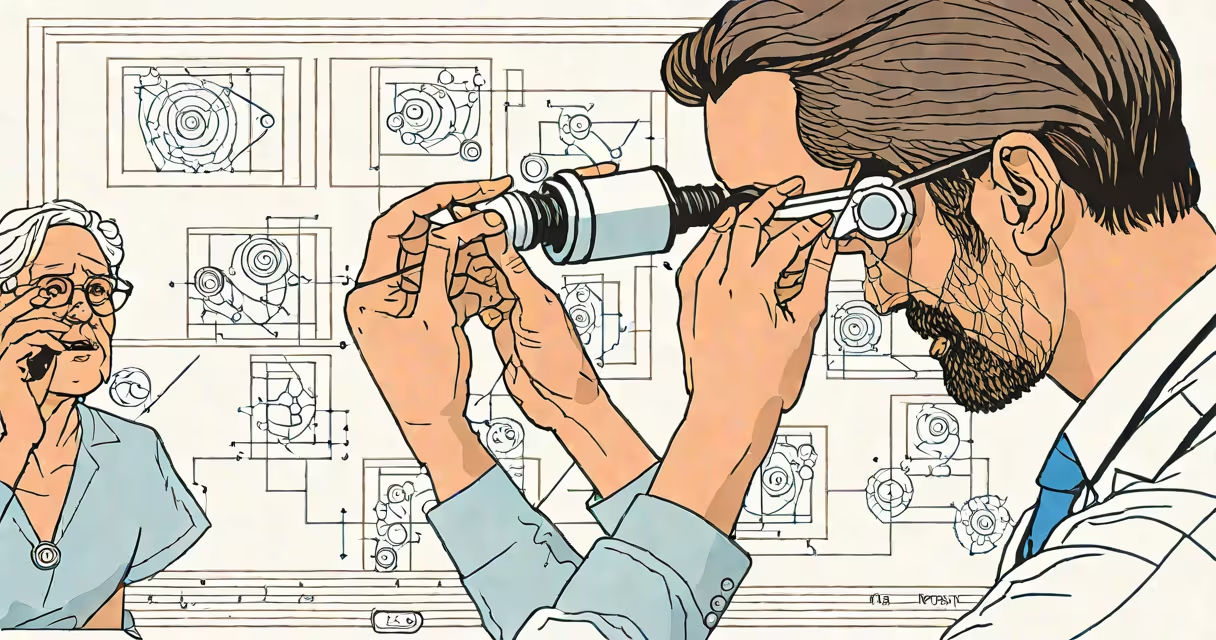
An OD doctor is a licensed optometrist who specializes in diagnosing and managing vision problems, prescribing corrective lenses, and detecting early signs of eye disease. The title "OD" stands for "Doctor of Optometry," a professional degree earned after completing a four-year optometry program and passing national licensing exams.
Optometrists are primary eye care providers. They assess visual acuity, perform eye health screenings, and manage conditions like nearsightedness, farsightedness, astigmatism, and presbyopia. They also diagnose and monitor chronic diseases such as diabetes and hypertension through retinal changes visible during an exam. According to the American Optometric Association (AOA), over 60 million Americans visit an optometrist annually for routine eye care.
OD doctors do not perform surgery. For surgical treatment of eye conditions, patients are referred to ophthalmologists-medical doctors (MDs) who specialize in eye care and surgery. While both professions serve vision health, their training paths differ. An OD doctor completes a Doctor of Optometry program, while an ophthalmologist earns an MD and undergoes additional residency training in ophthalmology.
OD doctors complete a minimum of three years of undergraduate study followed by four years of accredited optometry school. Programs include coursework in anatomy, physiology, pharmacology, optics, and clinical skills. Students spend hundreds of hours in supervised clinics treating patients before graduation.
After earning their degree, candidates must pass the National Board of Examinations in Optometry (NBEO) exams, which cover basic sciences, clinical procedures, and patient management. State licensing boards then require additional exams and background checks before issuing a license to practice. In most states, optometrists must renew their license every two years and complete continuing education credits.
For example, the University of California, Berkeley School of Optometry reports that its graduates achieve a 98% pass rate on the NBEO Part I exam. This reflects rigorous academic standards and prepares students for real-world clinical decision-making.
OD doctors provide complete eye exams, prescribe glasses and contact lenses, and manage common eye conditions. They also screen for glaucoma, macular degeneration, diabetic retinopathy, and dry eye syndrome. Early detection allows for timely intervention, reducing long-term complications.
Common services include refraction testing, tonometry (measuring intraocular pressure), and dilated fundus exams. Many ODs use advanced imaging tools like optical coherence tomography (OCT) to capture cross-sectional images of the retina. These tools enable precise diagnosis and tracking of disease progression.
OD doctors work in private practices, retail chains like LensCrafters, military clinics, public health departments, and telehealth platforms. Some specialize in pediatric optometry, geriatric eye care, or contact lens fitting. A 2022 report from the U.S. Bureau of Labor Statistics noted that optometrists had a median annual wage of $120,000, with employment projected to grow 10% from 2022 to 2032-faster than average.
| Service | Performed by OD? | Performed by Ophthalmologist? |
|---|---|---|
| Annual eye exam | Yes | Yes |
| Prescribe eyeglasses | Yes | Yes |
| Fit contact lenses | Yes | Yes |
| Diagnose cataracts | Yes | Yes |
| Perform cataract surgery | No | Yes |
| Treat glaucoma with medication | Yes | Yes |
| Manage diabetic retinopathy | Yes | Yes |
Many people assume that "doctor" in "OD" means the same as "MD." That's incorrect. While both titles indicate advanced education, an OD doctor is not a medical doctor. They do not attend medical school, cannot prescribe certain medications (like systemic steroids), and do not perform invasive surgeries.
A frequent misunderstanding is that optometrists only handle vision correction. In reality, they detect systemic health issues through eye exams. For instance, hypertensive retinopathy-a condition caused by high blood pressure-can be identified during a dilated eye exam. The American Academy of Ophthalmology notes that up to 25% of undiagnosed hypertension cases are first detected during routine eye exams.
Another misconception is that OD doctors are less qualified than ophthalmologists. This is false. OD programs are accredited by the Accreditation Council on Optometric Education (ACOE), and graduates must meet strict educational benchmarks. The curriculum includes 400+ hours of clinical training, comparable to many medical residencies.
I visited an OD doctor last year after noticing blurred vision at night. My initial concern was cataracts, but the optometrist ran a series of tests including visual field analysis and OCT scans. The results showed early-stage dry macular degeneration. He prescribed supplements and recommended lifestyle changes to slow progression. I later saw an ophthalmologist for confirmation, but the OD caught the issue early-before symptoms worsened.
This experience confirmed that OD doctors play a critical role in preventive eye care. Their focus on early detection and non-surgical management makes them essential partners in long-term eye health.
See an OD doctor for routine eye exams, vision correction, contact lens fittings, and monitoring chronic eye conditions. They're ideal for adults and children needing regular checkups. If you have a sudden change in vision, floaters, flashes, or pain, seek immediate care from an ophthalmologist.
For surgical needs-cataracts, retinal detachment, corneal transplants, or refractive surgery like LASIK-an ophthalmologist is required. Some optometrists collaborate with ophthalmologists through referral networks, especially in rural areas where specialist access is limited.
The term "OD" is sometimes confused with "board eligible," which applies to physicians who have completed residency but haven't yet passed a certification exam. For example, a doctor may be "board eligible" in ophthalmology after finishing training but not yet certified by the American Board of Ophthalmology. This status doesn't apply to optometrists.
Also, "OD" should not be mistaken for "DO"-a Doctor of Osteopathic Medicine, who is a physician trained in osteopathic medicine. DOs and MDs are both medical doctors, but DOs emphasize whole-body wellness and musculoskeletal manipulation.
When you see "OD" after a name, it indicates the individual holds a Doctor of Optometry degree and is licensed to practice optometry. This credential is distinct from medical degrees and reflects specialized training in vision science and patient care.
Understanding what an OD doctor means helps you make informed choices about your eye health. Whether you need a routine exam or suspect a serious condition, knowing the difference between optometrists and ophthalmologists ensures you receive the right care at the right time.