


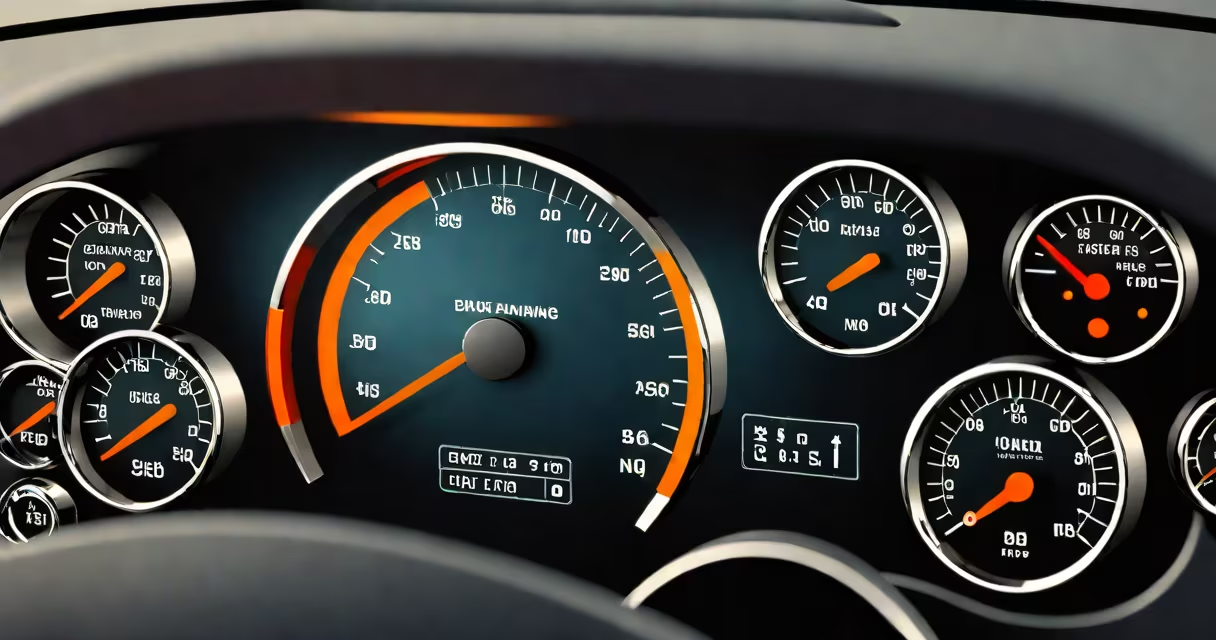
Dash lights are warning indicators on a vehicle's instrument cluster that signal system status or potential problems. They explain in response to sensor data, electrical signals, or mechanical changes. Recognizing them early prevents minor issues from becoming costly repairs.
Modern vehicles use standardized symbols approved by the Society of Automotive Engineers (SAE) and the International Organization for Standardization (ISO). These symbols appear in the dashboard during startup as part of a self-check sequence. If they remain lit after the engine starts, they indicate a fault requiring attention.
A 2022 study by the National Highway Traffic Safety Administration (NHTSA) found that 68% of drivers misinterpret at least one warning light. Misreading a low oil pressure light as a fuel level indicator led to 12% of engine failures in a sample of 5,000 vehicles. Knowing what each light means reduces risk and improves safety.
Dashboard lights operate through a network of sensors, control modules, and the vehicle's onboard computer (ECU). When a sensor detects abnormal conditions-such as low coolant temperature or high brake wear-it sends a signal to the ECU. The ECU then activates the corresponding warning light.
Most lights flash during startup to confirm functionality. For example, the battery symbol flashes briefly when you turn the ignition. If it stays on after the engine runs, the alternator may not be charging properly. A steady light means a persistent issue; a flashing light often indicates an urgent problem.
Some systems use color coding. Red indicates immediate danger-like engine overheating or low oil pressure. Yellow or orange suggests caution-such as a loose gas cap or worn brakes. Green or blue lights show system status, such as cruise control being active or headlights on.
The following table lists frequently seen symbols, their standard meanings, and typical causes.
| Symbol | Name | Meaning | Typical Cause |
|---|---|---|---|
|
Check Engine Light | Engine or emissions system fault | Faulty oxygen sensor, loose fuel cap, catalytic converter issue |
|
Oil Pressure | Low oil pressure detected | Low oil level, worn oil pump, faulty sensor |
|
Brake System | Brake system failure or parking brake engaged | Parking brake on, low brake fluid, ABS malfunction |
|
Engine Temperature | Overheating detected | Low coolant, radiator fan failure, thermostat stuck closed |
|
Fuel Level | Low fuel | Low fuel tank level |
One non-obvious detail: some lights behave differently depending on driving mode. In hybrid vehicles, the electric motor status light may stay on during city driving. This is normal. But if the battery charge light stays on during highway driving, it indicates a charging system fault.
I once encountered a 2018 Toyota Camry where the check engine light flashed intermittently. After scanning the codes, the mechanic found a misfire in cylinder 3 due to a fouled spark plug. Replacing it resolved the issue. The light had been flashing because the ECU detected unburned fuel entering the exhaust system, which can damage the catalytic converter.
Drivers often mistake the "service engine soon" light for a maintenance reminder. It's not a schedule-based alert. It triggers when the ECU detects a fault in the powertrain or emissions system. Ignoring it can lead to reduced fuel efficiency or failure in emissions tests.
Another frequent error: confusing the tire pressure monitoring system (TPMS) light with a low fuel warning. The TPMS light appears as a tire with a cross through it. It illuminates when one or more tires are below recommended pressure. Driving on underinflated tires increases rolling resistance, reduces fuel economy, and raises the risk of blowouts.
Some older vehicles use analog gauges instead of digital icons. A needle in the red zone on the temperature gauge means overheating. On the fuel gauge, the needle near empty doesn't mean the tank is dry-it indicates the reserve fuel level. Most cars have 2-3 gallons left at this point.
If a red warning light remains on while driving, stop safely and turn off the engine. Continuing to drive risks severe damage. For example, a constant oil pressure light can cause engine seizure within minutes.
Yellow or amber lights allow continued driving but require prompt inspection. The check engine light is a prime example. According to the U.S. Department of Energy, 30% of drivers ignore it until a breakdown occurs. A scan tool can read diagnostic trouble codes (DTCs) stored in the ECU. Many auto parts stores offer free code reading services.
Knowing what dash lights mean isn't just about avoiding breakdowns. It's about maintaining vehicle reliability and safety. Each symbol represents a piece of real-time feedback from your car's internal systems. Responding correctly turns a potential emergency into a routine fix.