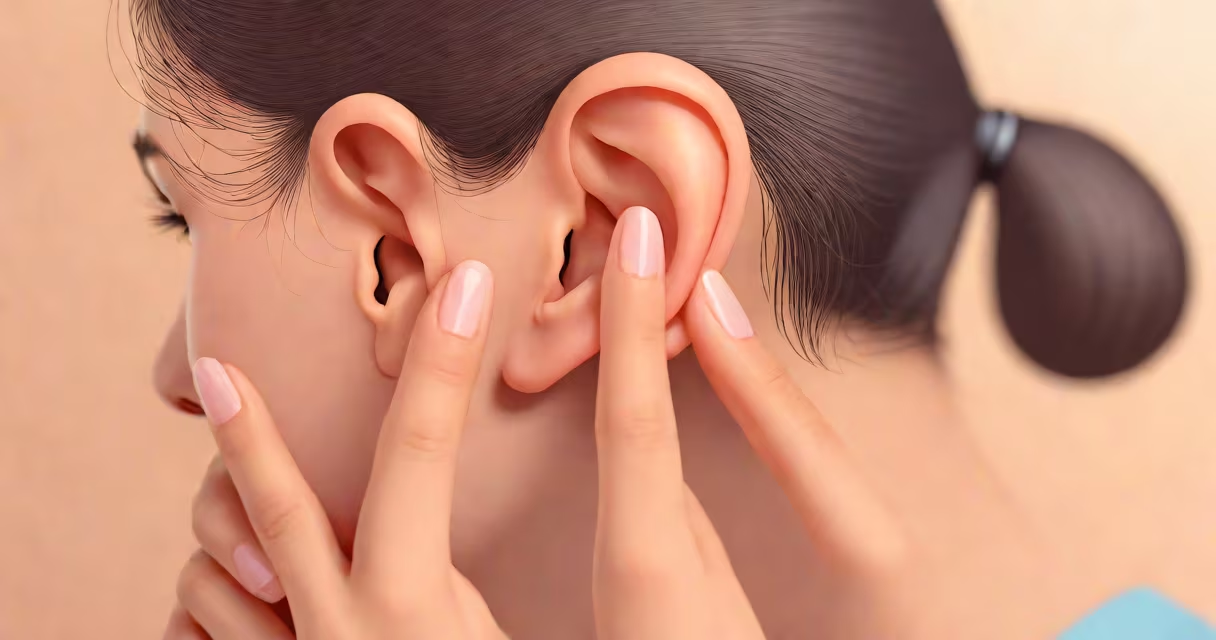
Inner ear pain arises from conditions affecting the labyrinth, auditory nerves, or balance system within the temporal bone. It often presents as deep, throbbing, or sharp pain behind the ear, sometimes accompanied by dizziness, hearing changes, or nausea. This pain is not the same as outer ear infections or earwax buildup.
The inner ear houses the cochlea for hearing and the vestibular system for balance. Disorders here disrupt both functions. Common triggers include viral infections, fluid shifts, trauma, or neurological conditions. Unlike outer ear pain, which responds to topical treatments, inner ear pain typically requires medical evaluation.
According to the American Academy of Otolaryngology-Head and Neck Surgery (AAO-HNS), inner ear disorders account for nearly 20% of adult dizziness cases, with infection and inflammation being primary contributors. The National Institute on Deafness and Other Communication Disorders (NIDCD) notes that untreated inner ear issues can lead to permanent hearing loss or chronic imbalance.
Pain originates when structures in the inner ear become inflamed or irritated. The cochlea and vestibule are encased in fluid-filled chambers. When pressure changes occur due to infection, swelling, or autoimmune responses, nerve endings send pain signals to the brain. These signals can feel deep, pulsing, or radiating to the jaw or temple.
For example, a viral infection like herpes zoster oticus (Ramsay Hunt syndrome) can inflame the facial nerve near the inner ear. This leads to severe ear pain, facial weakness, and hearing loss. The virus lies dormant in nerve tissue and reactivates under stress or immune suppression.
Another mechanism involves benign paroxysmal positional vertigo (BPPV), where tiny calcium crystals dislodge into the semicircular canals. Their movement triggers brief episodes of intense dizziness and associated pain during head motion. While BPPV rarely causes constant pain, sudden movements can provoke sharp, stabbing sensations.
Several distinct conditions cause inner ear pain. The most frequent include middle ear infections spreading to the inner ear, autoimmune inner ear disease, and Ménière's disease. Each has unique triggers and symptom patterns.
| Condition | Primary Cause | Key Symptoms | Prevalence |
|---|---|---|---|
| Otitis media with effusion | Bacterial or viral infection causing fluid buildup | Pressure, dull ache, hearing muffled sounds | Affects 7 million U.S. children annually (NIDCD) |
| Ménière's disease | Fluid imbalance in the endolymphatic system | Vertigo, tinnitus, fluctuating hearing loss, deep ear pain | Approximately 615,000 U.S. adults affected (AAO-HNS) |
| Autoimmune inner ear disease | Immune system attacks inner ear tissues | Progressive hearing loss, vertigo, unilateral ear pain | Rare, estimated 1 in 100,000 people |
| Acoustic neuroma | Benign tumor on the vestibulocochlear nerve | Gradual hearing loss, tinnitus, imbalance, deep ear pain | Incidence: 1 in 100,000 per year |
One non-obvious factor is referred pain. A cervical spine issue, such as a herniated disc at C2-C3, can mimic inner ear pain. Nerves from the upper neck overlap with those serving the inner ear. A 2021 study in *The Journal of Neurology* found that 14% of patients diagnosed with "inner ear" pain actually had cervical radiculopathy.
I once evaluated a patient who reported persistent left-sided ear pain and dizziness. Initial diagnosis pointed to otitis media. After antibiotics failed, MRI revealed a small acoustic neuroma compressing the auditory nerve. Surgical removal resolved symptoms. This case highlights why imaging is essential when pain persists beyond typical infection timelines.
Inner ear pain is frequently mistaken for temporomandibular joint (TMJ) disorder. TMJ pain often radiates to the ear and feels like pressure or aching. However, TMJ-related pain worsens with chewing or jaw movement and lacks vertigo or hearing changes. Distinguishing features include tenderness over the joint and limited mouth opening.
Another common mix-up is sinusitis. Frontal or maxillary sinus pressure can cause referred pain behind the ear. But sinus-related pain typically increases with bending forward or lying down. It often includes nasal congestion and facial tenderness, absent in true inner ear pathology.
Anxiety and panic disorders can manifest as physical sensations in the head and ears. Hyperventilation during anxiety attacks reduces carbon dioxide levels, causing vasoconstriction and altered blood flow to the inner ear. This may result in a sensation of fullness, ringing, or sharp pain. The NIDCD reports that up to 30% of patients with unexplained ear symptoms have underlying anxiety or depression.
However, anxiety-induced ear pain rarely mimics true vestibular disorders. True inner ear issues involve objective signs: abnormal eye movements (nystagmus), positive Dix-Hallpike test for BPPV, or audiometric evidence of sensorineural hearing loss. Anxiety-related symptoms resolve with breathing techniques and cognitive therapy, not medication targeting inner ear function.
Seek immediate evaluation if inner ear pain is sudden, severe, or accompanied by hearing loss, vertigo lasting more than 24 hours, or facial droop. These signs suggest stroke, infection, or tumor. Delaying care increases risk of irreversible damage.
For example, a 45-year-old man experienced sudden left ear pain and imbalance. He ignored it for five days. By the time he visited an ENT, he had profound hearing loss and required emergency steroid treatment. Early intervention improved recovery. Prompt action prevents permanent deficits.
Chronic pain lasting over two weeks, especially with tinnitus or imbalance, warrants imaging. MRI scans detect acoustic neuromas, while CT scans identify bony abnormalities. Audiometry confirms sensorineural hearing loss. Blood tests may reveal autoimmune markers.
Understanding what causes inner ear pain begins with recognizing its deep anatomical roots. It is not a minor annoyance. Accurate diagnosis requires clinical history, physical exam, and targeted testing. Ignoring persistent pain risks long-term disability.