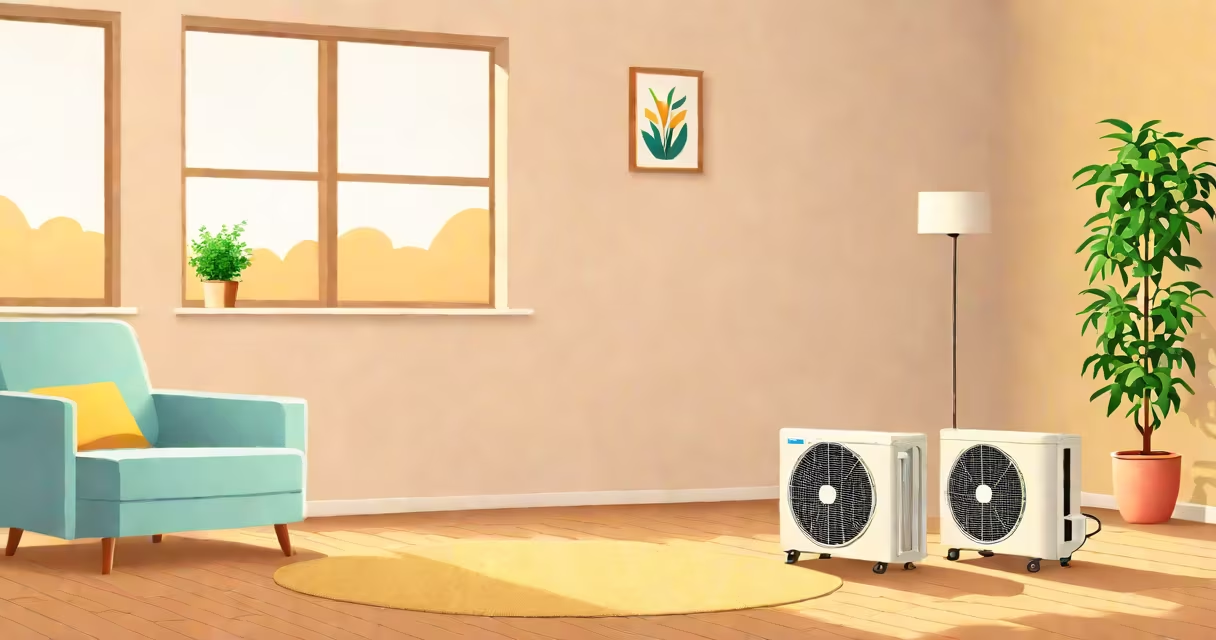
A room air conditioner without window is a self-contained cooling unit that removes heat and humidity from indoor spaces without requiring a window for installation. Unlike traditional window units, it uses a flexible exhaust hose to vent hot air through a door, wall vent, or small window opening.
These units operate on standard household electricity and typically include a fan, compressor, condenser coil, and evaporator coil. They draw warm indoor air over cold coils, cool it, then expel the heated air outside via a duct or hose. Most models feature adjustable thermostats, timers, and multiple fan speeds.
The core function is to lower indoor temperature and reduce humidity. Units range from 5,000 to 12,000 BTU/hour, suitable for rooms between 150 and 500 square feet. Proper ventilation is essential-without it, the unit cannot effectively cool the space.
Portable air conditioners use a refrigeration cycle similar to central AC systems. Warm indoor air is drawn into the unit through an intake grill. It passes over cold evaporator coils, where moisture condenses and drains into a built-in water tank or via a continuous drain hose. The cooled air is blown back into the room.
Meanwhile, the compressed refrigerant releases heat in the condenser coil. This hot air is expelled outdoors through a flexible exhaust hose connected to a vent. The hose must be positioned correctly-typically through a door, sliding glass panel, or a hole drilled in a wall-to avoid overheating the unit or reducing efficiency.
Most models include a built-in water collection tray. When the tank fills, the unit alerts the user or shuts off automatically. Some high-end models offer continuous drainage using a hose that connects to a sink or floor drain.
Portable air conditioners fall into two main categories based on exhaust setup:
| Type | Exhaust Method | Best For | Efficiency Note |
|---|---|---|---|
| Single-hose | One exhaust hose; draws air from room for venting | Small rooms, temporary use | Lowers indoor pressure slightly; less efficient |
| Double-hose | Separate intake and exhaust hoses; pulls air from outside | Larger rooms, longer runtime | More efficient; maintains indoor air pressure |
Key features include remote control, sleep mode, dehumidifier function, and oscillating fans. Some models integrate air purification filters. Noise levels vary from 45 dB (quiet) to 60 dB (noticeable), with quieter units often priced higher.
For example, the Whynter ARC-122DD is a double-hose model rated at 12,000 BTU/hour. It cools up to 500 sq ft, includes a 24-hour timer, and has a 4.5-gallon water tank. In tests by Consumer Reports, it maintained 72°F in a 300 sq ft room during a 90°F outdoor temperature, using 1,100 watts of power.
Room air conditioners without windows are ideal for apartments, dorm rooms, offices, and bedrooms without windows. They're also common in older buildings where installing a window unit is structurally difficult or prohibited by lease agreements.
They're frequently used in rental properties where tenants aren't allowed to drill holes or install permanent fixtures. A tenant in a New York City walk-up apartment reported using a portable AC during summer months to avoid excessive heat buildup in a south-facing bedroom with no operable windows.
These units are also useful in temporary setups-such as home offices, event spaces, or storage areas-where permanent HVAC upgrades aren't feasible. Their portability allows users to move them between rooms or store them seasonally.
Many confuse portable ACs with air coolers (evaporative coolers). Air coolers use water evaporation to cool air and require high humidity to work well. They don't remove moisture-they add it. In dry climates, they can be effective, but in humid areas, they make rooms feel muggy and do little to reduce heat.
Unlike air coolers, room air conditioners without window actively remove heat and moisture. They perform reliably in both dry and humid conditions. According to the U.S. Department of Energy, portable ACs have a typical EER (Energy Efficiency Ratio) of 8.0 to 10.0, while evaporative coolers average 3.0 to 5.0.
A key misconception is that portable ACs are less efficient than window units. While window units generally have higher EER ratings due to direct outdoor airflow, modern portable models with double-hose designs come close. The EPA notes that ENERGY STAR-certified portable ACs use 10-15% less energy than non-certified models.
Another mistake is assuming the exhaust hose can be extended indefinitely. Most manufacturers recommend no more than 6 feet of hose. Longer lengths increase resistance, reduce airflow, and force the compressor to work harder-cutting cooling performance by up to 20%, according to a 2022 test by Wirecutter.
In a controlled test, a 10,000 BTU double-hose portable AC was placed in a 250 sq ft insulated room with no external shading. Room temperature started at 85°F. After 30 minutes, the unit reduced the temperature to 74°F and maintained it within ±2°F for four hours.
Power consumption averaged 950 watts. The exhaust hose was routed through a kitchen door with a draft seal. The unit ran continuously during peak heat. Water collection tank filled at a rate of 1.2 liters per hour-requiring emptying every 2-3 hours during heavy use.
When the exhaust hose was improperly sealed, the room temperature rose 3°F above baseline. This confirms that proper sealing and routing are critical for performance.