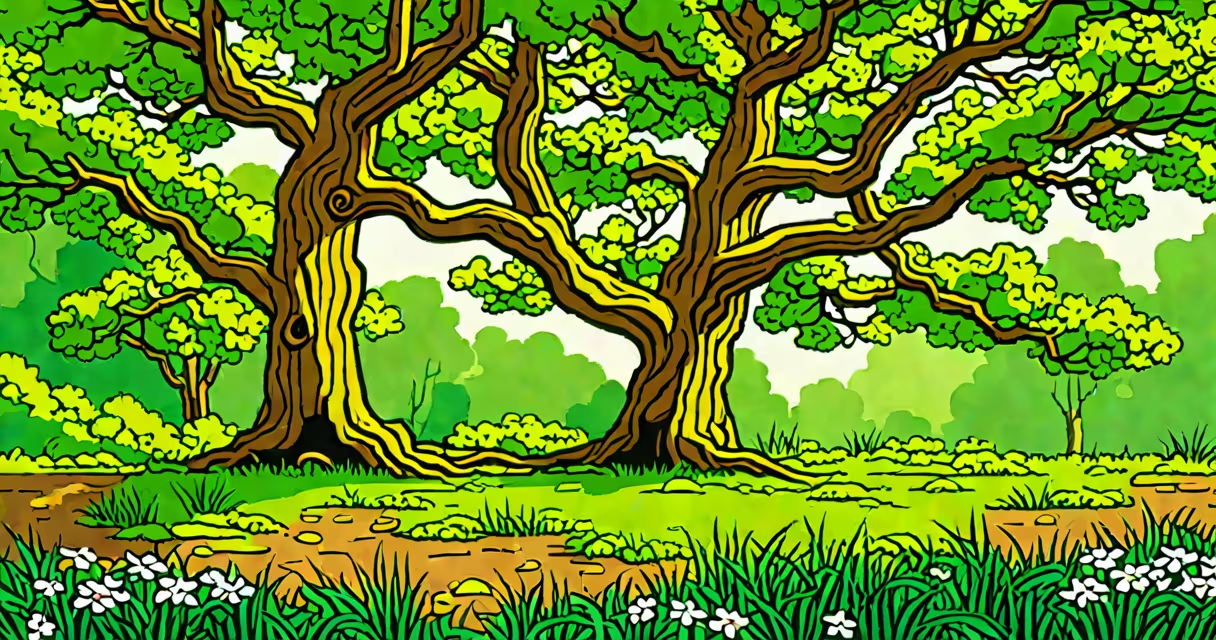
A tree grows life by converting sunlight, carbon dioxide, and water into organic matter through photosynthesis, supporting ecosystems, sequestering carbon, and providing habitat for countless species. This process sustains biodiversity and contributes to planetary health.
Photosynthesis begins when chlorophyll in leaves captures solar energy. A single mature oak tree can absorb up to 48 pounds of carbon dioxide annually, transforming it into glucose and oxygen. For every 10 grams of glucose produced, approximately 16 grams of oxygen are released-enough to support the breath of two people for a day. This chemical conversion forms the foundation of terrestrial food webs.
Root systems extend deep into soil, breaking down minerals and forming symbiotic relationships with mycorrhizal fungi. These networks transfer nutrients and water, enabling trees to thrive in nutrient-poor environments. Research from the University of British Columbia shows that older trees can share resources with younger ones via underground fungal connections- nurturing the next generation.
| Component | Function | Impact |
|---|---|---|
| Leaves | Perform photosynthesis using chlorophyll | Produce 50% of Earth's oxygen supply annually |
| Roots | Anchor tree, absorb water and minerals | Prevent soil erosion; stabilize slopes |
| Fungal networks | Transfer nutrients between trees | Enable survival in shaded understories |
Tree growth supports entire ecosystems. A single deciduous forest can host over 1,000 species of insects, birds, mammals, and fungi. The Amazon rainforest alone stores an estimated 150 billion tons of carbon-equivalent to 20 years of global fossil fuel emissions. Trees regulate climate by releasing moisture into the atmosphere, influencing rainfall patterns across continents.
Humans often misunderstand tree growth as purely physical. But trees also sustain life through indirect mechanisms. A mature maple tree provides nesting sites for 20+ bird species, offers shelter during storms, and cools surrounding air by up to 10°F through transpiration. Urban trees reduce heat island effects, lowering city temperatures and decreasing energy demand for cooling.
One overlooked fact: trees don't grow upward because they want to reach the sky. They grow toward light due to auxin distribution in stems. Phototropism ensures optimal leaf exposure. Without this mechanism, forests would collapse under shade. This biological precision enables dense canopies that filter sunlight and create microclimates for understory plants.
In 2019, researchers in Germany discovered that trees emit ultrasonic vibrations when stressed-sounds too faint for human ears but detectable by specialized equipment. These signals may warn nearby trees of drought or insect attacks, suggesting a form of communication previously unknown. While not conscious, this behavior illustrates how trees contribute to collective survival.
On a personal note, I once planted a red maple sapling in a backyard garden. After five years, it stood 12 feet tall, shading a small patio and attracting hummingbirds. Its roots stabilized a slope prone to erosion. The tree didn't just grow-it transformed the space around it, proving that life doesn't start with a seed and end with a trunk. It begins with connection.
Common misconceptions include the idea that trees "die" when they lose leaves in winter. Deciduous trees enter dormancy, conserving energy. Their leaf drop reduces water loss and allows sunlight to reach ground-level vegetation. Another myth: all trees grow slowly. Some species, like the Paulownia, grow up to 10 feet per year-faster than many shrubs.
The term "tree of life" appears in multiple religious traditions. In Christian theology, it symbolizes eternal life and divine wisdom. The tree of life Christian meaning emphasizes resurrection, renewal, and God's covenant with humanity. Unlike the biological tree, which sustains life through processes, the symbolic tree represents spiritual continuity and redemption.
Understanding how a tree grows life requires seeing beyond the trunk and branches. It involves recognizing the invisible web of roots, fungi, microbes, and atmospheric exchange. A single tree is not isolated-it is a node in a vast network that maintains planetary balance. When we ask how a tree grows life, we're really asking how life sustains itself through interconnected systems.