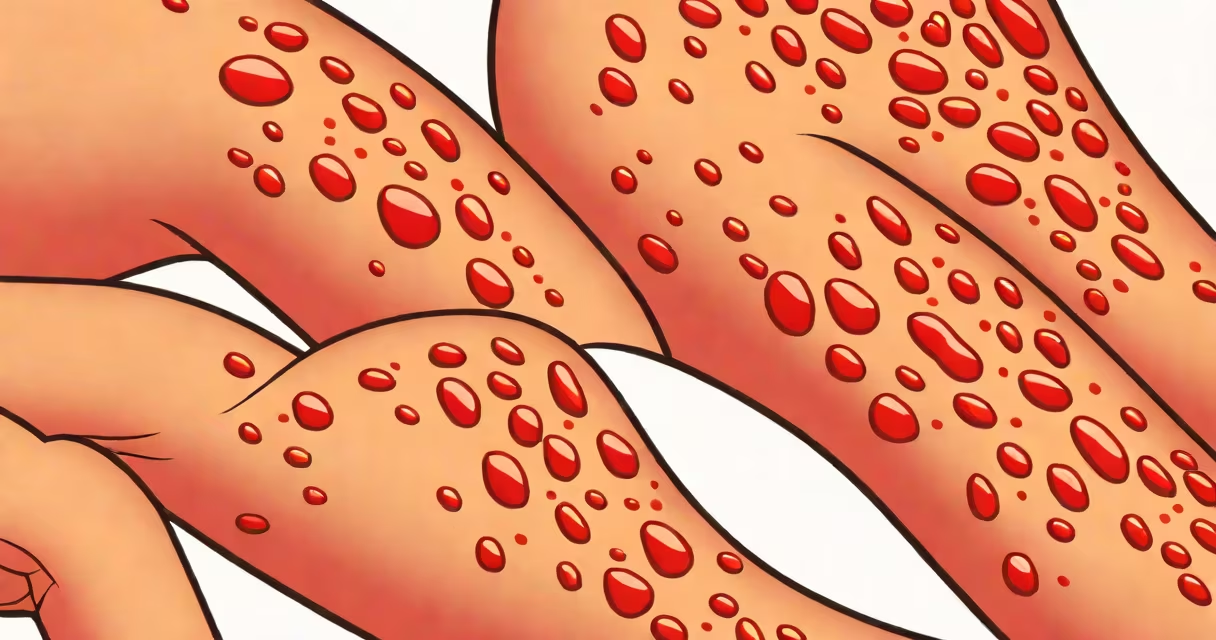
Raised bumps on skin are visible, elevated areas that differ in size, texture, and color from surrounding tissue. They result from inflammation, infection, abnormal cell growth, or allergic reactions affecting the epidermis, dermis, or subcutaneous layers.
These lesions may appear suddenly or develop over days. Common forms include papules, nodules, pustules, and wheals. While many are harmless, some signal underlying health issues requiring evaluation.
According to the American Academy of Dermatology, over 100 distinct skin conditions can manifest as raised bumps. Identifying the root cause often requires clinical assessment, especially when accompanied by pain, fever, or spreading.
Bumps form when immune cells, fluid, or excess tissue accumulate beneath or within the skin. This buildup alters the skin's surface contour. For example, a pimple results from clogged pores filled with sebum, bacteria, and dead skin cells. The pressure creates a visible bump.
Inflammatory responses trigger swelling. When histamine is released during an allergic reaction, blood vessels dilate and fluid leaks into tissues, forming a wheal-a temporary, raised bump. These often itch and fade within hours.
Chronic conditions like psoriasis involve accelerated skin cell turnover. Cells pile up faster than they shed, forming thick, scaly plaques. The American Academy of Dermatology notes that psoriasis affects about 2.2% of U.S. adults, with lesions typically appearing on elbows, knees, and scalp.
Not all raised bumps are the same. Their appearance and location help narrow down potential causes. Below are major categories:
| Type | Appearance | Common Causes | Typical Location |
|---|---|---|---|
| Papule | Small, solid, raised lesion under 1 cm | Acne, insect bites, eczema, lichen planus | Face, arms, legs |
| Nodule | Larger, deeper, firm bump (≥1 cm) | Cysts, granulomas, certain cancers | Back, buttocks, face |
| Pustule | Bump filled with pus | Acne, folliculitis, impetigo | Face, chest, back |
| Wheal | Transient, pale or red bump that fades quickly | Allergies, insect stings, urticaria | Anywhere on body |
Some causes are easily identifiable. A single pustule on the chin likely stems from acne. Multiple small papules on the forearms after gardening suggest contact dermatitis from poison ivy. However, internal triggers such as autoimmune disorders or systemic infections may present with widespread or persistent bumps.
A non-obvious distinction: not all raised bumps are inflammatory. Some, like sebaceous cysts, are benign growths formed from blocked oil glands. They're usually painless unless infected. Others, such as actinic keratosis, are precancerous lesions caused by UV exposure. The National Cancer Institute reports that over 58 million Americans have actinic keratosis, making it one of the most common pre-cancerous skin conditions.
While many raised bumps resolve on their own, certain signs indicate the need for professional care. Redness spreading from a bump, warmth, or pus suggests bacterial infection. Fever accompanying skin changes may point to systemic illness.
I've seen a patient with a rapidly growing nodule on the neck that turned out to be a basal cell carcinoma. It began as a small, flesh-colored bump and grew to 1.2 cm in six weeks. Early diagnosis prevented deeper tissue invasion. This underscores why visual tracking matters.
People often confuse raised bumps with other skin changes. For example, "wheals" are transient and flat-topped, while "plaques" are larger, flatter, and thicker. Another common mix-up: raised bumps versus moles. Moles are pigmented and usually stable, whereas bumps change in size or color.
Another term for bumps on skin is "lesions." But not all lesions are raised. Flat spots, discolorations, or scars are also lesions. Using "bumps" specifically implies elevation. Mislabeling can delay proper treatment.
For instance, a patient once described "bumps" on her back that were actually keratosis pilaris-tiny, rough, hair-filled follicular plugs. She had avoided dermatology for months due to confusion. After clarification, she received effective topical therapy. See alternative terminology for skin bumps.
What can cause raised bumps on skin includes infections, allergic reactions, autoimmune diseases, and neoplastic processes. Accurate identification relies on appearance, location, duration, and associated symptoms. Persistent, painful, or spreading bumps demand evaluation. Early intervention prevents complications and improves outcomes.